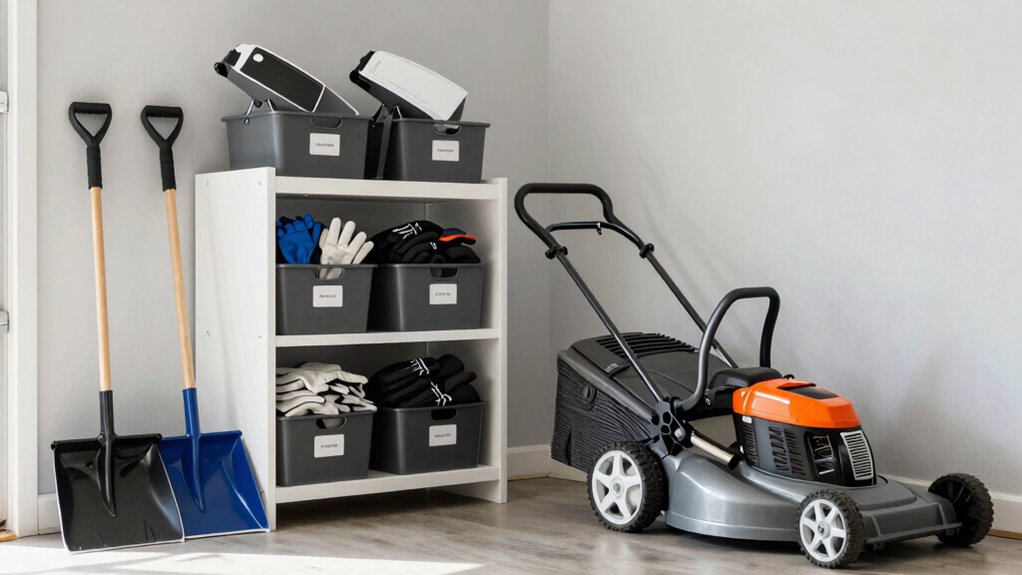

To store snow equipment and leaf blowers between seasons, clean and dry them thoroughly to prevent rust and mold. Drain fuel or add stabilizer, and inspect for damage, replacing worn parts if needed. Store them in a climate-controlled area in weatherproof containers or on wall hooks to protect from moisture and pests. Use moisture absorbers and keep them out of direct sunlight. For a full guide, you’ll find more tips to keep your equipment in top shape.
Key Takeaways
- Clean and dry snow equipment and leaf blowers thoroughly to prevent rust and mold.
- Drain fuel or add fuel stabilizer; run engines briefly to clear residual fuel.
- Store in climate-controlled, dry, and well-ventilated containers or sheds.
- Use moisture absorbers and seal containers to prevent humidity and pest damage.
- Perform a quick operational check before reuse and address any issues promptly.
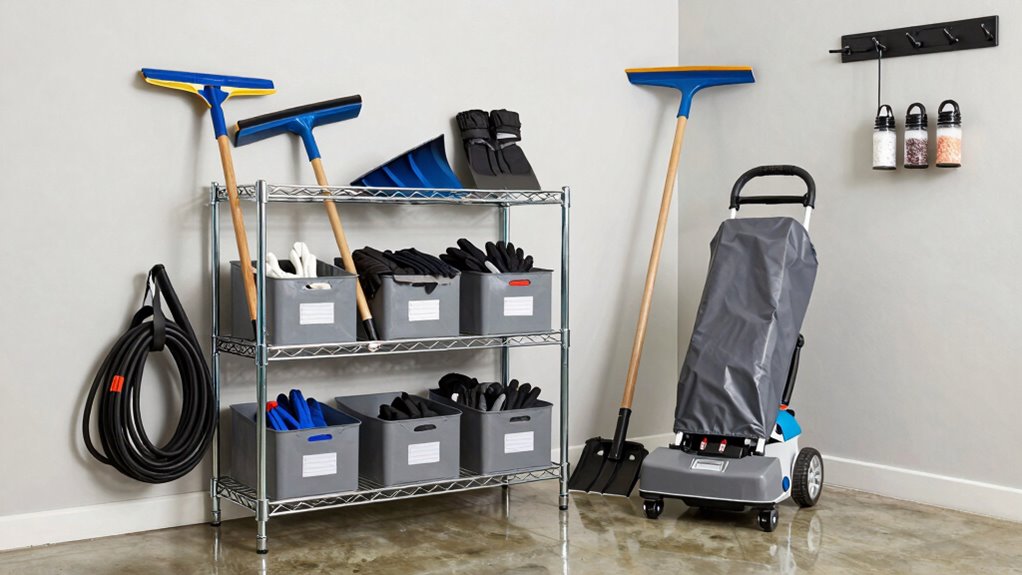
Wondering how to keep your snow equipment and leaf blowers in good shape for next season? Proper storage is essential to guarantee they stay in top condition and are ready to perform when you need them again. The first step is to develop a thorough maintenance checklist. This checklist should include cleaning all equipment thoroughly, draining or adding fuel stabilizer to gas-powered tools, inspecting for worn or damaged parts, and lubricating moving components. Cleaning removes dirt and debris that can cause corrosion or mechanical issues over time. For gas-powered tools, you want to either drain the fuel or stabilize it with fuel stabilizer to prevent gum deposits and varnish buildup, which could clog carburetors or fuel lines. Inspect blades, belts, and hoses for wear, replacing any damaged parts before storing. Lubrication is vital—apply oil to chains, gears, and other moving parts to prevent rust and assure smooth operation when you take the equipment out again. Additionally, storing your tools in climate-controlled environments can significantly extend their lifespan by minimizing exposure to extreme temperatures and humidity. Using appropriate cleaning agents can also help remove stubborn grime and protect metal surfaces from corrosion. Incorporating regular maintenance routines ensures your equipment remains in optimal condition year after year. Regularly inspecting and maintaining your tools can also help identify issues early, saving time and money in repairs or replacements. To further protect your equipment, it’s advisable to check the manufacturer’s storage recommendations, which can provide specific guidance for your tools.
Once your equipment is cleaned and maintained, consider your storage container options. The right storage container can make a significant difference in protecting your tools from moisture, dust, and pests. Sturdy plastic or metal storage cabinets with sealed doors are ideal because they prevent moisture from seeping in, which can cause rust. If space is limited, wall-mounted storage units or hooks can keep leaf blowers and smaller snow tools off the ground, reducing the risk of damage. For larger equipment, heavy-duty storage sheds with proper ventilation are a good choice—they keep your tools dry and allow air circulation to prevent mold or rust. When selecting storage containers, look for options that are weatherproof and lockable for added security. Keep in mind that proper organization inside these containers makes it easier to find what you need when the season rolls around again. Properly storing tools in weatherproof containers can also help prevent exposure to moisture, extending their lifespan even further.
In addition to using suitable storage options, consider adding moisture absorbers like silica gel packs or desiccant bags inside your storage containers. These help reduce humidity that can cause corrosion, especially in humid climates. Also, store your equipment in a dry, cool place away from direct sunlight, which can degrade plastics and rubber parts over time. When you’re ready to use your equipment again, take it out, perform a quick inspection, and run it briefly to verify everything operates smoothly. Following a solid maintenance checklist and choosing the right storage container options will help extend the life of your snow equipment and leaf blowers, making your seasonal changeover seamless and your tools ready for action when needed.

Rubbermaid 48 Gallon Black Action Packer Lockable Latch Indoor and Outdoor Storage Box Container for Home, Garage, Backyard, Single
- Durable for Rugged Use: Resistant to rain and pests
- Heavy Duty Construction: Suitable for camping and truck storage
- Temperature Resistant: Withstands 0°F to 115°F
As an affiliate, we earn on qualifying purchases.
As an affiliate, we earn on qualifying purchases.
Frequently Asked Questions
What’s the Best Way to Prevent Rust on Stored Equipment?
To prevent rust on stored equipment, you should focus on corrosion prevention by applying protective coatings like oil or specialized rust inhibitors. Make sure to clean and dry your tools thoroughly before storage, as moisture accelerates rust formation. Store your equipment in a dry, sheltered place and consider using silica gel packs or a dehumidifier to control humidity. Regularly inspect and maintain your tools to keep rust at bay.
How Often Should I Run Maintenance Checks During Storage?
Think of your stored equipment as a sleeping dragon needing gentle checks. You should run maintenance checks every 1-2 months, focusing on battery preservation and fuel stabilization. Charge batteries fully and disconnect them, and add fuel stabilizer to the tank if you plan to store for extended periods. Regular checks keep equipment ready to roar back into action when the season calls, preventing issues from brewing in hibernation.
Are There Specific Storage Temperatures I Should Aim For?
You should aim for a storage temperature around 50-70°F to prevent damage to your equipment. Temperature control is vital to avoid freezing or overheating parts. Additionally, humidity regulation is important; keep the area dry to prevent rust and corrosion. Avoid extreme temperature fluctuations, as they can harm seals and lubricants. Stable, moderate temperatures with proper humidity control help guarantee your snow equipment and leaf blowers stay in good condition between seasons.
Can I Store Equipment Outdoors or Should It Be Kept Inside?
You should store snow equipment and leaf blowers indoors if possible, as outdoor storage exposes them to weather and pests. If outdoor storage is necessary, use equipment covers to safeguard against moisture and dirt. Additionally, applying pest prevention measures helps keep critters away. Indoor storage guarantees better climate control, prolongs equipment life, and keeps your tools ready for next season.
How Do I Dispose of Old or Broken Snow and Leaf Blower Parts?
You should recycle old or broken snow blower and leaf blower parts through battery recycling and parts recycling programs. Separate batteries from other components, and drop them off at designated recycling centers. For metal, plastic, or electronic parts, visit local hazardous waste facilities or recycling centers that accept these materials. Doing so helps protect the environment, prevents pollution, and guarantees your equipment parts are disposed of responsibly and safely.
Conclusion
Storing your snow equipment and leaf blowers properly guarantees they’re ready to spring back to life when needed. Think of your tools as loyal friends; with a little care and attention, they’ll serve you reliably season after season. By following these simple steps, you’ll keep them in top shape, preventing damage and prolonging their lifespan. When spring rolls around, you’ll be glad you prepared—your tools will be waiting, fresh and enthusiastic, like flowers after a long winter’s nap.