
To clean your concrete safely without etching, use a gentle acid-based cleaner designed for concrete and apply it carefully with a pump sprayer or brush after pre-wetting the surface. Combine this with moderate-pressure washing using a wide-angle nozzle, keeping the nozzle moving steadily to avoid damage. Always wear protective gear and test a small area first. Approaching cleaning this way helps you preserve your surface’s integrity while restoring its look—you’ll discover more tips along the way.

Get cleaning gear delivered free with Prime
- Fast, free delivery on millions of items
- Prime Video, Amazon Music and more included
- Member-only deals all year
Key Takeaways
- Use pressure washing combined with mild, acid-based cleaners to effectively clean without damaging the concrete surface.
- Pre-wet the surface and apply cleaners carefully, following manufacturer instructions for dilution and contact time.
- Employ moderate-pressure settings and wide-angle nozzles during pressure washing to prevent etching and ensure even cleaning.
- Always test a small area first and wear protective gear to ensure safety and monitor the concrete’s reaction.
- Rinse thoroughly after cleaning, dispose of runoff responsibly, and avoid aggressive chemicals to maintain surface integrity.

Cleaning concrete without etching is possible and can be highly effective when using the right techniques and products. Instead of harsh chemical treatments that can damage your concrete’s surface, many professionals rely on safer methods like pressure washing combined with specially formulated cleaners. This approach preserves the integrity of your concrete while delivering a thorough clean. The key is choosing the right cleaning agents and applying them correctly, ensuring you don’t compromise the surface’s durability or appearance.
One popular strategy involves using acid-based cleaners carefully designed for concrete. These cleaners are milder than traditional muriatic acid and are formulated to break down dirt, stains, and algae without etching the surface. When applied properly, acid-based cleaners loosen grime, making pressure washing more effective and reducing the need for aggressive scrubbing. You’ll want to pre-wet the concrete to prevent the cleaner from penetrating too deeply and to ensure even coverage. Then, dilute the acid-based cleaner according to the manufacturer’s instructions, applying it with a pump sprayer or brush for better contact.
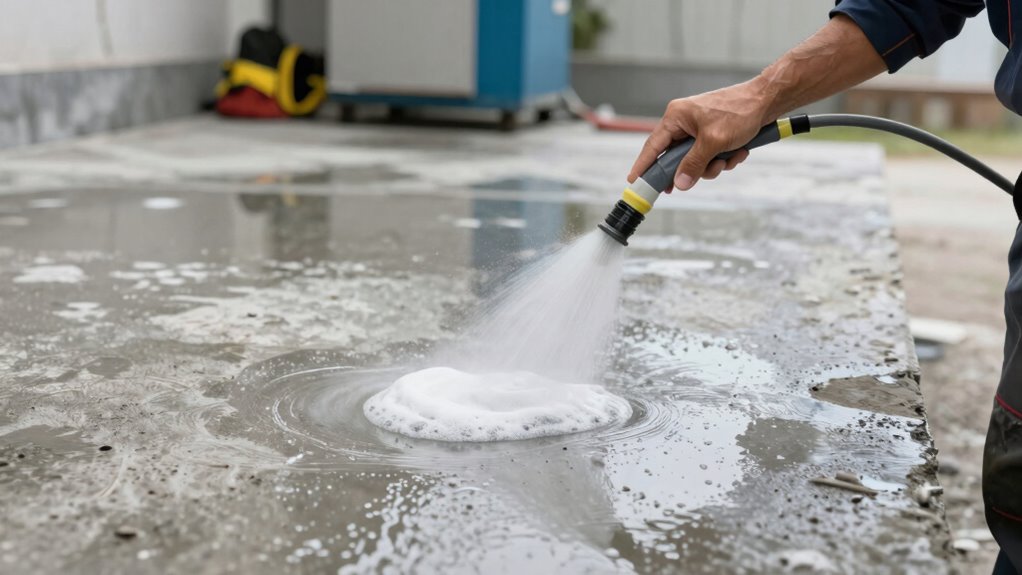
Once the cleaner has had time to work—usually around 10 to 15 minutes—you should use a pressure washer set at a moderate pressure level. The goal is to remove surface contaminants without damaging the concrete. Use a wide-angle nozzle to distribute the water evenly and avoid focusing too much pressure on any one spot, which could cause surface etching. As you pressure wash, keep the nozzle moving steadily to prevent streaks or missed areas. The combination of chemical cleaning and pressure washing allows you to lift dirt efficiently while maintaining the concrete’s surface integrity.
It’s important to follow safety guidelines during this process. Wear protective gear, including gloves and goggles, especially when working with acid-based cleaners. Also, test a small area first to see how your concrete reacts and to ensure the cleaner is effective without causing damage. After cleaning, rinse thoroughly with water to remove any residual cleaner or debris. Properly disposing of used cleaning solutions and runoff is equally critical, especially when acids are involved. Understanding safety precautions and proper handling techniques is essential for a successful cleaning project.
This method proves that you don’t need to etch your concrete to restore its appearance. By leveraging acid-based cleaners designed for concrete and combining them with pressure washing, you achieve a clean, fresh look without risking surface damage. The process is safer, environmentally friendly, and preserves the longevity of your concrete surfaces, making it a preferred choice for homeowners and professionals alike.
concrete pressure washer with wide-angle nozzle
As an affiliate, we earn on qualifying purchases.
As an affiliate, we earn on qualifying purchases.
Frequently Asked Questions
Can Concrete Cleaning Be Done Without Damaging the Surface?
Yes, concrete cleaning can be done without damaging the surface. You should focus on proper surface preparation to guarantee thorough cleaning and use safe, eco-friendly chemicals that won’t harm the concrete. Following industry-approved methods helps protect the integrity of your surface while effectively removing dirt and stains. Always prioritize chemical safety and proper techniques, so your concrete stays durable and looks great without risking etching or surface damage.
How Long Does a Typical Concrete Cleaning Process Take?
A typical concrete cleaning process takes about 1 to 3 hours, depending on the surface size and condition. You’ll want to focus on proper surface prep and choose the right equipment, like pressure washers or soft scrubbers, to guarantee thorough cleaning without damage. This approach minimizes the risk of etching and keeps your concrete looking its best. Time varies based on the level of dirt and the cleaning method used.
Are Eco-Friendly Cleaning Options Available for Concrete?
Think of eco-friendly solutions as a gust of fresh air for your concrete. You can definitely choose sustainable methods that are safe for the environment and effective at cleaning. These eco-friendly options use natural or less harmful chemicals, ensuring your concrete stays pristine without damaging the planet. By opting for sustainable methods, you protect your surroundings while achieving a deep clean, making your space both beautiful and eco-conscious.
What Are the Signs That Concrete Needs Cleaning?
You’ll notice your concrete needs cleaning when surface deterioration becomes visible, such as cracks or discoloration. Mold growth is another clear sign, especially in shaded or damp areas. If you see moss, algae, or persistent stains, it’s time to clean. Regular maintenance prevents further damage and keeps your concrete looking fresh. Addressing these signs early guarantees you avoid costly repairs and maintain a safe, attractive surface.
Can Cleaning Remove All Types of Stains From Concrete?
You can’t expect to hit a home run with every stain, but proper stain removal can tackle most of them. While cleaning can considerably improve surface discoloration and remove many stains, some stubborn ones like oil or rust may need specialized treatments. Don’t lose heart—your concrete can look great again with the right approach, but keep in mind that not all stains are a walk in the park.
Conclusion
By choosing a safe, etching-free cleaning process, you’re treating your concrete like a precious gem—shining brightly without damage. Think of it as nurturing a delicate garden instead of blasting away with harsh chemicals. When you follow these pros’ steps, your concrete stays strong and beautiful, standing tall like a monument. So, embrace the gentle touch and watch your surfaces flourish, turning everyday concrete into a stunning masterpiece that lasts for years to come.
Fall Picks
fall essentials
As an affiliate, we earn on qualifying purchases.