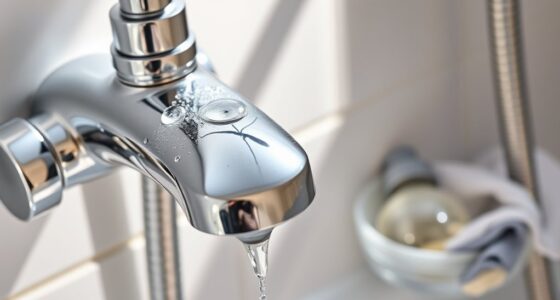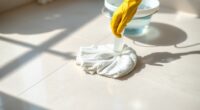
To remove rust stains from sinks and tubs, start by pouring white vinegar directly onto the stain, letting it sit for at least 15 minutes to loosen the rust. Then, sprinkle baking soda over the area to enhance cleaning, creating a fizzing reaction that lifts the stain. Use a soft scrub pad to gently scrub in circular motions, rinse thoroughly with warm water, and wipe dry. For more effective tips and techniques, keep exploring these natural cleaning methods.

Get cleaning gear delivered free with Prime
- Fast, free delivery on millions of items
- Prime Video, Amazon Music and more included
- Member-only deals all year
Key Takeaways
- Saturate the rust stain with white vinegar and let sit for at least 15 minutes to loosen rust particles.
- Apply a baking soda paste or sprinkle baking soda over the vinegar-treated area to enhance cleaning.
- Use a soft brush or non-abrasive scrub pad to scrub in circular motions until the stain lifts.
- Rinse thoroughly with warm water and wipe with a clean cloth to remove residue.
- Regularly clean sinks and tubs to prevent rust buildup and maintain their appearance.

Rust stains on sinks and tubs can be stubborn, but with the right approach, you can remove them effectively. One of the best methods involves cleaning with vinegar, thanks to its natural acidity that breaks down rust. Start by pouring white vinegar directly onto the stain, making sure to saturate the area thoroughly. Let it sit for at least 15 minutes to loosen the rust particles. Afterward, grab a soft brush or a non-abrasive scrub pad and gently scrub the stain in circular motions. Vinegar’s acidic properties help dissolve the rust, making it easier to lift away. For stubborn stains, you might want to repeat this process or let the vinegar sit a bit longer before scrubbing again.
In addition to vinegar, using baking soda can boost your rust removal efforts. Baking soda acts as a gentle abrasive and a natural deodorizer. After applying vinegar and scrubbing, sprinkle baking soda over the stained area. The combination creates a fizzing reaction that helps lift the rust from the surface. For extra cleaning power, make a paste by mixing baking soda with a small amount of water. Apply this paste directly onto the rust stain and let it sit for 10 to 15 minutes. Then, scrub again with your brush or scrub pad, focusing on any remaining spots. The abrasive texture of baking soda works well on light to moderate rust stains, helping to scrub stubborn spots away without scratching porcelain or acrylic fixtures.
If the rust stain persists, you can create a more potent paste by mixing baking soda with white vinegar instead of water. Apply this mixture to the stain and let it sit for 20-30 minutes. The chemical reaction will intensify, breaking down even stubborn rust deposits. Afterward, scrub thoroughly and rinse with warm water. Always follow up with a clean cloth to wipe away any residue. Incorporating proper cleaning techniques can also help maintain your fixtures and prevent future stains.
white vinegar for rust stain removal
As an affiliate, we earn on qualifying purchases.
As an affiliate, we earn on qualifying purchases.
Frequently Asked Questions
Are Commercial Rust Removers Safe for All Sink Materials?
Commercial rust removers aren’t safe for all sink materials, so you should check the label carefully. Some contain harsh chemicals that can damage delicate surfaces like enamel or fiberglass. Also, consider chemical safety and environmental impact before use. Opt for eco-friendly options when possible, and always follow instructions to avoid damaging your sink or harming the environment. When in doubt, test on a small area first.
Can Rust Stains Be Prevented From Forming Initially?
Rust stains can be prevented from forming like a fortress protecting your sink or tub. To do this, you should regularly clean and dry the surfaces, especially after exposure to water. Use preventative measures such as applying a rust-resistant coating or sealant. Employing stain prevention techniques like avoiding harsh chemicals and fixing leaks promptly keeps your fixtures shiny and stain-free, saving you time and effort in the long run.
How Long Does It Typically Take for Rust Stain Removal?
Rust removal can take anywhere from a few minutes to an hour, depending on the stain’s severity. You should start seeing results within 10 to 15 minutes if you act quickly. To guarantee effective stain prevention, regularly clean your sink or tub and dry it thoroughly after use. Using a rust remover promptly helps speed up rust stain removal and keeps your fixtures looking new longer.
Are Homemade Remedies as Effective as Commercial Products?
Think of DIY solutions and natural remedies as gentle rainstorms cleaning stubborn rust. While they can be effective, they often lack the concentrated power of commercial products. Homemade remedies, like lemon juice or vinegar, work well for light stains and are eco-friendly. However, for tougher rust, commercial products deliver quicker, more reliable results. So, your choice depends on stain severity and your preference for natural versus industrial-strength solutions.
Is Professional Help Necessary for Severe Rust Stains?
For severe rust stains, professional assistance isn’t always necessary, but it can be helpful if the stain severity is extensive or stubborn. You should consider expert help if DIY methods don’t work after multiple attempts or if the stain has penetrated deeply. Professionals have specialized tools and cleaning agents that can effectively remove persistent rust stains without damaging your sink or tub, saving you time and effort.
Conclusion
Remember, tackling rust stains promptly prevents them from setting in and becoming harder to remove. While many suggest using lemon juice or vinegar, their effectiveness varies based on stain severity. Notably, some experts believe that rust stains are caused by mineral buildup rather than actual rust, which highlights the importance of proper cleaning. So, always test your chosen method first, and don’t hesitate to combine proven solutions for best results. Acting quickly truly makes all the difference.
Halloween Picks
halloween
As an affiliate, we earn on qualifying purchases.