TL;DR

Get cleaning gear delivered free with Prime
- Fast, free delivery on millions of items
- Prime Video, Amazon Music and more included
- Member-only deals all year
Hunker has described a simple upcycling project that turns a capped plastic bottle into a holder for a wet umbrella. The bottle catches water as it drains from the umbrella, but the holder must be emptied after use and the umbrella should be dried separately to limit mildew risk.
Hunker has outlined a DIY umbrella holder made from an empty, capped plastic bottle and string, offering a way to catch water from a wet umbrella in a car or near a home entrance. The project uses the bottle as a drip container, but the report advises users to empty it after each use and let the umbrella dry rather than leaving it stored wet.
The holder is made by removing the bottle’s bottom, then making two holes near the cut opening for a hanging loop. The umbrella is inserted through that opening with the bottle held upside down; water runs toward the bottle neck and remains inside until it is emptied. The cap and neck therefore need to remain accessible.
Hunker says the basic materials are a plastic bottle with a cap, string and a tool to cut plastic. The report notes that YouTuber ABC Upcycling used a drill to make the string holes, while a knife or scissors can also be used. It recommends washing off the bottle label before assembly and measuring string according to where the holder will hang.
The finished holder can be hung in a car or near an entryway. Decoration is optional: the bottle can be left clear, painted or covered with fabric or cord. Hunker advises keeping glue away from the cap and opening, allowing paint or other finishes to dry fully, and opening the bottle to pour out collected water after each use.
A Simple Way to Catch Umbrella Drips
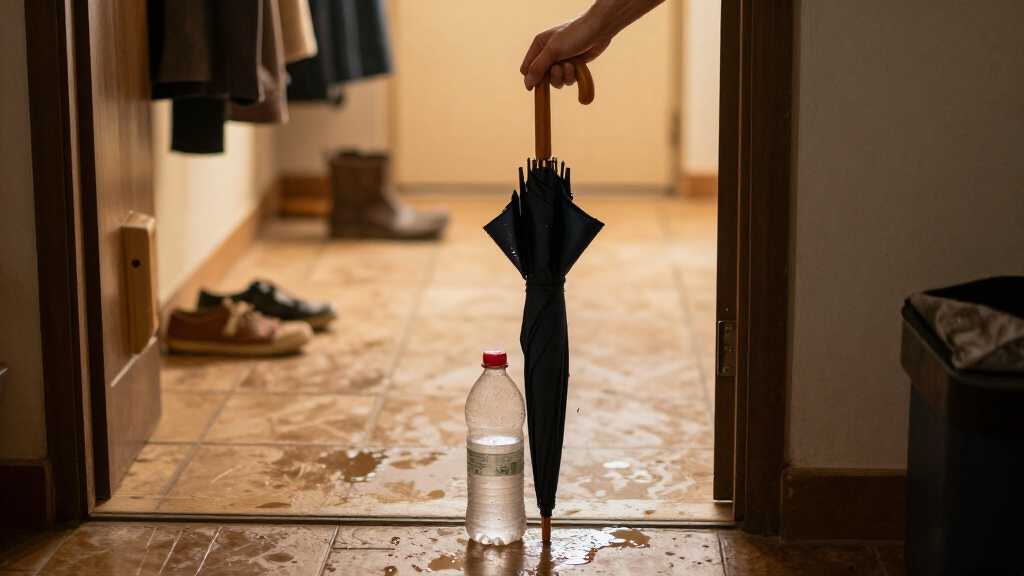
The idea addresses a common practical problem: a wet umbrella can drip onto car interiors, hardwood floors or entryways while being transported or stored. A bottle holder provides a contained place for runoff, rather than leaving the umbrella to drip directly onto a surface. Hunker also points to the risk of leaving an umbrella outside, where wind could blow it away.
For readers, the project uses a household item that might otherwise be discarded and requires few materials. Its usefulness depends on routine care, however. Water left in a closed container and a damp umbrella left inside for an extended period can create conditions for mildew, the source warns. The bottle is a temporary drip catcher, not a substitute for drying the umbrella.
plastic bottle umbrella drip catcher
As an affiliate, we earn on qualifying purchases.
As an affiliate, we earn on qualifying purchases.
How the Bottle Holder Works
The report presents the bottle as a small upcycling project rather than a commercial product announcement. Its central design choice is to store the umbrella upside down in a bottle with its base removed. The bottle’s neck and cap form the lower collection area, while the cut end serves as the opening for the umbrella.
Hunker describes possible placements including a car, an interior hook by an entryway, or a back-door handle. It also suggests decorating the exterior, while stressing that access to the cap must be preserved so water can be drained. The source provides instructions and care guidance but does not report product testing or comparative results.
“This umbrella holder is as simple as it is functional.”
— Hunker report
Limits and Safety Details to Check
The report does not specify bottle dimensions, a maximum umbrella size, or how much water the holder can contain. It also does not compare different bottle shapes or materials, so readers will need to judge whether a particular bottle fits their umbrella and intended hanging location.
Cutting plastic can leave a sharp or uneven edge. Hunker’s supplied instructions do not describe a finishing method for that edge or give detailed safety guidance for cutting or drilling. Users should handle tools carefully and avoid placing a cut edge where it could snag fabric or cause injury. The source also does not establish how well the holder works under repeated use or in a moving vehicle.
Empty, Dry and Reuse the Holder
The steps described are a home project, with no later product launch or follow-up milestone given in the source. Anyone making the holder should measure the hanging loop for its location, finish any decoration, and let it dry completely before use. After a rainy trip, the report recommends opening the cap and draining the water, then taking the umbrella out and opening it indoors to dry.
Before hanging the holder in a car or near a doorway, users can check that it stays in place and does not obstruct movement or access. The source offers no additional performance data, so its practicality will depend on the bottle, umbrella and storage spot chosen.
Key Questions
What do I need to make the bottle umbrella holder?
Hunker lists a capped plastic bottle, string and something to cut the plastic as the basic materials. A tool to make two holes for the string is also needed; the report says a drill, knife or scissors can be used for the holes.
How does the bottle catch the water?
The bottle is turned upside down and its bottom is cut off. The umbrella slides through that opening, while water drains toward the bottle neck and cap. The cap must remain easy to open so the collected water can be poured out.
Can the umbrella stay in the bottle between uses?
The report says not to leave a wet umbrella in the holder for long because mildew could develop. It recommends opening the umbrella indoors to dry, then storing it closed until it is needed again.
Can I decorate the bottle?
Yes. Hunker suggests leaving it clear or adding paint, fabric or cord. Keep decoration away from the cap and bottle opening, and let paint or glue dry completely before using the holder.
Source: rss
Columbus Day / Indigenous Peoples' Day Picks
long weekend sales
As an affiliate, we earn on qualifying purchases.