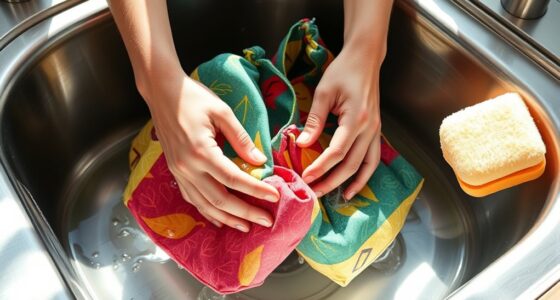
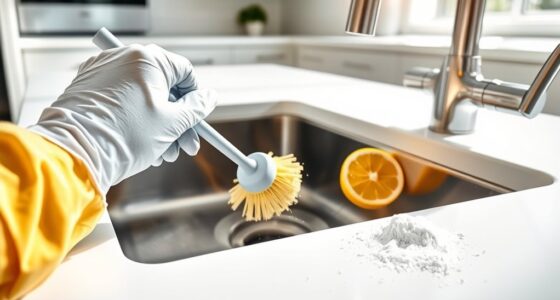
To remove hard water stains from glass, start by soaking a cloth or sponge in white vinegar and applying it to the affected areas for 10-15 minutes to loosen deposits. Gently scrub with a non-abrasive pad, then rinse with water. For stubborn stains, make a paste of baking soda and vinegar, apply it, and rinse thoroughly. With patience and proper techniques, you can restore your glass’s clarity—keep exploring for more effective tips.
Key Takeaways
- Soak a cloth in white vinegar and apply it to the stained glass, letting it sit for 10-15 minutes before scrubbing.
- Use a baking soda paste on damp glass to gently scrub away mineral deposits without scratching.
- Combine baking soda and vinegar to create a fizzing cleaning paste that effectively loosens hard water stains.
- Rinse the glass thoroughly with water after cleaning to remove residue and prevent streaks.
- Use non-abrasive tools and repeat treatments if stains are stubborn for best results.
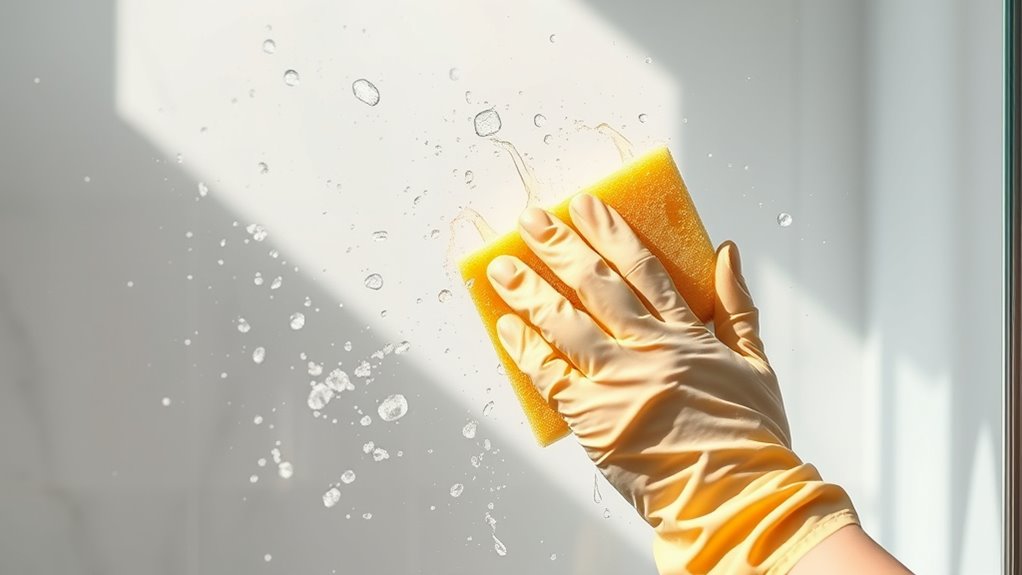
Hard water stains can turn your clear glass surfaces dull and cloudy, but luckily, removing them is straightforward. The key is to break down the mineral deposits causing the discoloration using simple household ingredients. Vinegar solutions are especially effective because they contain acetic acid, which dissolves calcium and magnesium build-up. To use vinegar, soak a cloth or sponge in white vinegar and apply it directly to the stained areas. Let it sit for 10-15 minutes to loosen the deposits. Then, scrub gently with a non-abrasive pad or brush, and rinse thoroughly with water. For stubborn stains, you can also fill a spray bottle with vinegar and spritz it onto the glass, then let it sit longer before wiping clean. Repeating this process may be necessary for heavily stained surfaces, but vinegar’s natural acidity makes it a safe and effective option.
In addition to vinegar solutions, baking soda techniques provide another powerful method for tackling hard water stains. Baking soda acts as a mild abrasive that helps lift mineral deposits without scratching the glass. To try this, sprinkle baking soda directly onto the damp surface or make a paste by mixing it with a small amount of water. Apply the paste to the stained areas and scrub gently with a soft cloth or sponge. The combination of the abrasive action and the alkaline nature of baking soda helps neutralize acids and loosen deposits. After scrubbing, rinse the glass thoroughly with warm water to remove any residue. For deeper stains, you can create a cleaning paste by mixing baking soda with vinegar, which will fizz and bubble as it reacts, enhancing its cleaning power. Apply this mixture to the glass, allow it to sit for a few minutes, then scrub and rinse.
Both vinegar solutions and baking soda techniques are safe, inexpensive, and eco-friendly ways to restore clarity to your glass surfaces. The key is to be patient and persistent—sometimes, a few applications are needed for stubborn stains. Remember to always use non-abrasive tools to avoid scratching the glass and to rinse thoroughly after each cleaning. Using appropriate cleaning tools can make the process easier and more effective. With a little effort, you can enjoy sparkling, streak-free glass that looks brand new again. Whether you prefer the acidity of vinegar or the gentle abrasiveness of baking soda, these methods are effective and easy to incorporate into your regular cleaning routine.
Frequently Asked Questions
Can Hard Water Stains Cause Glass to Become Cloudy Permanently?
Hard water stains can cause glass to become cloudy if limestone buildup and mineral deposits aren’t removed promptly. Over time, these deposits can etch the glass surface, leading to permanent cloudiness. However, with proper cleaning and treatment, you can often restore clarity. Regularly using vinegar or commercial cleaners helps dissolve mineral deposits before they cause lasting damage, preventing your glass from turning permanently cloudy.
Are There Eco-Friendly Methods to Remove Hard Water Stains?
Yes, there are eco-friendly solutions to remove hard water stains. You can use natural cleaning agents like vinegar or lemon juice, which are safe and effective. Simply mix equal parts of water and vinegar or rub lemon slices directly on the stains. These eco-friendly solutions break down mineral deposits without harming the environment. Regular use of natural cleaners helps keep your glass clear and shiny without relying on harsh chemicals.
How Often Should I Clean Glass to Prevent Hard Water Stains?
Think of your glass as a mirror reflecting your care; clean it every one to two weeks to keep stains at bay. Adjust your cleaning frequency based on water hardness levels—harder water means more frequent washes. Regular cleaning acts like a shield, preventing mineral buildup from settling in. By staying consistent, you’ll let your glass sparkle, showcasing its clarity and inviting a fresh, spotless look every time.
Do Commercial Cleaners Damage Glass Surfaces Over Time?
Commercial cleaners can cause chemical damage if used improperly or too frequently, leading to surface deterioration over time. You might notice etching, cloudiness, or roughness on your glass surfaces. To avoid this, always follow the manufacturer’s instructions, test a small area first, and opt for gentler, non-abrasive products when possible. Regular cleaning with mild solutions helps protect your glass from long-term damage and preserves its clarity.
Can Hard Water Stains Be Removed From Tinted or Decorative Glass?
Think of your tinted or decorative glass as a delicate painting; hard water stains can be like stubborn smudges that threaten its beauty. You can remove these stains, but you need gentle, non-abrasive cleaners designed for glass tinting and decorative coatings. Use a soft cloth and a vinegar solution to lift the stains without damaging the tint or coating, keeping your glass’s beauty intact and vibrant.
Conclusion
Think of your glass as a mirror to your home’s clarity. Hard water stains are like shadows that obscure its shine, but with a little effort, you can wipe away these marks and restore its brilliance. Remember, each clean surface reflects not just light, but your care and attention. So, take action today—transform your glass from dull to dazzling—and let your space shine with renewed clarity and confidence.