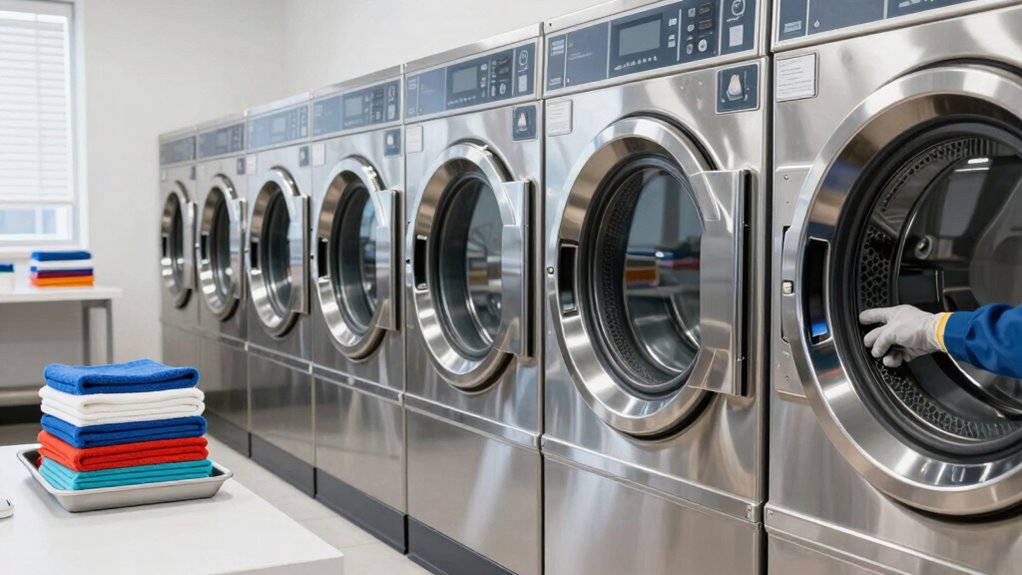
To maintain commercial washers and dryers for linens, regularly inspect and clean filters, vents, and lint traps to prevent clogs and guarantee peak airflow. Check belts, hoses, and seals for wear, and troubleshoot any unusual noises or leaks early. Use the right amount of detergent, avoid overloading, and control water levels and temperatures for ideal performance. Keeping interior drums and lint filters spotless and scheduling professional checkups will help your equipment stay efficient—continue to discover more helpful tips below.
Key Takeaways
- Regularly inspect and clean filters, vents, and lint traps to ensure optimal airflow and prevent fire hazards.
- Check and replace worn belts, hoses, and seals to avoid leaks and mechanical failures.
- Maintain proper water levels, detergent use, and cycle settings to ensure thorough cleaning and prevent equipment strain.
- Clean interior drums and dispensers frequently to prevent residue buildup and odors.
- Schedule professional maintenance and vent cleaning to address complex issues and improve dryer safety and efficiency.
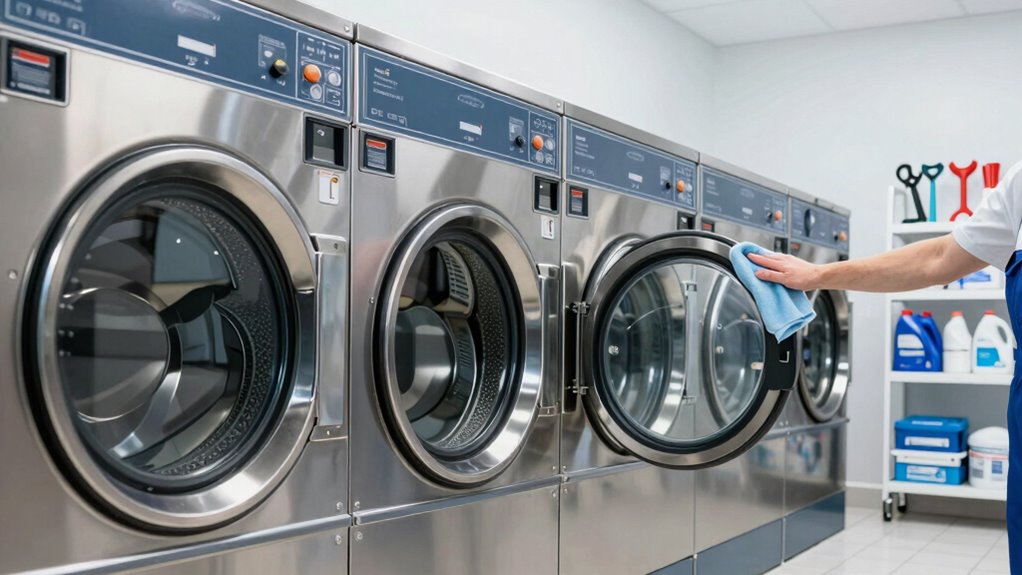
Regular maintenance of commercial washers and dryers is indispensable to keep them running efficiently and prevent costly breakdowns. When you stay on top of maintenance, you not only extend the lifespan of your equipment but also improve energy efficiency, which can reduce your operational costs. Proper care guarantees your linens are thoroughly cleaned and dried, saving your business time and frustration. One of the most effective ways to boost energy efficiency is to regularly inspect and clean filters, vents, and lint traps. Clogged filters hinder airflow, causing machines to work harder and consume more energy. Make it a habit to check these components daily, removing lint and debris to maintain peak airflow and drying performance.
Regular maintenance of washers and dryers boosts efficiency, extends lifespan, and prevents costly breakdowns.
In addition, paying attention to the condition of your belts, hoses, and seals can prevent leaks and mechanical issues that might force you to shut down operations unexpectedly. When you notice any unusual noises, vibrations, or slow cycles, it’s a good idea to troubleshoot these problems early. Troubleshooting tips include verifying that the power supply is stable, checking for blockages, and confirming that water inlet valves are functioning correctly. If you notice persistent issues, consult your user manual or contact a technician to avoid further damage. Regularly reviewing equipment maintenance best practices can also help you develop a scheduled routine that minimizes downtime and maximizes performance.
Maintaining proper water levels and detergent usage is another essential aspect of efficient operation. Overloading machines or using too much detergent can strain the system and decrease cleaning quality. Keep an eye on cycle times and water temperature settings, adjusting them as needed to match the load size and type of linens. Proper load balancing prevents uneven wear and tear, helping your equipment run smoothly. Additionally, understanding maintenance guidelines can help you develop a routine that reduces unexpected repairs and prolongs the life of your machines. Properly functioning equipment is vital to ensure linens come out clean and fresh every cycle.
Cleaning the interior drum and detergent dispensers regularly is also indispensable. Residue buildup can impact washing performance and cause odors. When you perform these cleaning routines, you help guarantee linens come out spotless and fresh. For dryers, regularly checking and cleaning the lint filter is essential—failure to do so can increase drying times and energy consumption. Also, inspecting the dryer vent for obstructions improves airflow and reduces fire risk. Furthermore, staying informed about preventative maintenance techniques can help you catch issues early before they escalate. Incorporating proper maintenance routines into your schedule ensures your commercial laundry equipment remains reliable and efficient over time.
commercial washer filter cleaning kit
As an affiliate, we earn on qualifying purchases.
As an affiliate, we earn on qualifying purchases.
Frequently Asked Questions
How Often Should I Replace Washer and Dryer Parts?
You should replace washer and dryer parts as needed, typically every 6 to 12 months, depending on usage. Regularly assess your equipment for signs of wear and tear, and consider equipment upgrades to improve efficiency. Keep spare parts on hand for quick replacements, preventing downtime. Staying proactive with maintenance guarantees your machines run smoothly, extends their lifespan, and keeps your linen cleaning process uninterrupted.
What Are Common Signs of Equipment Failure?
You’ll notice signs of equipment failure when your washers and dryers start making unusual noises, show inconsistent cycles, or have longer drying times. Regular maintenance helps extend their lifespan, so stick to your maintenance schedule. Keep an eye on worn belts, clogged filters, and electrical issues. Addressing these early prevents costly repairs, ensuring your equipment stays reliable, safe, and efficient for cleaning linens.
Can I Perform Maintenance Myself or Need Professional Help?
Did you know that 60% of equipment breakdowns could be prevented with regular maintenance? You can perform simple DIY inspections, like checking for leaks or unusual noises, but for thorough cleaning and repairs, professional servicing is vital. While minor tasks keep your machines running, complex issues require experts to guarantee safety and proper function. Combining DIY upkeep with professional help guarantees your commercial washers and dryers stay reliable and efficient.
How Do I Prevent Mold and Mildew Buildup?
To prevent mold and mildew buildup, you should regularly clean and dry your washers and dryers. Use mold prevention techniques like leaving the door slightly open after use to promote airflow, and wipe down surfaces to eliminate moisture. Mildew control is easier when you run a hot water cycle with vinegar or a commercial cleaner weekly. Keep the area well-ventilated and guarantee no excess water remains after each load.
What’s the Best Way to Troubleshoot Laundry Machine Errors?
When troubleshooting laundry machine errors, you’ve got to roll up your sleeves. First, check the error code displayed during the laundry cycle; it offers clues to the problem. Confirm that the machine is properly calibrated, as misalignment can cause errors. Reset the machine if needed, and make certain all connections are secure. If issues persist, consult the manufacturer’s manual or call a technician to keep things running smoothly.
Conclusion
So, after all that effort keeping your commercial washers and dryers in top shape, it’s amusing to think that neglecting them could turn your spotless linens into a soggy mess. Ironically, a little routine maintenance now saves you from costly repairs and downtime later. Remember, your machines aren’t invincible—treat them well, and they’ll reward you with clean, fresh linens, instead of broken-down chaos. Who knew a little TLC could make such a difference?