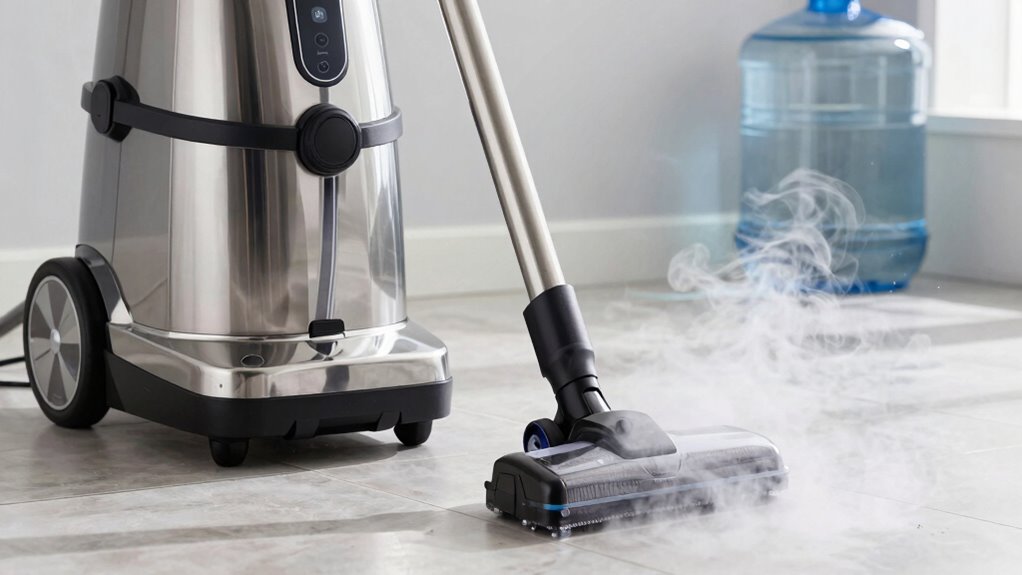

To prevent spitting and mineral buildup in your continuous-fill steam cleaner, use distilled or demineralized water instead of tap water, especially if you live in a hard water area. Regularly flush and descale the machine as recommended, and avoid overfilling the water tank. Keep hoses, nozzles, and seals clean and in good condition. Following these tips helps maintain performance and extends your device’s lifespan. For more useful insights, keep exploring effective maintenance strategies.
Key Takeaways
- Use distilled or demineralized water to minimize mineral deposits and prevent buildup inside the boiler.
- Regularly flush and clean the water tank to remove accumulated mineral deposits and reduce spitting.
- Avoid overfilling the water tank and follow manufacturer guidelines for proper filling procedures.
- Inspect and replace worn seals, hoses, and nozzles to prevent leaks and ensure smooth operation.
- Perform routine maintenance and follow safety instructions to extend the cleaner’s lifespan and improve performance.
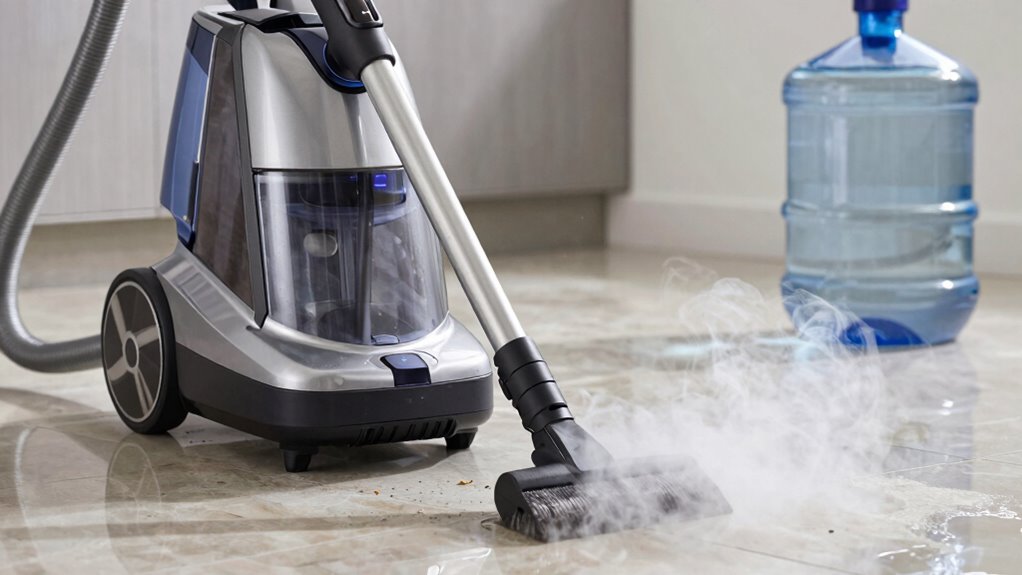
Continuous-fill steam cleaners have revolutionized the way you clean by allowing you to keep working without stopping to refill water. This means you can tackle larger cleaning tasks more efficiently, saving time and effort. However, to get the most out of your device and guarantee it operates safely and effectively, you need to pay attention to steam cleaner safety and maintenance tips. One common issue that can arise with these machines is “spitting,” where water or mineral deposits shoot out during use. Understanding how to prevent this problem starts with proper maintenance and careful operation.
Spitting often occurs when mineral buildup accumulates inside the boiler or water tank. Over time, minerals from tap water can settle and create blockages or uneven heat distribution, leading to water splattering during steam release. To prevent this, using distilled or demineralized water is highly recommended, especially if your area has hard water. This simple maintenance tip can greatly reduce mineral buildup, ensuring smoother operation and longer-lasting equipment. Regularly flushing your steam cleaner according to the manufacturer’s instructions also helps clear out mineral deposits before they become problematic.
Another critical aspect of steam cleaner safety is avoiding overfilling the water tank. Continuously filling the tank without letting it cool down can cause pressure buildup or leaks, which could be hazardous. Always follow the manufacturer’s guidelines for filling and ensure the machine is unplugged and cooled before refilling. Pay attention to the pressure release valve or any indicator lights; these features are designed to keep the device operating safely. Properly maintaining your steam cleaner not only prevents spitting but also extends its lifespan and keeps you safe during use.
In addition to water quality and filling practices, inspecting hoses, nozzles, and seals regularly is essential. Damaged or worn parts can cause leaks, leading to water spitting or even electrical hazards if water reaches internal components. Cleaning or replacing these parts as needed is a simple maintenance tip that enhances safety and performance. Always unplug your machine before performing any maintenance, and consult the user manual for specific instructions. Incorporating regular preventative maintenance into your routine can further reduce the risk of mineral buildup and operational issues.
Frequently Asked Questions
How Often Should I Descale My Continuous-Fill Steam Cleaner?
You should descale your continuous-fill steam cleaner every 3 to 6 months, depending on your water’s mineral content. If you notice mineral deposits or the steam output decreases, it’s time to descale sooner. Regular descaling helps prevent ‘spitting’ and mineral buildup, ensuring peak performance. Use a descaling solution or vinegar, and follow the manufacturer’s instructions to keep your cleaner running smoothly and extend its lifespan.
Can I Use Tap Water in All Models?
Using tap water in your steam cleaner is like inviting trouble—most models aren’t designed for it. It can cause mineral deposits that lead to spitting and clogging. Check your manufacturer’s guidelines, but generally, distilled or demineralized water is safer. This prevents mineral buildup and keeps your cleaner running smoothly. Using tap water regularly might save money but could cost you in repairs or reduced efficiency over time.
What Safety Precautions Are Necessary During Operation?
During operation, you should wear safety gear like gloves and goggles to protect against hot steam and splashes. Make certain proper ventilation by opening windows or doors to prevent steam buildup and humidity. Keep children and pets away from the area, and always read the manufacturer’s safety instructions. Using safety gear and maintaining good ventilation help you operate the steam cleaner safely and effectively, reducing risks of burns or accidents.
Are There Specific Cleaning Solutions Compatible With Continuous-Fill Steam Cleaners?
Are you wondering if specific cleaning solutions work with your continuous-fill steam cleaner? Most models are compatible with distilled water, which helps prevent mineral deposits and spitting. Avoid using harsh chemicals or additives that could damage the unit or cause buildup. Always check your manufacturer’s guidelines for cleaning solution compatibility to keep your steamer running smoothly and prevent mineral buildup, ensuring effective cleaning without damage.
How Do I Troubleshoot Persistent Mineral Buildup Issues?
To troubleshoot persistent mineral buildup, first check the water hardness in your area, as hard water causes more mineral deposits. Use a descaling solution recommended by your cleaner’s manufacturer regularly to dissolve mineral deposits. Make sure to empty and rinse the water tank after each use, and consider using distilled or softened water to minimize mineral buildup. Regular maintenance prevents mineral deposits from clogging your steam cleaner and reduces spitting issues.
Conclusion
Just as Da Vinci mastered the art of innovation, mastering your continuous-fill steam cleaner guarantees it runs smoothly and efficiently. By preventing spitting and mineral buildup, you keep your cleaning masterpiece pristine, much like a well-preserved Renaissance painting. Embrace these practices, and your steam cleaner will serve you faithfully, transforming your cleaning routine into an art form. Remember, with proper care, your device can be your most reliable tool—an enduring proof to craftsmanship and care.