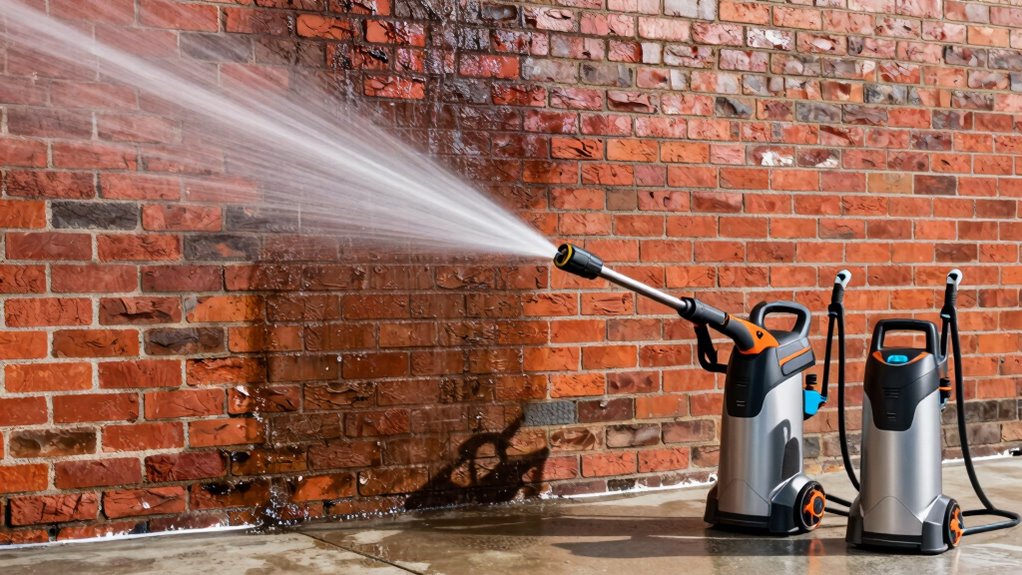

For a pressure washer for brick cleaning, the cleaner matters as much as the machine: this roundup’s best overall pick is Kärcher Concrete & Driveway Cleaner, a surface-focused option that can suit masonry when its label permits. Krud Kutter Concrete & Driveway Concentrate and Simple Green Oxy Solve Concrete and Driveway Cleaner are other standouts for buyers comparing purpose-made outdoor surface formulas. The main tradeoff is between a targeted concrete-and-driveway product and a broader house-wash concentrate, alongside dilution, compatibility, and how gently the product treats aging mortar. Keep reading for the full breakdown and guidance on matching a cleaner to your brick, stains, and washer.

Get cleaning gear delivered free with Prime
- Fast, free delivery on millions of items
- Prime Video, Amazon Music and more included
- Member-only deals all year
Complete the kit


Key Takeaways
- Concrete-and-driveway formulas lead this lineup for brick-adjacent cleaning: Kärcher, Krud Kutter, and Simple Green offer the clearest surface-specific starting points, but buyers should confirm brick and mortar compatibility on each label.
- House-and-siding cleaners serve a different job: Kärcher, Zep, and Oxy Solve house-wash options make more sense when brick is part of a mixed exterior, not when a buyer wants a dedicated masonry cleaner.
- Concentrate size alone does not show value: Kärcher’s and Zep’s stated batch yields and the gallon formats need to be compared alongside label dilution directions and the area to be cleaned.
- Versatility is a tradeoff, not an automatic advantage: Zep All-in-1 and the multi-purpose Kärcher and Krud Kutter formulas may suit several outdoor jobs, while narrower surface-targeted cleaners are easier to match to a specific task.
- No cleaner makes high pressure safe for weak masonry: For soft, old, painted, or deteriorating brick, the right first move may be a low-pressure test or hand cleaning rather than a stronger wash.
| Kärcher Multi-Purpose Pressure Washer Detergent Concentrate |  | Best Multi-Surface Pick | Compatibility: Most consumer gas and electric pressure washers; compatible with Kärcher Home & Garden pressure washers | Application: Pressure washer, foam cannon, or manual use | Listed yield: Conflicting claims: up to 40 gallons in item details and up to 20 gallons in product description | VIEW ON AMAZON | See Our Full Breakdown |
| Kärcher House and Siding Cleaner for Pressure Washers, Makes up to 40 Gallons |  | Best for Brick on Mixed Exterior Facades | Brand: Kärcher | Product type: Concentrated exterior detergent | Yield: Makes up to 40 gallons | VIEW ON AMAZON | See Our Full Breakdown |
| Kärcher Concrete & Driveway Cleaner for Pressure Washers, Makes up to 40 Gallons |  | Best Overall for Brick and Masonry | Surfaces: Concrete, brick, masonry, and stone | Yield: Makes up to 40 gallons of ready-to-use cleaner | Manual dilution: 1 part detergent to 39 parts water | VIEW ON AMAZON | See Our Full Breakdown |
| Krud Kutter Concrete & Driveway Pressure Washer Concentrate, 1 Gallon |  | Best for Stubborn Driveway Grime | Volume: 1 gallon | Dilution: Makes up to 20 gallons of solution | Coverage: Up to 5,800 square feet | VIEW ON AMAZON | See Our Full Breakdown |
| Simple Green Oxy Solve Concrete and Driveway Pressure Washer Cleaner, Unscented, 128 fl oz |  | Best for Rust and Automotive Stains | Volume: 128 fl oz | Use: Pressure washer cleaner for concrete and masonry surfaces | Compatible surfaces: Driveways, walkways, patios, and masonry | VIEW ON AMAZON | See Our Full Breakdown |
| Zep House and Siding Wash, 128 oz |  | Best for Large Siding Areas | Volume: 128 oz | Coverage: Up to 5,000 sq ft | Yield: Up to 20 gallons | VIEW ON AMAZON | See Our Full Breakdown |
| Zep All-in-1 Premium Pressure Washing Concentrate, 172 fl oz |  | Best Multi-Surface Brick Pick | Volume: 172 fl oz (5.09 L) | Color: Blue | Use: Pressure washing | VIEW ON AMAZON | See Our Full Breakdown |
| Krud Kutter Multi-Purpose Pressure Washer Concentrate, 1 Gallon |  | Best for Mixed Grime on Brick | Volume: 1 gallon (128 fluid ounces) | Item weight: 8.5 pounds | Dilution: Conflicting listing: up to 11 gallons or up to 20 gallons of solution | VIEW ON AMAZON | See Our Full Breakdown |
| Simple Green Oxy Solve Total Outdoor Cleaner Concentrate |  | Best for Pressure Washer or Manual Use | Volume: 1 gallon | Use: Pressure washer or manual application | Coverage: Up to 6,400 sq ft | VIEW ON AMAZON | See Our Full Breakdown |
| Oxy Solve House and Siding Pressure Washer Cleaner Concentrate, 1 Gallon |  | Best for Algae, Moss, and Mildew on Brick | Volume: 1 gallon | Coverage: Up to 6,400 sq ft | Suitable surfaces: Vinyl, aluminum, stucco, wood, and brick | VIEW ON AMAZON | See Our Full Breakdown |
| pressure washer for brick cleaning | Volume | Coverage |
|---|---|---|
| Kärcher Multi-Purpose Pressure | — | — |
| Kärcher House and Siding Clean | — | — |
| Kärcher Concrete & Driveway Cl | — | — |
| Krud Kutter Concrete & Drivewa | 1 gallon | Up to 5,800 square feet |
| Simple Green Oxy Solve Concret | 128 fl oz | — |
| Zep House and Siding Wash | 128 oz | Up to 5,000 sq ft |
| Zep All-in-1 Premium Pressure | 172 fl oz (5.09 L) | Not specified in the supplied product data |
| Krud Kutter Multi-Purpose Pres | 1 gallon (128 fluid ounces) | Up to 5,800 square feet |
| Simple Green Oxy Solve Total O | 1 gallon | Up to 6,400 sq ft |
| Oxy Solve House and Siding Pre | 1 gallon | Up to 6,400 sq ft |
More Details on Our Top Picks
Kärcher Multi-Purpose Pressure Washer Detergent Concentrate
For brick cleaning that is part of a broader outdoor wash, this concentrate offers more flexibility than Kärcher Concrete & Driveway Cleaner, which is aimed specifically at masonry and hard-surface grime. Kärcher’s multi-purpose formula is listed for use on driveways, patios, siding, decks, vehicles, boats, and fences, and it can be applied through a pressure washer, foam cannon, or by hand. That versatility makes it a practical choice when one cleaning session includes brick paths alongside other surfaces. The main tradeoff is less brick-specific guidance than the concrete-and-driveway option. I’d also check the label before mixing: the supplied details conflict on whether a gallon makes up to 20 or 40 gallons, so I would not rely on either yield figure without confirming the instructions.
Pros:- Works with most consumer gas and electric pressure washers
- Can be applied by pressure washer, foam cannon, or by hand
- Listed for a broad range of outdoor surfaces and items
Cons:- Product details conflict on whether one gallon makes up to 20 or 40 gallons
- The supplied description does not give a brick-specific cleaning focus
- Dilution needs to be checked on the product label
Best for: Homeowners cleaning brick alongside siding, patios, vehicles, or other outdoor surfaces who want one detergent with several application options.
Not ideal for: Buyers focused mainly on oily or heavily soiled brick who want a masonry-targeted formula and a clearly specified dilution ratio.
- Compatibility:Most consumer gas and electric pressure washers; compatible with Kärcher Home & Garden pressure washers
- Application:Pressure washer, foam cannon, or manual use
- Listed yield:Conflicting claims: up to 40 gallons in item details and up to 20 gallons in product description
- Suitable uses:Driveways, decks, siding, patios, vehicles, boats, and fences
- Dilution:Follow the product label
- Origin:Made in the USA of domestic and imported materials
Our verdict“Choose this when brick is only one part of a mixed-surface cleanup; pick Kärcher Concrete & Driveway Cleaner for a more masonry-focused job.”
Kärcher House and Siding Cleaner for Pressure Washers, Makes up to 40 Gallons
This is the better fit when brick sits alongside siding, gutters, or other exterior materials that need cleaning in the same pass. Unlike Kärcher Concrete & Driveway Cleaner, which targets masonry grime such as oils and dirt, this concentrate is framed around house and siding washes while still listing brick as a compatible surface. Its stated yield of up to 40 gallons and use by pressure washer, foam cannon, or hand give it broad application flexibility. The formula is phosphate-free and described as rinsing without residue, useful when cleaning several exterior areas. The tradeoff is that the supplied information does not identify brick-specific stain targets. I’d also plan the wash in manageable sections, since the cleaner should not dry on the surface before rinsing.
Pros:- Brick is listed among compatible exterior surfaces
- Makes up to 40 gallons of cleaning solution
- Can be applied by pressure washer, foam cannon, or by hand
- Phosphate-free formula is described as rinsing without residue
Cons:- Must be rinsed before it dries on the surface
- Manual application requires dilution
- Supplied details do not specify particular brick stains it targets
Best for: Homeowners washing brick accents together with vinyl, aluminum, fiber-cement, wood, or stucco exterior surfaces.
Not ideal for: People cleaning oil-stained brick driveways who want a cleaner specifically presented for concrete, brick, and driveway grime.
- Brand:Kärcher
- Product type:Concentrated exterior detergent
- Yield:Makes up to 40 gallons
- Application methods:Pressure washer, foam cannon, or manual application
- Compatible surfaces:Vinyl, aluminum, fiber cement, wood, gutters, roofing, brick, and stucco
- Formula:Phosphate-free
- Rinse guidance:Rinses without residue; do not allow cleaner to dry on surfaces during application
Our verdict“Choose this for brick that is part of a wider house wash, but favor Kärcher Concrete & Driveway Cleaner for a driveway-centered masonry cleanup.”
Kärcher Concrete & Driveway Cleaner for Pressure Washers, Makes up to 40 Gallons
Among these options, this is my clearest match for a brick-cleaning job because the stated surfaces include brick, masonry, concrete, and stone, with oils, dirt, and grime named as targets. That focus gives it an advantage over Kärcher House and Siding Cleaner, which includes brick but is oriented toward broader exterior washing. The concentrate makes up to 40 gallons, and the listed manual mix of one part detergent to 39 parts water gives buyers a defined starting point. It also works through a pressure washer, foam cannon, or by hand and is described as quick-rinsing, biodegradable, and phosphate-free. The tradeoffs are practical: rinse before it dries, and test an inconspicuous area first. It is a strong all-around masonry choice, not a promise that every old stain will disappear.
Pros:- Explicitly designed for brick, masonry, concrete, and stone
- Targets oils, dirt, and grime
- Makes up to 40 gallons of ready-to-use cleaner
- Can be used with a pressure washer, foam cannon, or by hand
Cons:- Must be rinsed before the detergent dries
- Instructions recommend testing an inconspicuous area first
- A masonry focus makes it less tailored to a whole-house siding wash than Kärcher House and Siding Cleaner
Best for: Homeowners cleaning brick patios, walkways, or driveways who want a masonry-specific concentrate with several application methods.
Not ideal for: Buyers washing mostly siding and gutters, or anyone who cannot work in sections and rinse the cleaner before it dries.
- Surfaces:Concrete, brick, masonry, and stone
- Yield:Makes up to 40 gallons of ready-to-use cleaner
- Manual dilution:1 part detergent to 39 parts water
- Application methods:Pressure washer, foam cannon, or manual application
- Rinse:Quick-rinsing formula designed not to leave residue
- Formula details:Biodegradable and phosphate-free
- Use guidance:Test an inconspicuous area first and rinse before the cleaner dries
Our verdict“Choose this as the most directly brick-focused option here, especially for masonry areas with general dirt or oil grime.”
Krud Kutter Concrete & Driveway Pressure Washer Concentrate, 1 Gallon
Krud Kutter is the more stain-targeted choice for brick driveways where oil, grease, algae, or dirt are the main problem. Its directions call for a 3–5 minute penetration period before rinsing, unlike Kärcher Concrete & Driveway Cleaner, which is described as quick-rinsing and does not list a dwell time. That extra wait may suit set-in grime, but it means the job needs a little more timing and attention. The concentrate makes up to 20 gallons and lists coverage up to 5,800 square feet; those figures help frame the scale of a cleanup, though actual coverage can vary by surface and soil. The formula is bleach-free and biodegradable. I’d choose it for stain-focused hardscape work, not for a quick wash where minimizing dwell time is the priority.
Pros:- Targets oil, grease, algae, and dirt on hard surfaces
- Suitable for brick, concrete, masonry, and asphalt
- Lists coverage of up to 5,800 square feet
- Bleach-free and biodegradable formula
Cons:- Requires a 3–5 minute penetration period before rinsing
- Must be rinsed before it dries on the surface
- Makes up to 20 gallons, less than the stated yield for Kärcher Concrete & Driveway Cleaner
Best for: Brick driveway and patio owners dealing with oil, grease, algae, or dirt who can allow a few minutes of dwell time before rinsing.
Not ideal for: Buyers seeking a quick-application cleaner or a concentrate with a stated yield closer to Kärcher Concrete & Driveway Cleaner’s up-to-40-gallon claim.
- Volume:1 gallon
- Dilution:Makes up to 20 gallons of solution
- Coverage:Up to 5,800 square feet
- Dwell time:3–5 minutes
- Formula:Bleach-free and biodegradable
- Compatible surfaces:Concrete, brick, masonry, asphalt, driveways, patios, sidewalks, garage floors, and basement floors
- Targeted grime:Oil, grease, algae, and dirt
Our verdict“Pick Krud Kutter when stubborn driveway stains matter more than a fast rinse or a higher stated solution yield.”
Simple Green Oxy Solve Concrete and Driveway Pressure Washer Cleaner, Unscented, 128 fl oz
Simple Green Oxy Solve stands apart by naming a wider set of stubborn driveway marks: oil, rust, grease, automotive fluid, tire, and exhaust stains. Its peroxide-based formula is presented as a way to lift grime without harsh chemicals, making this a targeted alternative to the broader-purpose Kärcher Multi-Purpose Detergent. It is intended for concrete and masonry, including the walkways, patios, and driveways where brick often appears. The supplied details do not give a dilution ratio, solution yield, or coverage figure, so buyers have less information for planning a large job than they do with Krud Kutter’s up-to-20-gallon yield and stated coverage. The unscented formula may suit people avoiding added scent, but the product-container appearance can vary from the image, and the available data does not spell out application options beyond pressure-washer use.
Pros:- Targets rust, oil, grease, automotive fluid, tire, and exhaust stains
- Designed for concrete, driveways, walkways, patios, and masonry
- Uses a peroxide-based formula described as working without harsh chemicals
- Unscented
Cons:- Supplied product details do not state dilution instructions, yield, or coverage
- Application methods beyond pressure-washer use are not specified in the supplied details
- Container may vary from the image shown
Best for: Homeowners tackling brick or masonry with rust, tire, exhaust, or automotive-fluid stains who prefer an unscented peroxide-based cleaner.
Not ideal for: Buyers who need a clearly stated dilution ratio, solution yield, or coverage estimate before treating a large brick area.
- Volume:128 fl oz
- Use:Pressure washer cleaner for concrete and masonry surfaces
- Compatible surfaces:Driveways, walkways, patios, and masonry
- Formula:Peroxide-based
- Targeted stains:Oil, rust, grease, automotive fluid, tire, and exhaust stains
- Scent:Unscented
- Color:Purple
- Container:May vary from the image shown
Our verdict“Choose this for brick and masonry marked by automotive or rust stains, but favor Krud Kutter if stated yield and coverage matter more.”
Zep House and Siding Wash, 128 oz
Zep House and Siding Wash is the area-focused choice here: its 128-ounce container makes up to 20 gallons and is listed to cover up to 5,000 square feet. That makes it a practical option when brick cleaning is part of a broader exterior wash, rather than the only task. Unlike Zep All-in-1 Premium Pressure Washing Concentrate, the supplied description does not specifically name brick or algae stains, so I would favor the All-in-1 formula when those are the central cleaning targets. This wash’s useful tradeoff is its stated dilution yield, not a brick-specific claim. The product details also do not identify particular stains it tackles or list a brick-safe application method, so buyers should check the label and test an inconspicuous area before treating masonry.
Pros:- 128-ounce container makes up to 20 gallons of solution
- Listed coverage reaches up to 5,000 square feet
- Concentrate is suited to larger exterior-cleaning jobs
Cons:- Product details do not specifically list brick among suitable surfaces
- No particular stain targets or application instructions are provided in the supplied description
Best for: Homeowners cleaning a large area of house siding alongside brick and who want a concentrate with a stated 20-gallon yield.
Not ideal for: Buyers seeking a cleaner explicitly described for brick or algae stains; the supplied product details do not specify either.
- Volume:128 oz
- Coverage:Up to 5,000 sq ft
- Yield:Up to 20 gallons
- Product type:Concentrated house and siding wash
- Intended cleaning:Outdoor surfaces
- Application details:Not specified in the supplied product data
Our verdict“Choose it for broad siding work with a large stated yield, but pick Zep All-in-1 when explicit brick use matters more.”
Zep All-in-1 Premium Pressure Washing Concentrate, 172 fl oz
For a brick-cleaning roundup, Zep All-in-1 Premium Pressure Washing Concentrate earns its place by naming brick directly alongside driveways, siding, wood, and stucco. Its algae-stain claim gives buyers a clearer target than the general house-and-siding focus of Zep House and Siding Wash. The 172-fluid-ounce container is also the largest stated volume among these five products, though the listing gives no coverage or dilution yield, making it harder to plan a very large job. Compared with Krud Kutter Multi-Purpose Pressure Washer Concentrate, Zep’s supplied details are less specific about other grime such as oil, grease, and tree sap. I’d choose it for routine brick and mixed-surface cleaning, but not when a stated coverage figure or a broader list of stain types is the deciding factor.
Pros:- Brick is explicitly listed as a suitable surface
- Targets algae stains according to the product description
- Suitable for several other common outdoor surfaces
- Large 172-fluid-ounce container
Cons:- No coverage or dilution yield is supplied in the product data
- The description does not identify performance on oil, grease, or tree sap
Best for: Homeowners using one pressure-washer concentrate on brick, driveway, wood, and stucco surfaces, especially where algae stains are a concern.
Not ideal for: Buyers who need a stated coverage estimate or dilution yield to plan a large masonry project.
- Volume:172 fl oz (5.09 L)
- Color:Blue
- Use:Pressure washing
- Suitable surfaces:Siding, driveways, brick, wood, and stucco
- Stains addressed:Algae stains
- Coverage:Not specified in the supplied product data
Our verdict“Pick Zep All-in-1 for a clearly brick-compatible cleaner that also covers several other outdoor surfaces.”
Krud Kutter Multi-Purpose Pressure Washer Concentrate, 1 Gallon
Krud Kutter Multi-Purpose is the strongest fit when brick has more than ordinary surface dirt: its description calls out oil, grease, bird droppings, and tree sap, as well as brick and concrete. The suggested three-to-five-minute dwell gives the cleaner time to work before rinsing, while its bleach-free, water-based formula includes anti-corrosive agents intended to help protect pressure-washer components. That makes it more targeted to varied grime than Zep All-in-1 Premium Pressure Washing Concentrate, whose supplied stain claim focuses on algae. Planning takes a little care, though: the dilution information conflicts, listing both up to 11 and up to 20 gallons, and the cleaner must be rinsed before it dries. I’d follow the product label rather than rely on a single yield estimate.
Pros:- Names brick and masonry among its suitable surfaces
- Targets dirt, oil, grease, bird droppings, and tree sap
- Bleach-free formula includes anti-corrosive agents for pressure-washer components
- Three-to-five-minute dwell time is specified
Cons:- Conflicting dilution details state both up to 11 and up to 20 gallons
- Must be rinsed before it dries on the surface
- The supplied instructions do not support treating the listed coverage as a guaranteed result
Best for: Homeowners cleaning brick patios, walkways, or walls with mixed grime such as grease, sap, and bird droppings who want a bleach-free concentrate.
Not ideal for: Buyers who need unambiguous dilution instructions or cannot rinse the treated surface promptly.
- Volume:1 gallon (128 fluid ounces)
- Item weight:8.5 pounds
- Dilution:Conflicting listing: up to 11 gallons or up to 20 gallons of solution
- Coverage:Up to 5,800 square feet
- Formula:Water-based, bleach-free, biodegradable
- Dwell time:3–5 minutes
- Suitable surfaces:Includes brick, masonry, concrete, siding, decks, and equipment
- Color:Purple
Our verdict“Choose Krud Kutter for brick with varied, stubborn grime if you can verify dilution on the label and rinse promptly.”
Simple Green Oxy Solve Total Outdoor Cleaner Concentrate
Simple Green Oxy Solve Total Outdoor Cleaner offers the most flexible application in this group: it can be used with a pressure washer or manually, which helps when brick steps, corners, or small sections are awkward to reach with a machine. Its peroxide-powered formula is listed for brick and concrete, and the stated coverage of up to 6,400 square feet is higher than the figures supplied for Zep House and Siding Wash and Krud Kutter Multi-Purpose. The tradeoff is that the description does not name specific stains, so I would not choose it over Krud Kutter Multi-Purpose when grease, sap, or bird droppings are the main problem. EPA Safer Choice certification is another useful point of difference, but buyers should still follow the label’s surface and application directions.
Pros:- Suitable for brick and concrete as well as wood, vinyl, and composite
- Can be used with a pressure washer or manually
- Listed coverage reaches up to 6,400 square feet
- Peroxide-powered formula is EPA Safer Choice Certified
Cons:- No particular stains are identified in the supplied product description
- The supplied data does not give a dilution ratio or dwell time
Best for: Homeowners cleaning brick alongside other outdoor surfaces who want the option to apply the concentrate manually or through a pressure washer.
Not ideal for: Buyers focused on a named stain such as grease, tree sap, or algae, since the supplied description does not identify specific stain targets.
- Volume:1 gallon
- Use:Pressure washer or manual application
- Coverage:Up to 6,400 sq ft
- Suitable surfaces:Wood, vinyl, concrete, brick, and composite
- Cleaning agent:Peroxide-powered
- Certification:EPA Safer Choice Certified
Our verdict“Pick Simple Green Oxy Solve for flexible application and broad listed coverage, rather than for a specific stain-removal claim.”
Oxy Solve House and Siding Pressure Washer Cleaner Concentrate, 1 Gallon
When discoloration on brick is the main concern, Oxy Solve House and Siding Cleaner makes a more focused case than Simple Green Oxy Solve Total Outdoor Cleaner: it specifically names algae, moss, and mildew stains. Brick is included among its listed surfaces, and the peroxide-based concentrate is stated to cover up to 6,400 square feet when used with a pressure washer. That coverage matches the total-outdoor Simple Green product, but this option is less flexible because its listing requires a pressure washer; Simple Green can also be applied manually. The supplied data also gives no dwell time or dilution yield, leaving less guidance for planning and application. I’d shortlist it for discolored brick and siding, while checking label directions before use on older or delicate masonry.
Pros:- Brick is explicitly listed as a suitable surface
- Targets algae, moss, and mildew stains
- Peroxide-based cleaning agent
- Listed coverage reaches up to 6,400 square feet
Cons:- Requires a pressure washer for use
- No dilution ratio or dwell time is supplied in the product data
- The stated coverage applies when used with a pressure washer
Best for: Homeowners using a pressure washer to clean brick or siding marked by algae, moss, or mildew stains.
Not ideal for: Buyers who want manual application, a stated dilution yield, or a cleaner intended for use without a pressure washer.
- Volume:1 gallon
- Coverage:Up to 6,400 sq ft
- Suitable surfaces:Vinyl, aluminum, stucco, wood, and brick
- Cleaning agent:Peroxide
- Formula note:Orally non-toxic
- Application:Pressure washer required
- Stains addressed:Algae, moss, and mildew
Our verdict“Choose Oxy Solve House and Siding for pressure-washer cleaning of brick with algae, moss, or mildew discoloration.”

How We Picked
I ranked these products by how clearly their stated use fits brick and masonry cleaning, then weighed dilution guidance, concentrate format, compatibility information, and usefulness across common exterior-cleaning jobs. Concrete-and-driveway products rank ahead of broad house washes because their intended surface is closer to brick paving and hardscape, though a label must explicitly permit the buyer’s type of brick and mortar before use. I treated listed batch yield as a practical comparison point, not proof of cleaning strength.
The ranking also reflects how much uncertainty a buyer must resolve before spraying: clear surface guidance and a focused use case count in a product’s favor, while broad claims call for closer label checking. I did not assume that any cleaner is safe for every masonry surface or that a pressure washer can compensate for unsuitable chemistry or excessive pressure. Each product has a distinct role, and the guide favors fit for the job over the number of surfaces named on the container.
| pressure washer for brick cleaning | Coverage |
|---|---|
| Kärcher Multi-Purpose Pressure | — |
| Kärcher House and Siding Clean | — |
| Kärcher Concrete & Driveway Cl | — |
| Krud Kutter Concrete & Drivewa | Up to 5,800 square feet |
| Simple Green Oxy Solve Concret | — |
| Zep House and Siding Wash | Up to 5,000 sq ft |
| Zep All-in-1 Premium Pressure | Not specified in the supplied product data |
| Krud Kutter Multi-Purpose Pres | Up to 5,800 square feet |
| Simple Green Oxy Solve Total O | Up to 6,400 sq ft |
| Oxy Solve House and Siding Pre | Up to 6,400 sq ft |
Factors to Consider When Choosing Pressure Washer For Brick Cleaning
Choosing a cleaner for brick starts with the masonry, not the bottle. I would match the product label to the exact surface and stain, then plan pressure, application, and rinsing as a separate part of the job.
Match the Label to Brick and Mortar
Brick is not one uniform surface: fired clay, concrete pavers, painted brick, and historic masonry can react differently to cleaners and water pressure. Read the product label for explicit permission to use it on the material you have, including mortar joints if the maker gives separate guidance. A cleaner described for concrete or driveways is a closer starting point than a siding wash, but that wording alone does not confirm compatibility with every brick. Avoid guessing from a product’s general outdoor-use claims. If the label is unclear, contact the manufacturer or choose a product with clearer masonry instructions. This extra check matters most on older walls, where mortar may be softer than the brick.
Identify the Stain Before Choosing a Formula
Soil, algae, mildew, oil, and efflorescence are different problems, and a general-purpose cleaner may not address them equally. Check the label for the stain types the formula is intended to clean rather than assuming a broad name means it handles every mark. For oil or embedded grime on a driveway, a concrete-focused cleaner may be a more relevant starting point than a house-and-siding wash. White mineral deposits can have causes that pressure washing alone will not fix, so avoid scrubbing aggressively before identifying them. Test an inconspicuous patch and follow the stated dwell time. Picking chemistry for the stain can reduce the temptation to compensate with excessive pressure.
Treat Pressure as a Separate Choice
A pressure washer can damage mortar, erode soft brick faces, or force water into gaps even when the detergent is suitable. Start with the broadest spray pattern, lower pressure, and greater nozzle distance allowed by the machine and cleaner instructions. Test a hidden area, then check for surface scarring, loosened mortar, or color change before cleaning the full wall or path. Narrow jet tips and close-range spraying may remove grime quickly but carry more risk on masonry. Let the cleaner do its labeled work instead of relying on pressure alone. If the surface is fragile, hand scrubbing or professional cleaning may be the safer route.
Compare Dilution and Coverage, Not Container Size
Concentrates can look like better value because one container may make many batches, but the stated yield depends on the maker’s dilution directions. Compare the ready-to-use volume, recommended application rate, and the size of your project rather than the bottle volume alone. Kärcher lists up to 40 gallons for some of its cleaners, while other products are sold in larger concentrate formats; those figures do not directly measure strength or area covered. Do not make a mixture stronger than directed to stretch or speed up a cleaning job. Also check whether the formula goes into a detergent tank, a downstream injector, or another approved applicator. The right setup can affect both convenience and how evenly the cleaner reaches the brick.
Plan for Runoff and Nearby Materials
Cleaning a brick patio or wall can send detergent and loosened grime toward plants, lawns, drains, painted trim, and metal fixtures. Read the label for protective steps, runoff warnings, and instructions for rinsing nearby surfaces. Pre-wetting surrounding plants or shielding delicate finishes may help, but follow the product maker’s specific directions rather than relying on a generic routine. Work in a small section so you can control application and keep track of where rinse water flows. Avoid letting cleaner dry on brick or adjacent surfaces unless the label explicitly directs otherwise. Runoff planning is particularly useful on sloped driveways and near storm drains.
Choose Versatility Only When You Will Use It
A multi-purpose concentrate can be convenient if you regularly clean several compatible outdoor surfaces, but wide-ranging claims do not replace surface-specific directions. A dedicated concrete-and-driveway formula may be easier to match to a hardscape job, while a house-and-siding wash may suit a mixed exterior where brick is only one component. Before buying, list the surfaces you actually plan to clean and check that the label names each one. Avoid applying one product across brick, siding, and painted trim simply because all are outdoors. A single-use product can be the more sensible choice when it provides clearer instructions for the main job. Versatility pays off only when the formula is labeled for the surfaces you own.
Frequently Asked Questions
Can I use a concrete-and-driveway pressure washer cleaner on a brick wall?
Only if the product label permits use on that type of brick and its mortar. A driveway or concrete designation makes a cleaner more relevant to hardscape than a siding wash, but it does not establish compatibility with old, painted, soft, or historic masonry. Check the label for surface restrictions and application directions before mixing it. If the guidance is unclear, ask the manufacturer or choose a cleaner with explicit brick instructions. Test a hidden area before treating the full wall.
Should I use detergent or pressure alone to clean brick?
That depends on the stain and the condition of the masonry. A compatible cleaner may help loosen surface grime, so the washer can rinse it away without relying on a harsh, close-range jet. For loose dirt on sound brick, water alone may be enough; for biological growth or oil, a label-matched product may be more useful. Either way, start gently and test a small area. If mortar is crumbling or brick faces are flaking, avoid pressure washing until the surface has been evaluated.
Are house-and-siding cleaners a good choice for brick?
They can be appropriate when the product label names brick or the specific masonry surface, especially on an exterior that combines siding and brick. A house-wash label by itself is not a guarantee that the formula suits every kind of masonry. For a brick patio or driveway, a concrete-and-driveway cleaner may be a closer match, subject to its own label directions. Compare surface permissions and stain guidance rather than choosing by the product name alone. On a mixed exterior, test each material separately because the same cleaner and rinse method may not suit both.
How do I compare concentrates that claim different batch yields?
Use the maker’s stated dilution and application instructions as the basis for comparison. A claim such as “makes up to 40 gallons” describes a possible mixed volume, not how many square feet the product will clean or how well it will work on your stain. Check the container size, dilution ratio, and whether the cleaner is intended for a pressure washer detergent system. Do not increase the concentration beyond label directions to chase faster results. For a small project, a product that is easy to portion and apply may be more useful than one with a larger theoretical yield.
What should I do if brick turns lighter or looks rough after a test spray?
Stop spraying and rinse the test area according to the cleaner’s directions. A color change or rough texture can indicate that the pressure, product, or surface condition is unsuitable, and continuing may spread the damage. Check whether the cleaner is approved for that masonry and whether the washer nozzle and distance match the recommended method. Do not apply a stronger mix or a narrower spray to correct the result. If the change remains or mortar appears damaged, pause and seek advice from a masonry professional.
Conclusion
For most buyers comparing these ten formulas, I would start with Kärcher Concrete & Driveway Cleaner as the best overall fit for a brick-cleaning shortlist, then verify that its label covers the exact masonry. Krud Kutter Concrete & Driveway Concentrate is my best value-style pick for buyers who want a focused hardscape cleaner in a gallon format, while Simple Green Oxy Solve Concrete and Driveway Cleaner suits shoppers who prefer a named concrete-and-driveway formula. Beginners should favor whichever product offers the clearest instructions for their surface and pair it with a low-pressure test, rather than choosing by broad claims. For mixed siding-and-brick exteriors, compare the Kärcher, Zep, and Oxy Solve house-wash products only where their labels allow brick use; for varied compatible outdoor tasks, look at Zep All-in-1 or the multi-purpose concentrates. No product is a safe shortcut for fragile mortar: if your masonry is aged or deteriorating, gentle hand cleaning or professional guidance is the better specific need to prioritize.