
To clean your reusable water bottles and lids, start by rinsing them with warm water after each use. Use mild dish soap and a brush or sponge to scrub inside and around the lid and straw, paying special attention to crevices and seals. For stubborn odors, fill the bottle with a mixture of baking soda and water overnight or use vinegar and water. Regular cleaning keeps your bottles fresh; keep exploring for more tips.

Get cleaning gear delivered free — and shop member deals
- Fast, free delivery on millions of items
- Access to Prime Big Deal Days deals on October 6–7
- Prime Video, Amazon Music and more included
Key Takeaways
- Wash bottles with warm water and mild dish soap, scrubbing gently to remove residue and prevent odors.
- Clean lids, seals, and straws thoroughly using a small brush or soaking in vinegar or baking soda solutions.
- Use a mixture of vinegar and water or baking soda to eliminate stubborn odors inside bottles overnight.
- Ensure all parts are completely air-dried and properly ventilated to prevent mold and bacteria growth.
- Follow manufacturer instructions for dishwasher safety and replace worn parts regularly for hygiene.
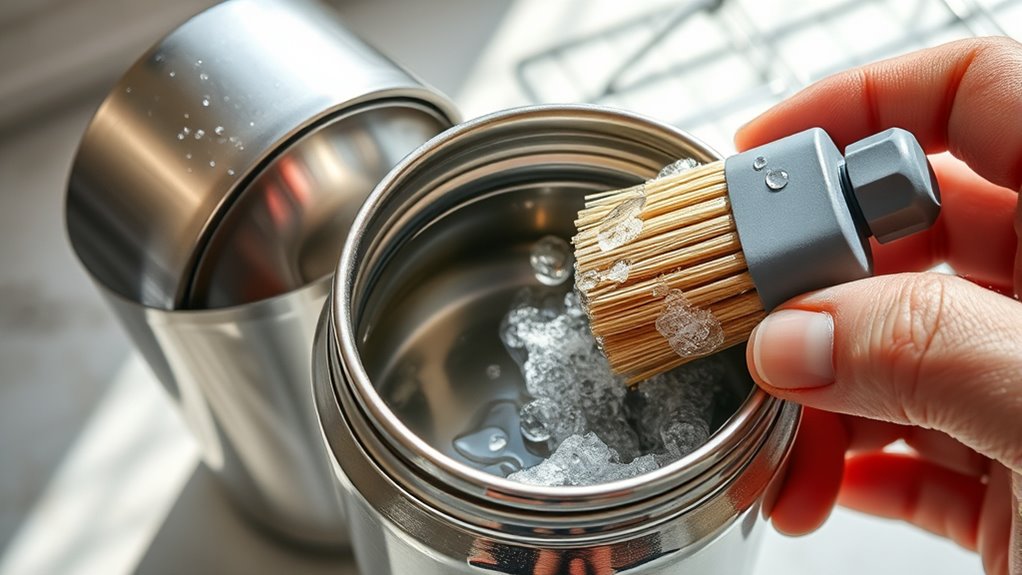
Keeping your reusable water bottle clean is essential to guarantee it stays hygienic and free of bacteria. The first step is understanding how to properly care for the bottle material you’re using. Different materials, like stainless steel, glass, or plastic, require specific cleaning methods to avoid damage and ensure thorough cleaning. For stainless steel bottles, use warm water and mild dish soap, avoiding abrasive scrubbers that could scratch the surface. Glass bottles can be cleaned similarly but should be handled gently to prevent breaking. Plastic bottles, on the other hand, might need more careful attention, especially if they develop cloudiness or stains. Always check the manufacturer’s recommendations for cleaning, as some plastics are dishwasher safe, while others aren’t. Proper maintenance, including regular cleaning, can also help prevent the buildup of harmful pollutants and odors, contributing to healthier hydration habits.
Odor removal techniques are also vital to keeping your bottle fresh. Over time, bottles can develop unpleasant smells from leftover residues or bacteria buildup. To eliminate odors, you can use a mixture of baking soda and water. Fill your bottle with warm water, add a teaspoon of baking soda, and let it sit overnight. Shake it gently in the morning and rinse thoroughly. Vinegar is another effective odor remover—fill the bottle with equal parts white vinegar and water, let it sit for a few hours, then rinse well. For stubborn smells, a combination of baking soda and vinegar can be used in sequence, ensuring all residues are broken down. Regularly cleaning your bottle after each use prevents odor buildup, but these techniques are especially useful when odors persist despite routine washing. Additionally, maintaining good ventilation of your bottle after cleaning can help dry it thoroughly and prevent mold growth.
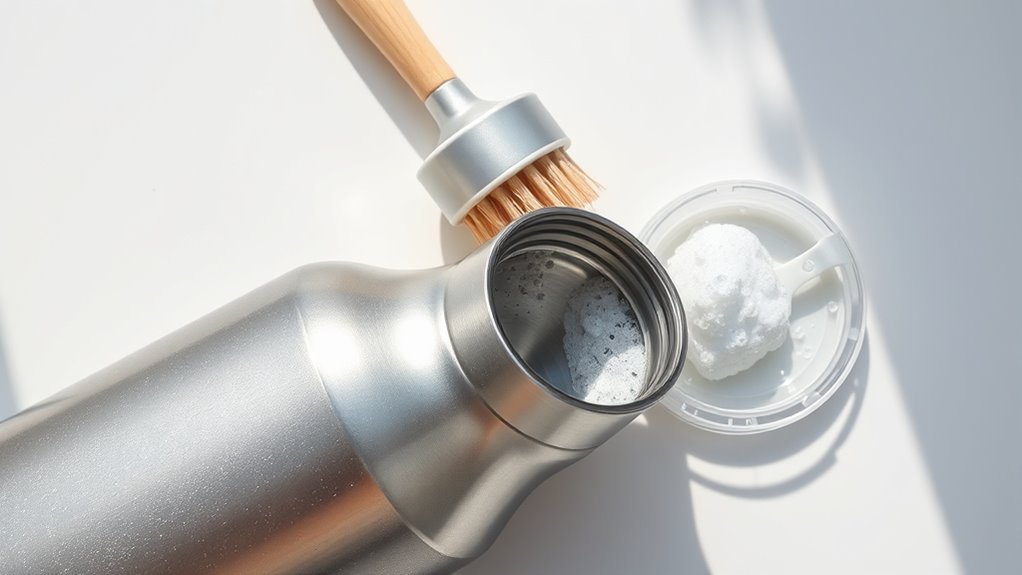
When cleaning your bottle, pay close attention to the lid and any seals or straws it may have. These parts often harbor mold and bacteria because they’re difficult to reach. Use a small brush or a toothbrush to scrub around the threads, seals, and any crevices. Soaking these parts in warm, soapy water or vinegar solution helps loosen grime and kill germs. Remember, some lids or straws are dishwasher safe—check the label before placing them in the dishwasher to avoid warping or damage. If they’re not dishwasher safe, wash them manually and let them air dry completely before reassembling.
stainless steel water bottle cleaning brush
As an affiliate, we earn on qualifying purchases.
As an affiliate, we earn on qualifying purchases.
Frequently Asked Questions
Can I Put My Reusable Bottle in the Dishwasher Regularly?
Yes, you can put your reusable bottle in the dishwasher regularly if it’s made of dishwasher-safe materials like stainless steel or certain plastics. Always check the manufacturer’s guidelines to confirm dishwasher safety. Removing lids and small parts for thorough cleaning is recommended. Using the top rack helps prevent warping or damage. This routine keeps your bottle hygienic and free from mold, bacteria, and odors, making it a convenient cleaning method.
How Do I Remove Stubborn Odors From Water Bottles?
Think of stubborn odors as uninvited guests that refuse to leave. To banish them, fill your bottle with a mixture of baking soda and warm water, then let it sit overnight. Rinse thoroughly to guarantee odor removal and stain elimination. For extra crispness, add a splash of vinegar or lemon juice. Regular cleaning with these natural solutions keeps your water bottle smelling clean and looking new, making every sip invigorating.
Are There Any Cleaning Methods for Narrow-Neck Bottles?
Yes, for narrow-neck bottles, you can use a bottle brush to reach all areas effectively. Start with a vinegar soak to eliminate odors and loosen grime; fill the bottle with equal parts vinegar and water, letting it sit for about 15 minutes. After soaking, scrub the inside with the bottle brush, focusing on hard-to-reach spots, then rinse thoroughly with warm water to guarantee a clean, odor-free bottle.
How Often Should I Replace My Reusable Water Bottle?
You should replace your reusable water bottle every 6 to 12 months, depending on its bottle lifespan and condition. Regularly inspect for cracks, deep stains, or lingering odors, which signal it’s time for a replacement. Following a consistent replacement schedule helps prevent bacterial buildup and ensures you’re drinking safely. Even if it looks fine, replacing it periodically maintains your hydration routine healthy and hygienic.
Is It Safe to Use Bleach for Cleaning Bottles and Lids?
A stitch in time saves nine, so ask yourself if cleaning with bleach is safe for your bottles and lids. While bleach can effectively disinfect, its safety depends on proper dilution and thorough rinsing. Bleach safety is essential—use only a small amount, and never leave residues. If you’re unsure, opt for safer alternatives like soap and hot water. Better safe than sorry!
Conclusion
Now that you know how to clean your reusable water bottles and lids properly, you’re unstoppable! Imagine never battling stubborn stains or funky odors again—your bottles will stay sparkling, crisp, and pure like a mountain spring. With just a little effort, you can turn your daily hydration routine into a invigorating, guilt-free experience that’s cleaner than ever. Say goodbye to germs and hello to confident, crystal-clear sips every time. You’ve got this!
Fall Picks
fall essentials
As an affiliate, we earn on qualifying purchases.