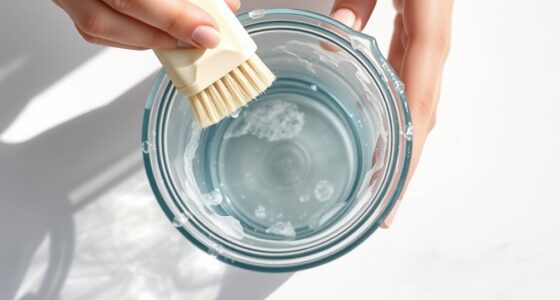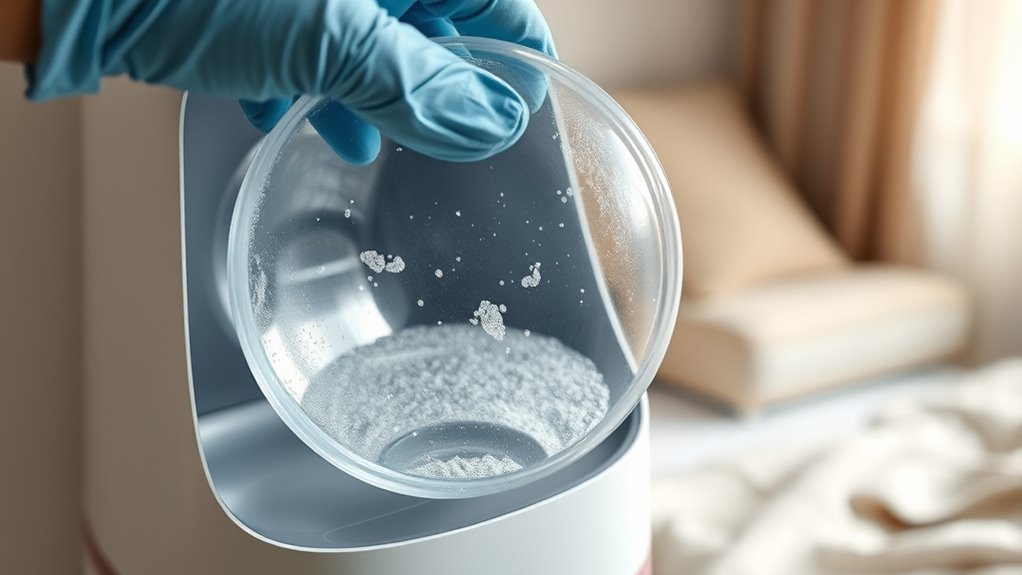

To clean your humidifier, first unplug it and empty the water tank. Disassemble all removable parts and wash them with mild soap and water. Use vinegar or a commercial descaler to dissolve mineral deposits inside the tank and on internal components. Rinse everything thoroughly to remove residue, then dry before reassembling. Regular maintenance prevents bacteria and mold buildup and keeps your device working efficiently. Keep going to discover more tips for a healthier, cleaner humidifier.
Key Takeaways
- Unplug the humidifier, disassemble all removable parts, and wash them with mild soap and water.
- Drain the water tank completely and clean it with vinegar or a descaler to remove mineral deposits.
- Use a soft brush or cloth to scrub inside the water tank and other components to eliminate buildup.
- Rinse all parts thoroughly to remove soap or cleaning agents, ensuring no residue remains.
- Dry all parts completely before reassembling and refilling with clean, preferably distilled, water.
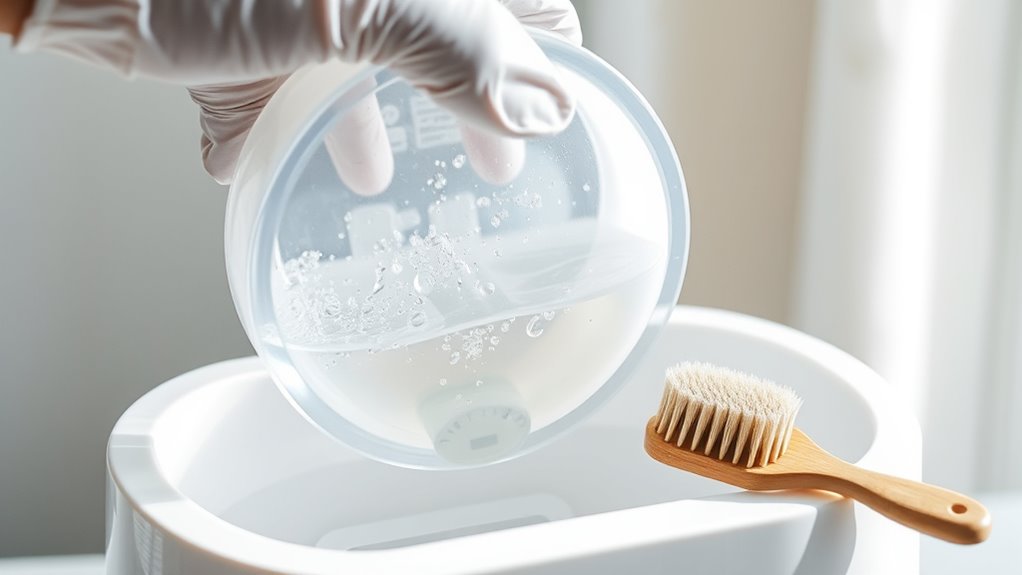
A humidifier can provide much-needed moisture to your home, but if you don’t clean it regularly, it can become a breeding ground for mold, bacteria, and mineral buildup. One of the most important aspects of maintaining a healthy humidifier is proper filter maintenance. The filter plays a crucial role in trapping impurities and ensuring the air you breathe remains clean. Over time, filters can become clogged with dust, mineral deposits, and microbial growth, which can compromise water quality and reduce the device’s effectiveness. You should check your filter frequently and replace or clean it according to the manufacturer’s instructions, typically every one to three months. Using high-quality, clean filters helps prevent the spread of bacteria and keeps water flowing smoothly through the system. If you notice a musty smell or decreased performance, it’s a sign you need to inspect and replace the filter promptly. Regular filter maintenance is also essential for providing protective styling benefits and ensuring optimal humidifier performance.
Water quality also directly impacts how often you need to clean your humidifier. Hard water, which contains high mineral content, promotes mineral buildup inside the device, creating white dust and reducing its lifespan. To combat this, consider using distilled or demineralized water, which contains fewer minerals and minimizes deposits. If tap water is your only option, regular cleaning becomes even more critical. Mineral deposits can harbor bacteria and mold, so you should drain and thoroughly clean your humidifier at least once a week. When cleaning, focus on removing mineral residues from the water tank and components, as these residues can serve as breeding grounds for harmful microbes. Using a mixture of vinegar and water, or a commercial descaler, can effectively dissolve mineral deposits and improve water quality inside the unit.
In addition to filter maintenance and water quality, it’s vital to keep the entire unit clean. Unplug the humidifier, disassemble it, and wash all parts with mild soap and water. Rinse thoroughly to remove any soap residue, which can also promote microbial growth. Regular maintenance not only prolongs the life of your humidifier but also ensures the air you breathe remains healthy. Remember, neglecting these steps can lead to dirty, contaminated mist being released into your home, which can aggravate allergies or respiratory issues. By staying on top of filter maintenance, choosing the right water, and cleaning the unit routinely, you’ll keep your humidifier functioning properly and your indoor air fresh, clean, and safe.
Frequently Asked Questions
How Often Should I Replace the Humidifier Filter?
You should replace your humidifier filter every 1 to 3 months, depending on usage and water quality. Regular filter replacement extends the humidifier’s lifespan and keeps it operating efficiently. Follow the filter replacement schedule recommended by your humidifier’s manufacturer, as neglecting this can lead to mold growth and reduced air quality. Keep an eye on signs like decreased mist output or unpleasant odors to know when it’s time for a new filter.
Can I Use Vinegar to Clean All Humidifier Types?
Coincidentally, vinegar cleaning is a versatile method for humidifier maintenance, but it’s not suitable for all types. You can safely use vinegar to clean plastic and metal humidifiers, as it helps dissolve mineral deposits and mold. However, avoid using vinegar on ultrasonic models with electronic components, since it might damage sensitive parts. Always check your humidifier’s manual before proceeding with vinegar cleaning to guarantee safe and effective maintenance.
Is It Safe to Leave Water in the Tank Overnight?
It’s not safe to leave water in the tank overnight because water evaporation can lead to bacterial growth and mold. Regular tank maintenance helps prevent buildup of germs, ensuring clean, humidified air. You should empty, rinse, and dry the tank thoroughly each day to avoid stagnation. Doing so minimizes health risks and keeps your humidifier functioning properly, providing safe, consistent moisture in your space.
What Are Signs My Humidifier Needs Professional Cleaning?
When things start to smell musty or visible mold growth and mineral buildup appear, it’s a clear sign your humidifier needs professional cleaning. If you notice slimy residue or persistent cloudy water, don’t disregard it—these issues can harbor bacteria and mold. Regular maintenance helps, but when problems persist despite cleaning, a professional service ensures your humidifier is thoroughly sanitized and safe to use again.
How Do I Prevent Mold Growth in My Humidifier?
To prevent mold growth in your humidifier, you should regularly perform humidifier maintenance, including daily emptying and drying the tank. Use distilled water to reduce mineral deposits that foster mold. Keep the tank and components clean by disinfecting weekly with vinegar or diluted bleach. Store the humidifier in a dry place when not in use. These steps help guarantee mold prevention and keep your device running efficiently.
Conclusion
Keeping your humidifier clean is essential for healthy air and smooth operation. Did you know that mold and bacteria can grow in moist environments, causing respiratory issues? Regular cleaning reduces this risk and extends your device’s lifespan. By following simple steps, you ensure the air you breathe stays fresh and safe. Don’t wait for a musty smell—clean your humidifier often and breathe easy, knowing you’re safeguarding your health and home.