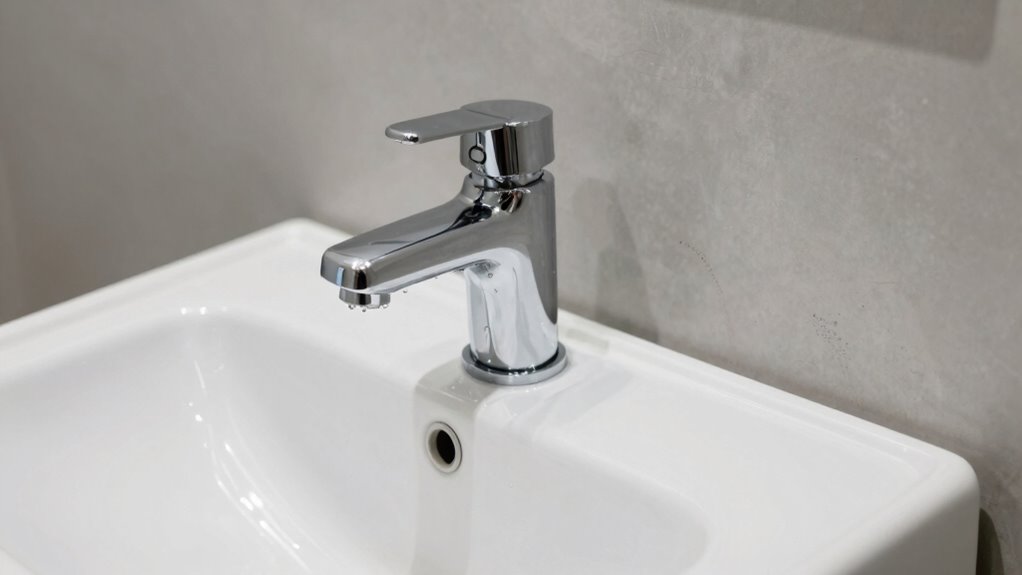

Touchless faucets and flush valves seem straightforward, but hidden cleaning headaches can cause trouble. Over time, sensors get dirty or clogged, leading to false activations or failures. Environmental factors like lighting and temperature changes further complicate maintenance. Plus, vandalism or tampering can damage fixtures, increasing repair costs. Regular cleaning, calibration, and security measures are essential to keep them functioning smoothly. Want to discover how you can minimize these issues and keep fixtures reliable? Keep going.
Key Takeaways
- Sensor calibration and regular cleaning prevent false activations caused by dirt, mineral deposits, or environmental factors.
- Vandal-proof features and security measures protect fixtures from tampering and damage, reducing maintenance headaches.
- Maintaining sensor lenses with non-abrasive cleaning solutions ensures reliable operation and minimizes downtime.
- Environmental factors like lighting and temperature fluctuations require periodic calibration adjustments to maintain sensor accuracy.
- Proactive maintenance and monitoring help address hidden cleaning challenges, ensuring hygiene standards and fixture longevity.
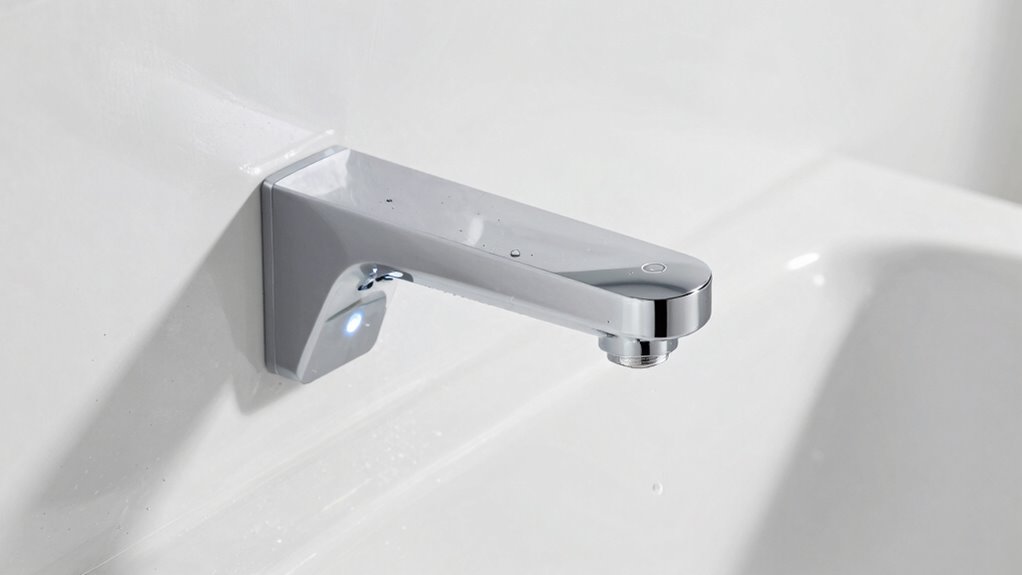
Touchless faucets and flush valves are transforming the way you interact with everyday fixtures by providing a more hygienic and convenient experience. With just a wave of your hand, you avoid touching surfaces that often harbor germs, making them a popular choice in public restrooms and healthcare settings. But as simple as they seem to operate, maintaining their seamless functionality involves some hidden challenges that can catch you off guard. Proper sensor calibration is essential to ensure these fixtures respond accurately; if the sensors aren’t correctly calibrated, they might activate unexpectedly or not at all, leading to frustration and increased maintenance. Regularly checking and adjusting sensor settings helps prevent false activations, ensuring users enjoy a smooth, touch-free experience without unnecessary interruptions.
Proper sensor calibration ensures touchless fixtures work smoothly and prevent frustrating false activations.
Another aspect that often goes unnoticed is vandalism prevention. Since touchless fixtures are frequently installed in public spaces, they become targets for vandalism or misuse. Tampering with the sensors or damaging the fixtures can render them inoperable, leading to costly repairs and replacement. To mitigate this, many manufacturers incorporate vandal-resistant features, but you still need to stay vigilant. Installing fixtures with security measures like tamper-proof covers or reinforced materials can help, but ongoing monitoring remains essential. When vandalism occurs, it not only increases maintenance costs but also compromises hygiene standards, so quick repairs and preventive measures are indispensable to keep these fixtures functioning properly.
The hidden cleaning headaches extend beyond vandalism and calibration. Sensors can become dirty or clogged over time, especially in environments with hard water or mineral deposits, which can interfere with their ability to detect motion properly. Regular cleaning of sensor lenses with non-abrasive solutions helps maintain their sensitivity. Additionally, environmental factors like lighting conditions and temperature fluctuations can impact sensor performance, requiring you to fine-tune calibration settings periodically. Neglecting these details leads to faulty operation, which frustrates users and increases maintenance efforts. Keeping sensor lenses clean and free from mineral buildup is a crucial part of ongoing maintenance.
In the end, your success with touchless fixtures depends on understanding that they’re more than just a hands-free convenience. Ensuring sensor calibration remains accurate, safeguarding against vandalism, and keeping sensors clean and properly adjusted form the backbone of their reliable operation. When these hidden cleaning headaches are addressed proactively, you’ll enjoy the full benefits of touchless technology—hygienic, efficient, and vandalism-resistant fixtures that serve your needs without constant trouble. Staying ahead of these issues means fewer repairs, happier users, and a smoother experience overall.
touchless faucet sensor calibration kit
As an affiliate, we earn on qualifying purchases.
As an affiliate, we earn on qualifying purchases.
Frequently Asked Questions
How Often Should Touchless Faucet Sensors Be Cleaned?
You should clean your touchless faucet sensors at least once a month to maintain proper sensor calibration and guarantee smooth operation. Regular cleaning prevents buildup of dirt and grime, which can interfere with sensor detection. If your faucet is used frequently or in a high-traffic area, consider increasing the cleaning frequency to every two weeks. Using a soft cloth and gentle cleaning solution helps preserve sensor functionality without causing damage.
Are Touchless Flush Valves Compatible With All Toilet Types?
Think of touchless flush valves as puzzle pieces; not every piece fits every puzzle. They’re compatible with most toilet bowl types, but you need to check for specific features like the flush valve installation. Some models work better with certain toilet designs, so always verify toilet bowl compatibility before installation. This guarantees a smooth setup, preventing future headaches and ensuring your touchless system works seamlessly with your existing toilet.
What Are the Common Electrical Issues With Touchless Faucets?
You might face electrical issues with your touchless faucet, like sensor calibration problems that cause false activations or failure to turn on. Wiring problems are also common, leading to inconsistent operation or complete failure. To fix these issues, make certain the sensor is properly calibrated and check all wiring connections for looseness or damage. Regular maintenance helps prevent electrical glitches and keeps your faucet functioning smoothly.
Can Touchless Fixtures Be Easily Repaired or Replaced?
You can easily repair or replace touchless fixtures. Picture yourself opening the sleek sensor to access calibration settings or swapping out a faulty part like a worn sensor or valve. With basic tools and guidance, you’ll fine-tune sensor calibration or swap parts without hassle. Most issues stem from sensor misalignment or minor component wear, making repairs straightforward, so your fixture stays functional and efficient, saving you time and frustration.
Do Touchless Faucets Consume More Water Than Traditional Ones?
Touchless faucets generally don’t consume more water than traditional ones. They’re designed to reduce water consumption by turning off automatically when not in use, saving you money and resources. However, if the sensors need frequent maintenance or become faulty, they might accidentally stay on or turn off too soon, affecting water flow. Proper sensor maintenance ensures peak water efficiency and prevents unnecessary water usage.
Conclusion
While touchless faucets and flush valves seem like sleek, seamless guardians of hygiene, they often hide a tangled web of cleaning challenges beneath their polished surface. Think of them as mysterious castles with secret chambers—easy to admire but tricky to maintain. To keep your sanctuary sparkling and truly touchless, you’ll need to navigate these hidden labyrinths with care. Only then can you enjoy the true elegance of effortless cleanliness without getting lost in the shadows.