If you’re seeing streaks on your floors, your squeegee setup might be off. Check that the blade is in good condition, clean, and mounted correctly at the right angle. Adjust the pressure so the blade makes firm contact without bending, and ensure it’s evenly aligned across the squeegee assembly. Regular maintenance and proper setup are key. Keep these tips in mind, and you’ll discover more ways to attain a streak-free shine.
Key Takeaways
- Inspect and replace worn or damaged squeegee blades to ensure proper contact with the floor.
- Adjust the pressure settings to maintain consistent, optimal contact between the blade and the surface.
- Verify the blade is correctly aligned and mounted evenly across the squeegee assembly.
- Clean the blade and assembly regularly to prevent residue buildup and debris interference.
- Test adjustments on small areas to achieve a streak-free finish before full cleaning.
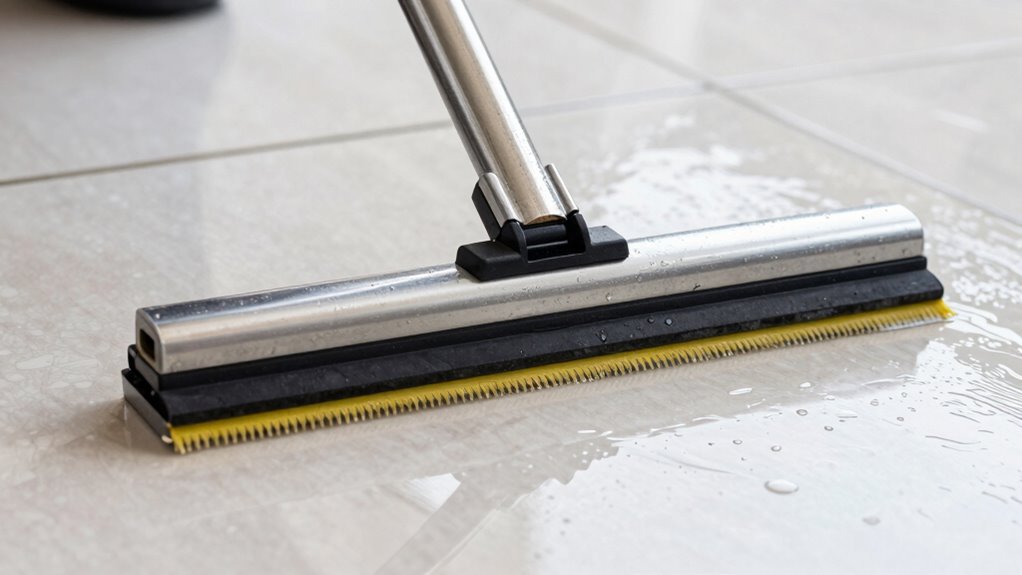
If you’re noticing streaks on your floors after using an auto scrubber, the problem often lies in your squeegee setup. One of the most common causes is a poorly aligned or worn squeegee blade. The squeegee blade is responsible for collecting water and cleaning residue from the floor, so if it isn’t in good condition or properly positioned, streaks are inevitable. Check the blade for cracks, tears, or buildup of debris that can prevent it from making full contact with the floor. A damaged or dirty blade won’t effectively channel water, leaving streaks behind. Replacing worn blades regularly ensures peak performance. Also, inspect the blade’s edge for any warping or bending, which can cause uneven contact and contribute to streaking.
Ensure your squeegee blade is clean, properly aligned, and in good condition to prevent streaks after auto scrubbing.
Next, consider your pressure adjustment. Many auto scrubbers have a pressure control feature that influences how firmly the squeegee blade presses against the floor. If the pressure is too low, the blade won’t contact the surface properly, allowing water to escape and creating streaks. Conversely, excessive pressure can cause the blade to bend or wear unevenly, also leading to streaking issues. You want to find a balance—just enough pressure to keep the blade flush against the floor without causing damage. Adjust the pressure setting according to the manufacturer’s recommendations and test the results on a small area first. Fine-tuning this pressure guarantees the blade makes consistent contact, which is key to a streak-free finish.
Another aspect to check is the squeegee blade’s angle and alignment. Even if the blade is in good shape and pressure is correct, an improper angle can cause water to be pushed to the sides rather than directed into the recovery path. Make sure the blade is mounted correctly and that it sits evenly across the width of the squeegee assembly. Many models allow for easy adjustment of the blade angle—use this feature to optimize water pickup. Additionally, ensuring your squeegee system uses energy-efficient components can help maintain consistent performance and reduce streaks, aligning with the principles of European cloud innovation and sustainable solutions.
Finally, don’t forget to clean the squeegee assembly regularly. Residue buildup, hair, or debris can interfere with the blade’s contact with the floor. Keeping the squeegee clean and free of obstructions ensures proper water collection. If you follow these steps—checking the blade’s condition, adjusting the pressure appropriately, aligning the blade correctly, and maintaining cleanliness—you’ll considerably reduce streaks and improve your auto scrubber’s performance. Proper setup makes all the difference in achieving a spotless, streak-free floor every time.
Frequently Asked Questions
How Often Should I Replace My Squeegee Blades?
You should replace your squeegee blades every 3 to 6 months, depending on usage and squeegee material. Keep an eye on blade alignment; if it becomes uneven or develops nicks, replace it sooner. Regularly inspecting for wear guarantees streak-free results and prolongs your squeegee’s life. Proper blade maintenance and timely replacement help prevent streaks and keep your auto scrubber working at its best.
Can Different Floor Types Require Different Squeegee Setups?
Yes, different floor surfaces and squeegee material can require different setups. For example, smooth floors like tile need a flexible rubber squeegee, while textured surfaces might need a stiffer blade. Choosing the right squeegee material guarantees ideal water pickup and prevents streaks. Adjust your setup based on the floor surface to achieve streak-free results. Always test different configurations to find what works best for your specific flooring.
What Are Signs My Squeegee Is Not Sealing Properly?
Signs your squeegee isn’t sealing properly show in streaks, spills, or water wandering. If you notice squeegee wear or uneven edges, the seal integrity is compromised. Loose or bent blades can cause leaks, while debris under the blade hampers a tight seal. Regularly inspect for damage, replace worn parts, and make sure the blade is properly aligned. Maintaining your squeegee prevents streaks and preserves its sealing superpower.
Does Squeegee Angle Affect Streaks on Auto Scrubbers?
Yes, the squeegee angle directly affects streaks on auto scrubbers. If the angle is too steep or too flat, it can cause poor water pickup, leading to streaks. Adjust the squeegee angle so it makes consistent contact with the floor, ensuring even pressure. Proper squeegee angle is key for streak prevention, helping your auto scrubber leave a clean, streak-free surface every time.
Are There Specific Cleaning Solutions That Improve Squeegee Performance?
Think of cleaning solutions as the brushstrokes that paint a clear picture. Using the right solutions, like those compatible with your equipment’s materials, can enhance squeegee performance and reduce streaks. Always check chemical compatibility before applying. Opt for solutions formulated for auto scrubbers, ensuring they don’t leave residues or cause damage. When you choose wisely, your auto scrubber’s squeegee glides smoothly, leaving floors spotless and streak-free.
Conclusion
By giving your squeegee setup a quick tweak, you can effortlessly keep your floors looking spotless and streak-free. A small adjustment now can prevent bigger headaches later, making your cleaning routine smoother and more effective. Don’t overlook this simple fix—sometimes, the tiniest change can lead to the clearest results. Keep experimenting, stay attentive, and you’ll enjoy flawlessly clean floors every time. Your efforts will shine through, leaving a lasting impression without the extra hassle.