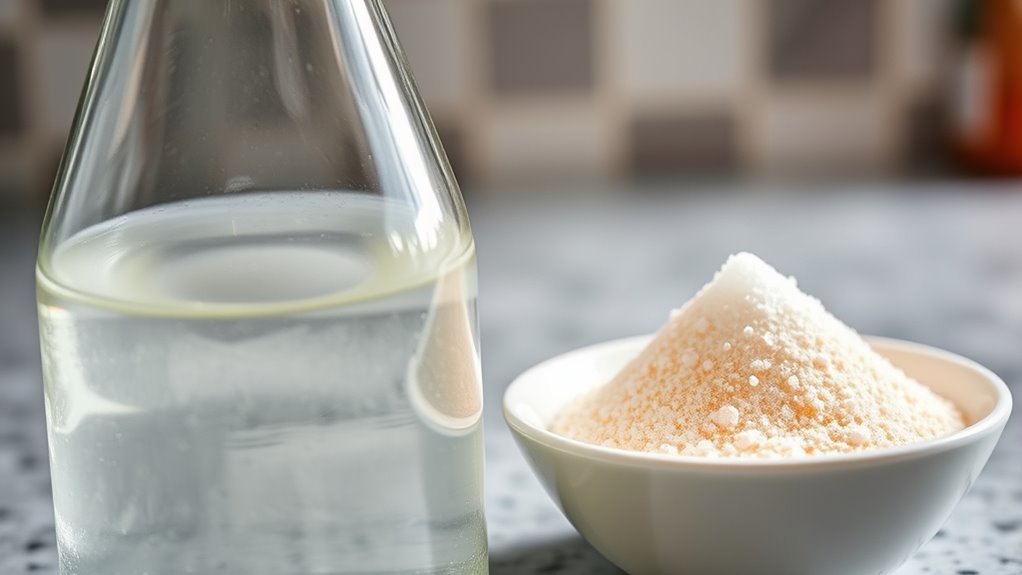

When deciding between vinegar and citric acid for cleaning, consider their strengths and surface compatibility. Use vinegar for general cleaning, disinfecting, and deodorizing most surfaces, but avoid natural stone and soft hardwoods to prevent damage. Choose citric acid for tackling stubborn mineral deposits, lime, and scale, especially on appliances and fixtures. To discover more about their best uses and tips for safe application, keep exploring these natural cleaners.
Open a free Amazon Business account
Business pricing, bulk buying and tax-exempt orders.
As an affiliate, we earn on qualifying purchases.
Key Takeaways
- Use vinegar for general disinfecting, deodorizing, and cleaning surfaces like counters and glass.
- Choose citric acid for descaling appliances, removing mineral deposits, and tackling tough hard water stains.
- Avoid vinegar on natural stone or delicate surfaces to prevent etching; citric acid is safer for most materials.
- Vinegar is effective for everyday cleaning but less potent on stubborn mineral buildup; citric acid handles scale better.
- Vinegar’s strong smell may be off-putting; citric acid generally leaves no odor after cleaning.

When it comes to natural acids used for cleaning, cooking, or preservation, vinegar and citric acid often come up as popular options. Both are versatile, effective, and eco-friendly options for tackling a variety of household tasks, but knowing when to use each can make a big difference in results. If you’re aiming for eco-friendly options or natural disinfectants, understanding their unique properties helps you choose the best one for the job.
Vinegar, usually white distilled or apple cider, is widely recognized as a natural disinfectant due to its acetic acid content. It’s excellent for cleaning surfaces, deodorizing spaces, and removing mineral deposits. Its acidic nature helps break down grime and bacteria without relying on harsh chemicals. Plus, vinegar is affordable, readily available, and biodegradable, making it a top choice for eco-conscious cleaning. It’s particularly effective for disinfecting kitchen counters, glass, and bathroom fixtures. However, vinegar’s strong smell can be off-putting, and it’s not suitable for all surfaces—like natural stone or certain hardwoods—since it can cause etching or damage.
Citric acid, on the other hand, is a natural compound found in citrus fruits. It’s often used in food preservation, but it’s also an excellent natural disinfectant and descaling agent. Because of its chelating properties, citric acid excels at breaking down mineral build-up, lime, and soap scum. It’s especially useful in cleaning appliances like coffee makers, kettles, and dishwashers. Citric acid is also biodegradable and non-toxic, fitting perfectly into eco-friendly options. When you want to tackle stubborn hard-water stains or scale buildup, citric acid’s potency makes it the better choice. Unlike vinegar, which has a strong smell, citric acid generally leaves no lingering odor, making it more pleasant for certain cleaning tasks.
Choosing between vinegar and citric acid depends on the specific task. For general disinfecting and everyday cleaning, vinegar is often sufficient. Its natural disinfectant qualities and broad application make it a go-to for many households. If you’re dealing with mineral deposits, hard water stains, or need a powerful descaler, citric acid is more effective. Both substances are safe and environmentally friendly options, but their different strengths mean you should select the one best suited to your needs. By understanding these differences, you can confidently incorporate natural acids into your cleaning routine, keeping your home safe, clean, and eco-friendly.
white distilled vinegar for cleaning
As an affiliate, we earn on qualifying purchases.
As an affiliate, we earn on qualifying purchases.
Frequently Asked Questions
Can Vinegar or Citric Acid Remove Rust Effectively?
Vinegar and citric acid can effectively remove rust because of their acidic pH levels. Vinegar, with a pH around 2.5, is a good eco-friendly solution for light rust, but citric acid, with a slightly lower pH, often works better on tougher stains. You can apply either directly or soak items in them. Both are safe, natural options that help you clean rust without harsh chemicals.
Are There Surfaces That Shouldn’t Be Cleaned With Either?
Did you know that about 20% of household surfaces get damaged by improper cleaning? You should avoid using vinegar or citric acid on delicate surfaces like marble, limestone, or painted finishes, as the acidity can cause etching or discoloration. Always test a small area first, and opt for gentler cleaners on sensitive surfaces to prevent damage and maintain their appearance.
How Long Should I Leave Each Solution on a Stain?
For effective stain removal, you should leave vinegar or citric acid on the stain for about 5 to 10 minutes. This application duration allows the solution to break down the stain without damaging the surface. Avoid letting it sit too long, especially on delicate materials. After the stain removal time, gently scrub or blot the area and rinse thoroughly to prevent residue buildup and guarantee complete cleaning.
Can These Acids Be Used in Food Preparation Cleaning?
Yes, you can use vinegar and citric acid for food preparation cleaning. They’re great for kitchen sanitization, helping to remove bacteria and odors. You might also use vinegar as a food flavoring or citric acid to brighten fruit and preserve freshness. Just make sure you rinse thoroughly afterward to avoid any residual acidity affecting your food’s taste. Always use food-grade solutions and follow proper dilution instructions.
Are There Any Health Risks From Prolonged Exposure?
Are health concerns from prolonged exposure to vinegar or citric acid significant? Generally, no, but it depends on how often and how much you’re exposed. Prolonged exposure to high concentrations might cause skin irritation or respiratory issues. To stay safe, use gloves and guarantee proper ventilation. If you have sensitive skin or respiratory problems, limit exposure and consult health guidelines. Stay cautious, but there’s usually little risk when used properly.
Conclusion
When choosing between vinegar and citric acid, remember each has its strengths. Use vinegar for everyday cleaning chores, much like your trusty old washboard, reliable but not always the fanciest. Citric acid is your go-to for tough stains and mineral buildup, like a modern-day Excalibur. So, pick wisely, and you’ll keep your home sparkling like a knight’s shining armor—without needing Merlin’s magic!
Fall yard work Picks
leaf blowers
As an affiliate, we earn on qualifying purchases.