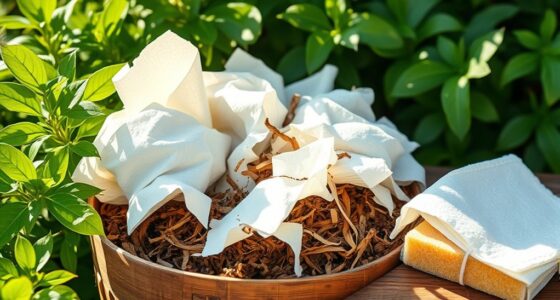
To manage organic cleaning waste at home, start by collecting kitchen scraps like vegetable peels and coffee grounds, and mix them with yard waste such as leaves and grass clippings. Keep your compost moist and turn it regularly to promote airflow and decomposition. Cover it to control odors and maintain the right moisture level. Properly managed compost reduces waste and creates rich soil, and you’ll discover more tips on maintaining an efficient compost system ahead.

Get cleaning gear delivered free — and shop member deals
- Fast, free delivery on millions of items
- Access to Prime Big Deal Days deals on October 6–7
- Prime Video, Amazon Music and more included
Key Takeaways
- Collect kitchen scraps like vegetable peels and coffee grounds separately for easy composting.
- Balance green (wet) and brown (dry) cleaning waste to promote effective decomposition.
- Cover compost to control moisture and odor, ensuring a pleasant, odor-neutral process.
- Regularly turn the compost to aerate and accelerate organic waste breakdown.
- Monitor moisture levels, keeping the compost moist but not soaked for optimal composting.

Have you ever wondered how to turn kitchen scraps and yard waste into nutrient-rich soil? Composting offers an eco-friendly way to do just that, providing benefits like soil enrichment and odor control. When you start composting, you transform everyday waste into a valuable resource that can boost your garden’s health. Instead of tossing food scraps and yard debris into the trash, you create a system that recycles organic material, reducing landfill waste and greenhouse gases. Properly managed compost not only enriches your soil but also helps maintain a healthy garden ecosystem.
Transform kitchen scraps and yard waste into nutrient-rich soil while reducing waste and boosting garden health.
To achieve effective soil enrichment, you need to understand what materials to add. Focus on a balanced mix of green materials—like vegetable scraps, coffee grounds, and grass clippings—and brown materials such as dried leaves, straw, and paper. This balance ensures your compost heats up enough to break down quickly and produces nutrient-dense soil. As organic matter decomposes, it releases indispensable nutrients that improve soil structure, increase water retention, and promote healthy plant growth. Over time, your compost will develop a rich, dark appearance, signaling that it’s ready to use.
Odor control is another essential aspect of compost management. When compost isn’t balanced properly or is too wet, it can produce unpleasant smells like ammonia or rotten eggs. To prevent this, aerate your compost regularly by turning or mixing it, which supplies oxygen needed for microbes to thrive. Covering your compost pile with a lid or a layer of brown materials helps absorb excess moisture and odors. Maintaining proper moisture levels—moist but not soaked—also keeps the composting process odor-free. If you notice foul smells, it’s a sign to add more browns or turn the pile to boost airflow. These simple steps help you manage compost effectively, ensuring it remains an odor-neutral process and a safe, beneficial way to handle organic waste.
Getting started with composting is straightforward once you understand these fundamentals. Keep your kitchen scraps and yard waste separate, layer greens and browns, and monitor moisture levels. Regular turning not only accelerates decomposition but also keeps odor at bay. Whether you’re an experienced gardener or just beginning, composting is a sustainable practice that turns your organic cleaning waste into a valuable resource, enriching your soil and maintaining a clean, odor-controlled compost system. With a little effort, you can turn everyday waste into a powerful tool for nourishing your garden and reducing your environmental footprint. Understanding the importance of proper compost management] helps you create a successful composting system that benefits your garden and the environment.
As an affiliate, we earn on qualifying purchases.
Frequently Asked Questions
Can I Compost Cleaning Products That Contain Chemicals?
You shouldn’t compost cleaning products that contain chemicals because the chemical residue can harm your compost and soil health. Instead, look for eco-friendly alternatives, like vinegar or baking soda, which break down safely and enrich your compost. By avoiding chemical-laden cleaners, you protect your compost’s integrity and promote a healthier environment, making your composting efforts more effective and sustainable.
How Often Should I Turn My Compost Pile?
You should turn your compost pile about once every 1-2 weeks to guarantee proper compost pile aeration. This turning frequency helps oxygen reach all the layers, speeding up decomposition and preventing odor buildup. If your pile heats up or becomes compacted, increase turning to maintain airflow. Regular turning keeps your compost healthy and active, transforming organic waste into rich, usable compost efficiently.
What Is the Ideal Moisture Level for Composting?
You want to maintain an ideal moisture level in your compost, which is essential for effective decomposition. Aim for a moisture balance similar to a damp sponge—moist but not dripping. Avoid compost dryness, as it slows down the process. If your pile feels too dry, add water or green materials. Keep checking regularly to make certain your compost stays consistently moist, promoting healthy microbial activity and faster composting.
Can I Compost Greasy or Oily Cleaning Waste?
Think of your compost like a delicate chef’s dish—grease disposal and oil contamination can spoil the mix. You shouldn’t compost greasy or oily cleaning waste because the fats and oils slow down decomposition and attract pests. Instead, dispose of them in the trash or follow local guidelines for safe disposal. Avoiding these contaminants keeps your compost healthy and your environment clean, just like a well-crafted recipe.
How Long Does It Take for Organic Cleaning Waste to Decompose?
The biodegradation timeline for organic cleaning waste varies based on factors like temperature, moisture, and waste type. Generally, composting duration ranges from a few months to six months, but greasy or oily waste can slow this process, extending the time needed for complete decomposition. To speed up the composting duration, guarantee proper aeration and balance of green and brown materials, giving your waste the best chance to biodegrade efficiently.
Conclusion
Think of composting as tending a tiny garden within your home’s waste. When you feed it the right scraps, it transforms trash into rich, nourishing soil—like a magic recipe that turns leftovers into gold. By managing your organic cleaning waste, you become the gardener of your own eco-friendly paradise. So, embrace this simple act, and watch your waste turn into something beautiful, just like a gardener nurturing a flourishing, vibrant garden.
Fall Picks
fall essentials
As an affiliate, we earn on qualifying purchases.