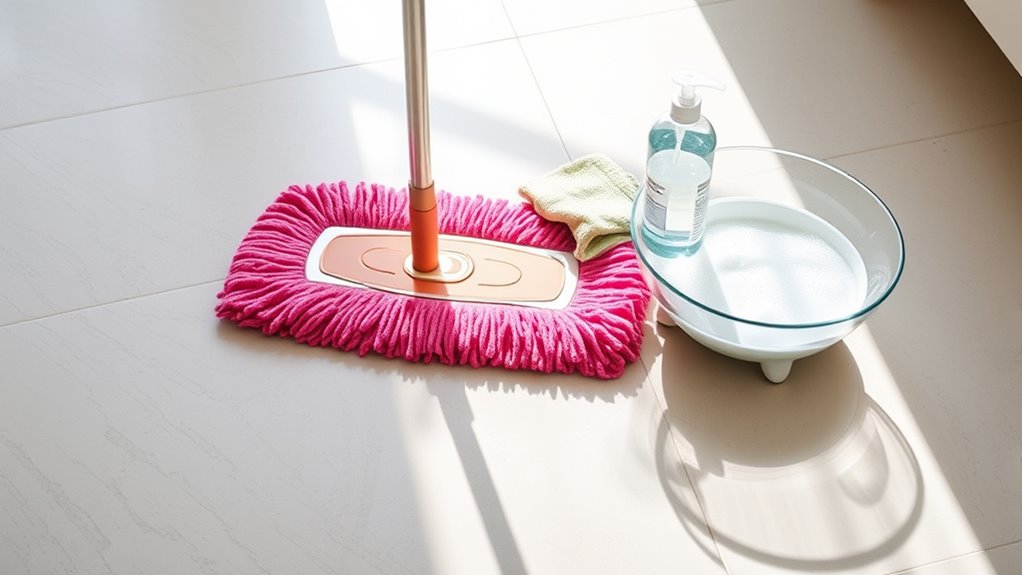

To set up your reusable mop system, designate a clean, dry storage area and make sure your mop covers are well-organized for easy access. After each use, rinse thoroughly and wash in hot water with detergent, adding disinfectant if needed. Allow covers to fully dry before storing to prevent bacteria growth. Consistently following these steps keeps your system hygienic and extends its lifespan—continue exploring to discover more tips for effective upkeep and sanitation.
Key Takeaways
- Designate a clean, dry storage area for mop covers to prevent mold and facilitate easy access.
- Rinse mop covers thoroughly after each use to remove dirt and debris before washing.
- Wash covers in hot water with detergent and disinfectants per manufacturer instructions for proper sanitization.
- Ensure covers are completely dry before storage, preferably through air drying, to prevent bacterial growth.
- Establish a regular cleaning schedule, including soaking in disinfectant solutions, to maintain hygiene and extend cover lifespan.
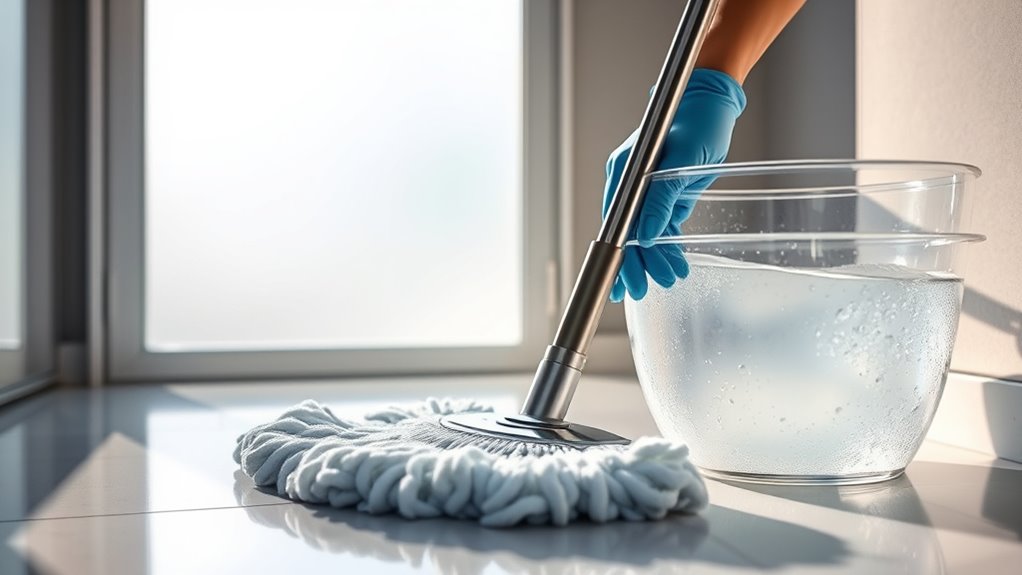
Reusable mop systems offer an eco-friendly and cost-effective alternative to traditional disposable mop pads. Instead of constantly buying single-use pads, you invest in a durable mop head or cloth that you can wash and reuse repeatedly. To maximize their benefits, it’s crucial to establish a consistent cleaning schedule. Regularly laundering your mop covers prevents dirt, bacteria, and grime from building up, ensuring each use delivers a spotless clean. Setting specific days for washing your mop covers—perhaps after every few uses—helps maintain a hygienic environment and extends the life of your equipment.
Reusable mop systems are eco-friendly, cost-effective, and help maintain hygiene with regular laundering.
Storage solutions play a essential role in keeping your reusable mop system ready for action while preventing cross-contamination. You should designate a clean, dry area for storing your mop heads or cloths. Using a well-ventilated container or hanging storage keeps your mops dry and prevents mold or mildew growth. Avoid storing dirty or damp mop covers in enclosed spaces that trap moisture, as this creates a breeding ground for bacteria. Proper storage also makes it easier to grab your mop quickly when needed, saving you time during busy cleaning routines.
When setting up your reusable mop system, consider how you’ll handle cleaning and sanitizing. After each use, rinse the mop thoroughly to remove debris and excess dirt. Then, wash the mop covers according to the manufacturer’s instructions—typically in hot water with a suitable detergent. Adding a disinfectant to the wash cycle can further eliminate germs, especially if you’re cleaning high-traffic areas or commercial spaces. Once washed, ensure your mop covers are completely dry before storing them away. Air drying in a well-ventilated space prevents moisture buildup, which could lead to bacterial growth.
In addition, understanding the importance of local laws regarding sanitation can help ensure your cleaning practices comply with health regulations and standards. Sanitizing between uses is equally important for maintaining a hygienic environment. You might choose to soak your mop covers periodically in a solution of disinfectant or running them through a hot water cycle with added disinfectant. Some systems include antimicrobial treatments or special cleaning agents designed to keep the fabric hygienic without damaging it. Remember, the key is consistency—regular sanitizing not only prolongs the lifespan of your mop covers but also protects the health of everyone in your space.

Extractors Upholstery Detailing Tool with Viewing Window,Auto detailing tools Hand Wand, Carpet Cleaning Extractor with Clear Head for Mytee/ShopVac & Most Portable Carpet Attachment,Vacuum Extractor
【 Upholstery Extractor Compatibility 】Upholstery cleaning wand for car detailing compatible with hand wand for portable extractor and...
As an affiliate, we earn on qualifying purchases.
Frequently Asked Questions
How Long Do Reusable Mop Systems Typically Last?
Reusable mop systems usually last about 6 to 12 months, depending on mop head durability and cleaning frequency. If you clean the mop regularly and follow proper sanitizing procedures, it can prolong its lifespan. Be mindful of signs like frayed fibers or persistent odors, which indicate it’s time to replace the mop head. Proper maintenance ensures your reusable system stays effective and lasts as long as possible.
Are Reusable Mop Systems Suitable for All Floor Types?
Did you know that 85% of cleaning professionals find reusable mop systems versatile across various floors? Reusable mop systems are generally suitable for most floor types, but you should consider floor compatibility and mop material considerations. For delicate surfaces like hardwood or laminate, choose softer mop heads, and for rougher floors, more durable materials work best. Always check the manufacturer’s recommendations to guarantee safe, effective cleaning.
What Are the Environmental Benefits of Reusable Mop Systems?
Reusable mop systems substantially boost your sustainability impact by reducing waste and minimizing the need for disposable cleaning supplies. When you choose reusable mops, you cut down on single-use products, leading to less landfill waste and a lower environmental footprint. This waste reduction not only benefits the planet but also supports eco-friendly practices in your cleaning routine, helping you contribute to a more sustainable future with every use.
Can Reusable Mop Systems Be Used With Disinfectants?
Yes, reusable mop systems can be used with disinfectants, but you need to check their disinfectant compatibility and chemical resistance first. Make sure the mop materials won’t degrade or lose effectiveness when exposed to specific disinfectants. Using compatible disinfectants maintains hygiene standards and extends the mop’s lifespan. Always follow manufacturer instructions for proper cleaning and disinfecting procedures to guarantee safety and peak performance.
How Often Should Reusable Mop Heads Be Replaced?
They say, “A stitch in time saves nine,” and it’s true for your mop heads. You should replace reusable mop heads every 10-15 uses or when you notice signs of wear and tear. Proper maintenance extends the mop head lifespan, but regular replacement guarantees effective cleaning and hygiene. Keep an eye on the condition, and don’t wait too long—timely replacement keeps your cleaning routines efficient and sanitary.

Shark CarpetXpert | Upright Carpet, Area Rug & Upholstery Cleaner | Carpet Shampooer with StainStriker Handheld Tough Stain Eliminator | Removes Tough Stains & Odors | 3 Cleaning Tools | White | EX201
WHOLE HOME CLEANING: Shark CarpetXpert with built-in StainStriker spot & stain remover and 3 tools. Upright carpet &...
As an affiliate, we earn on qualifying purchases.
Conclusion
Think of your reusable mop system as a loyal garden tool—it requires care and attention to flourish. When you set it up properly and sanitize it regularly, you’re nurturing a clean, healthy environment, much like tending a vibrant, thriving garden. With each thoughtful step, you ensure your mop remains a reliable partner in maintaining your space’s beauty and freshness. Keep it well-loved and cared for, and your cleaning efforts will always blossom into sparkling results.
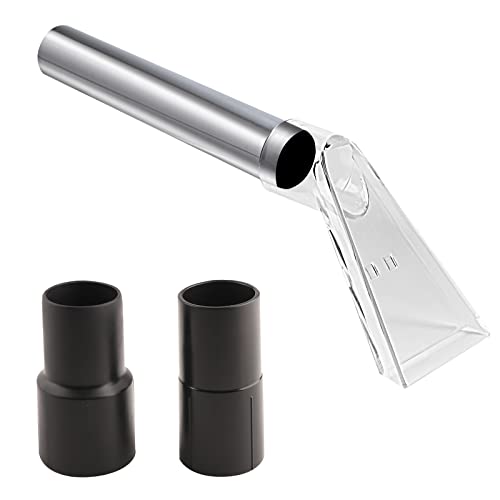
YSJWAER Carpet Vac Extractor Attachment-Tool - Cleaning Vacuum Clear Upholstery Car Detailing Turn Shop Vac into an Extractor
EXTRACTOR ATTACHMENT: This tool turns any wet/dry vacuum cleaner and shop vac into a powerful extractor. Has the...
As an affiliate, we earn on qualifying purchases.

Mytee S300-H Tempo Heated Spotter - 1 Gallon Unit - Heated Carpet Extractor - Interior Carpet Maintenance (S-300H Heated Tempo)
Performance – It features one of most powerful vacuum motors in its class, producing 85” of water lift...
As an affiliate, we earn on qualifying purchases.