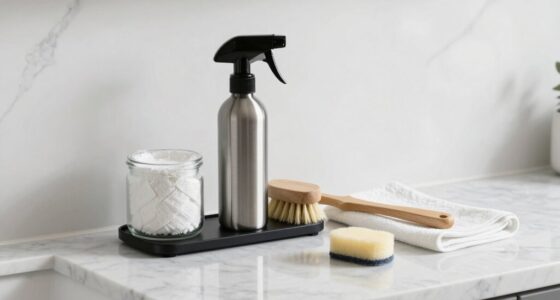
To reduce single-use waste in your weekly cleaning, choose products with minimal or biodegradable packaging, and opt for refills or concentrates. Use reusable cloths, microfiber towels, or sustainable brushes instead of disposables. Make your own cleaning solutions with vinegar, baking soda, and lemon to cut down on plastic bottles and harsh chemicals. Shop in bulk and bring reusable containers for refills. Small, mindful changes can make a big difference — discover more ways to eco-clean efficiently.
Key Takeaways
- Use reusable cleaning cloths, microfiber towels, and scrub brushes instead of disposable wipes and sponges.
- Purchase cleaning supplies in bulk and refill reusable containers to minimize packaging waste.
- Choose eco-friendly, biodegradable, or concentrated cleaning products with minimal packaging.
- Make homemade cleaners using vinegar, baking soda, and lemon to avoid single-use plastic bottles.
- Support brands with sustainable packaging practices and participate in return or recycling programs.

Many common cleaning habits generate unnecessary single-use waste, but you can make a difference by making small, intentional changes to your weekly routine. One of the easiest ways to start is by paying attention to the packaging of your cleaning products. Opt for eco friendly packaging whenever possible. Many brands now offer refills or concentrate formulas that reduce the need for multiple plastic bottles. By choosing products with minimal or biodegradable packaging, you decrease the amount of waste headed to landfills. Additionally, look for brands that prioritize sustainable packaging practices, such as using recycled materials or encouraging return programs. Embracing biodiversity and sustainable living principles can also inspire you to select eco-conscious products that support environmental health.
Switching to reusable cleaning tools is another impactful step. Instead of constantly tossing out disposable wipes, paper towels, or sponges, invest in durable, washable cloths, microfiber towels, or scrub brushes made from sustainable materials. These reusable options not only cut down on waste but also save you money in the long run. Keep a designated set of cleaning cloths that you can wash and reuse multiple times, reducing the need for single-use cleaning supplies. When shopping, prioritize products that are designed for durability and longevity, ensuring they can withstand regular use without falling apart quickly. Incorporating sustainable materials into your cleaning tools can further enhance your eco-friendly routine. Using environmentally friendly cleaning methods can also help reduce your overall waste footprint. You may also find that investing in low-waste packaging options encourages ongoing sustainable habits. Being mindful of the packaging choices of your cleaning supplies ensures that you’re actively reducing unnecessary waste from the outset.
You can also make your cleaning routine more eco-friendly by using homemade or natural cleaning solutions. Vinegar, baking soda, and lemon juice are excellent alternatives to many commercial cleaners, which often come in single-use plastic bottles. These ingredients are not only effective but also come in minimal packaging, especially if you buy them in bulk. By preparing your own cleaning solutions, you avoid unnecessary waste and reduce exposure to harsh chemicals.
Furthermore, you might consider bulk purchasing cleaning supplies to cut down on packaging waste. Many stores now offer bulk sections where you can fill your own containers with everything from dish soap to laundry detergent. Bring your reusable containers and refill them regularly, which minimizes packaging waste and encourages a more sustainable routine.
Incorporating these small changes—choosing eco friendly packaging, investing in reusable cleaning tools, and making your own cleaning solutions—can considerably cut down your weekly waste. Over time, these habits not only lessen your environmental impact but also foster a more mindful approach to household cleaning. Your efforts, no matter how small, contribute to a cleaner planet, and that’s worth the extra attention.
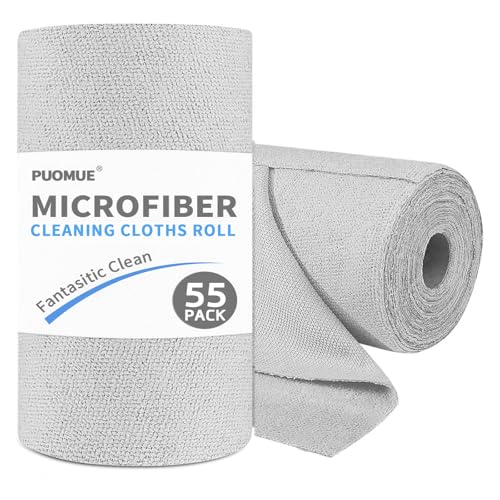
Puomue 55 Pack Microfiber Cleaning Cloth Roll, Tear Away Reusable Paper Towels, 11" X 9", Ultra Absorbent & Lint Free Microfiber Cloth for Cleaning Cars, Kitchen, Window, Home and Shop, Grey
- High Absorbency: Absorbs 6 times its weight in water
- Fast Drying: Quick drying for efficient cleaning
- Lint-Free & Soft: Made of 80% polyester, gentle on surfaces
As an affiliate, we earn on qualifying purchases.
As an affiliate, we earn on qualifying purchases.
Frequently Asked Questions
Are Reusable Cleaning Tools as Effective as Disposable Ones?
Reusable cleaning tools are just as effective as disposable alternatives when used properly. They often provide better cleaning effectiveness since they’re designed for durability and thoroughness. Plus, reusable options, like cloths or scrubbers, can be rinsed and reused multiple times, reducing waste. While disposable products might seem convenient, investing in quality reusable tools makes your cleaning more sustainable without compromising performance, helping you cut down on single-use waste.
How Can I Store Reusable Cleaning Supplies Hygienically?
You can store reusable cleaning supplies in a dedicated, well-ventilated container to guarantee storage hygiene and prevent contamination. Rinse tools thoroughly after each use and let them dry completely before storing. Consider using antimicrobial storage containers or disinfecting shelves to keep bacteria at bay. Regularly inspect and clean your storage area, turning it into a fortress against germs, so your supplies stay fresh and safe for every cleaning adventure.
What Are Eco-Friendly Alternatives to Common Cleaning Chemicals?
You can switch to eco-friendly cleaning by choosing products with biodegradable ingredients or natural cleaning agents. These alternatives often use plant-based formulas, avoiding harsh chemicals that harm the environment. Look for brands that clearly label their ingredients as biodegradable or natural. You might also make your own cleaners using vinegar, baking soda, and lemon. Not only are these options effective, but they also reduce single-use waste and promote a healthier planet.
How Often Should I Replace Reusable Cleaning Items?
You should replace reusable cleaning items every three to six months, depending on usage. While it might seem like a small detail, sticking to a cleaning schedule guarantees your tools stay effective and hygienic. Follow replacement tips such as checking for wear and tear or lingering odors. This approach keeps your cleaning routine eco-friendly and efficient, helping you reduce waste and maintain a healthier environment.
Can I Compost Used Cleaning Cloths and Sponges?
You can compost used cleaning cloths made from biodegradable fabrics if they’re free of synthetic dyes and chemicals. Check composting guidelines in your area, as some facilities accept natural fabrics, while others don’t. Sponges, especially synthetic ones, typically aren’t compostable and should be replaced regularly. To stay eco-friendly, opt for compostable sponges or cloths, and always verify they’re clean before composting.
Conclusion
By making small changes, you can turn your cleaning routine into a powerful act of environmental kindness. Imagine your home as a sanctuary not just for your family, but for the planet too. Every reusable cloth and eco-friendly product you choose is a step toward a cleaner Earth. Remember, change begins with you—like a pebble creating ripples, your efforts can inspire others to follow suit. Together, we can make a difference, one clean sweep at a time.