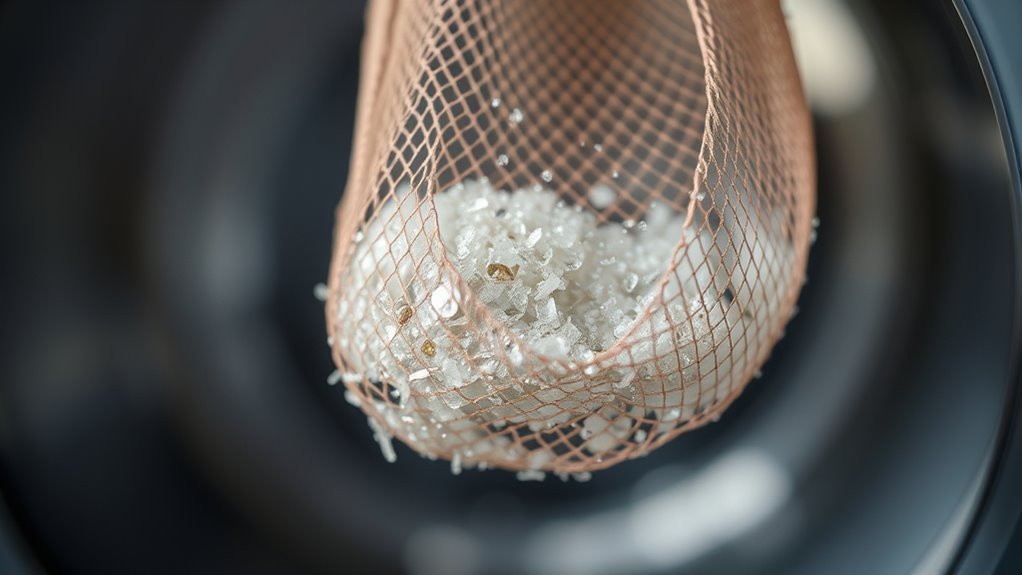

To capture microplastics during laundry, use specialized filters or microfiber catchers on your washing machine. Washing clothes less often, at lower temperatures, and choosing natural fibers like cotton or wool can also reduce fiber shedding. Installing effective filtration systems before wastewater reaches natural water bodies is vital, as standard filters often miss tiny fibers. Keep exploring to discover more practical steps and innovative solutions to minimize plastic pollution from your laundry routine.
Key Takeaways
- Install specialized microfiber filters or catchers on washing machines to trap microplastics before water is discharged.
- Choose natural fibers like cotton or wool, which shed fewer microplastics and are more biodegradable.
- Wash clothes at lower temperatures and gentler cycles to reduce fiber shedding during laundry.
- Reduce reliance on synthetic clothing to decrease the overall release of microplastics into wastewater.
- Advocate for and support development of advanced wastewater filtration systems designed to capture microscopic fibers.
Every time you do laundry, tiny microplastics are released from synthetic fabrics and wash down the drain, often unnoticed. These microplastics originate from clothing fiber shedding, where fibers break free from your garments during washing. Over time, this shedding can contribute markedly to environmental pollution, as these tiny particles are too small to be filtered out by standard wastewater treatment systems. Understanding this process is essential if you want to reduce your impact on the environment.
Every laundry session releases microplastics from synthetic fabrics into wastewater, contributing to environmental pollution.
Clothing fiber shedding happens whenever you wash your clothes, especially those made from polyester, nylon, or acrylic. As your clothes tumble in the washing machine, fibers loosen and detach, forming microplastics that hitch a ride with the wastewater. Many people aren’t aware that a single load of laundry can release hundreds of thousands of microplastic fibers. These particles are so small that they slip through the fabric of sewage systems and end up in rivers, lakes, and oceans, where they pose threats to marine life and potentially to human health.
Given this, wastewater filtration becomes an indispensable step in preventing microplastics from reaching the environment. Standard wastewater treatment plants are designed to handle organic waste and large debris but aren’t equipped specifically to trap microscopic fibers. As a result, a substantial portion of these fibers bypass filtration processes and contaminate water bodies. This leakage underscores the importance of upgrading wastewater filtration systems, or finding alternative solutions, to better capture clothing fibers shed during laundry.
You can take practical steps to minimize the release of microplastics during laundry. Using laundry filters or microfiber catchers installed on your washing machine can trap fibers before they escape with the wastewater. Additionally, washing clothes less frequently, using cold water, and opting for gentler cycles can reduce the amount of clothing fiber shedding. Choosing natural fibers like cotton or wool over synthetic ones can also make a difference because natural fibers tend to shed less and biodegrade more readily. Moreover, improving wastewater filtration technology is crucial for effectively capturing microplastics before they reach water bodies.
Frequently Asked Questions
Do All Laundry Types Release Microplastics Equally?
No, not all laundry types release microplastics equally. Fabrics with lower durability and synthetic fiber compositions, like polyester and nylon, shed more microplastics during washing. Natural fibers such as cotton and wool tend to release fewer particles because of their fiber structure. Your choice of fabric and laundry method impacts microplastic release, so opting for durable, natural materials and gentle wash cycles can help reduce pollution.
Are Certain Fabrics More Prone to Shedding Microplastics?
Yes, certain fabrics are more prone to shedding microplastics due to their synthetic material propensity. You’ll notice that polyester, nylon, and acrylic fabrics shed more fiber during washing, contributing to microplastic pollution. Natural fibers like cotton or wool shed less, but still release some microfibers. To reduce fabric fiber shedding, consider using filters or laundry bags designed to catch microplastics, protecting the environment and your washing machine.
How Effective Are Commercial Microplastic Filters?
Think of commercial microplastic filters like sturdy nets catching tiny fish; they’re quite effective but vary in filter durability. You’ll find some filters last through many washes, making them cost-effective, while others need frequent replacements. Studies show high-quality filters can trap over 90% of microplastics, saving your laundry water from pollution. Overall, investing in reliable filters helps protect the environment without breaking the bank.
Can Laundry Detergents Affect Microplastic Release?
Yes, laundry detergents can affect microplastic release. Some detergent formulations contain harsher chemicals that weaken fabrics, increasing microplastic shedding. Conversely, gentle or eco-friendly detergents with fewer chemicals might reduce fiber breakage. Fabric softeners can also influence release; they coat fibers, potentially reducing shedding but sometimes causing buildup that leads to additional fiber fragmentation. Choosing the right detergent and avoiding excessive softener use helps minimize microplastic pollution during laundry.
What Are the Environmental Impacts of Microplastics From Laundry?
Did you know that laundry microplastics contribute to over 35% of ocean contamination? These tiny particles don’t just persist; they undergo microplastic degradation, harming marine life and ecosystems. When released into waterways, they accumulate in the food chain, affecting animals and humans alike. Your laundry habits directly impact this issue, highlighting the importance of microplastic reduction to protect ocean health and prevent further environmental damage.
Conclusion
So, here you are, washing your clothes and unknowingly releasing tiny plastics into the environment. It’s ironic—your laundry, meant to clean, is quietly contributing to pollution. Now, every time you toss in a garment, you’re part of the problem. But the good news? Small changes can make a big difference. Next time, consider using filters or eco-friendly options. After all, it’s your laundry—why not make it a step toward saving the planet?