Baking soda is a safe, natural abrasive that helps you clean various surfaces without scratching. Its mildly alkaline pH (around 9) breaks down acids and greasy residues, making it effective for tackling stains, grime, and odors. It’s eco-friendly and gentle enough for use around kids and pets. Understanding how its pH works can improve your cleaning routine—stay with us to explore more about its science and applications.
Key Takeaways
- Baking soda’s mild alkalinity (pH ~9) helps break down acids and greasy residues safely.
- Its gentle abrasive properties enable effective cleaning without scratching delicate surfaces.
- Baking soda neutralizes odors by balancing pH, making it a safe, natural deodorizer.
- It is eco-friendly, biodegradable, and safe for use around children and pets.
- Suitable for cleaning various surfaces like stainless steel, ceramic, and glass with minimal risk of damage.
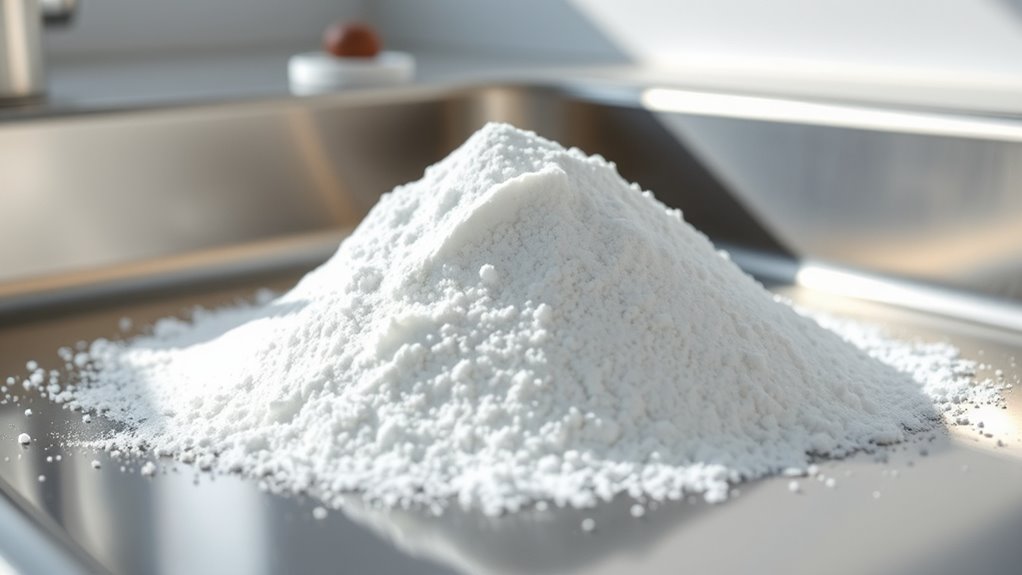
Baking soda is a versatile household staple that everyone should know how to use effectively. Its ability to serve as a gentle abrasive makes it an excellent choice for cleaning tasks around your home. One of the reasons baking soda works so well is because of its pH level, which is around 9. This slightly alkaline nature allows it to break down acids and neutralize odors efficiently. By understanding pH level analysis, you can better appreciate how baking soda interacts with different surfaces and stains, ensuring you use it safely and effectively. Whether you’re tackling greasy kitchen counters, stubborn stains, or bathroom grime, baking soda’s pH balance helps lift dirt without damaging delicate surfaces. Plus, because it’s eco-friendly cleaning, it’s a responsible choice that minimizes chemical use in your home. You won’t need harsh chemicals that can harm the environment or your health; baking soda is a natural, biodegradable option that gets the job done.
To maximize its cleaning power, it helps to understand the pH level analysis of baking soda. Knowing that it’s mildly alkaline allows you to target specific cleaning challenges. For example, when cleaning a greasy stovetop, the alkaline nature of baking soda helps to break down oils and fats more effectively than neutral cleaners. It also works wonders on removing odors from carpets, upholstery, or your refrigerator, as it neutralizes acidic smells rather than merely masking them. When mixed with water, baking soda creates a mild abrasive paste that can scrub away grime without scratching surfaces. This makes it ideal for surfaces like stainless steel, ceramic, and even glass. Its eco-friendly cleaning properties mean you can use it without worrying about polluting waterways or introducing toxic residues into your home. Understanding the acid-alkaline balance of baking soda also helps you choose the right cleaning products for different surfaces and stains, ensuring optimal results.
Another advantage of understanding pH level analysis is that baking soda can be safely used on a variety of surfaces and materials. Unlike harsh chemical cleaners, it’s gentle enough to use in areas where children or pets frequent. Plus, because it’s a natural product, it’s safe for the environment, making it a smart choice for sustainable cleaning routines. When you incorporate baking soda into your cleaning arsenal, you’re not only choosing an effective solution but also contributing to eco-friendly cleaning practices. Its ability to neutralize acids, lift dirt, and deodorize while being gentle on the planet makes baking soda a must-have. Armed with this knowledge about its pH level, you can confidently incorporate baking soda into your cleaning routine, knowing it’s a safe, effective, and eco-conscious solution for your household needs.
As an affiliate, we earn on qualifying purchases.
Frequently Asked Questions
Is Baking Soda Safe for Use on All Household Surfaces?
Baking soda is generally safe for most household surfaces, but you should check surface compatibility and material safety first. It’s gentle enough for countertops, sinks, and tubs, but avoid using it on delicate materials like marble or natural stone, as it can cause damage. Always test a small, hidden area before full application. When used correctly, baking soda is an effective and safe cleaning agent around your home.
Can Baking Soda Remove Tough Stains Effectively?
Think of baking soda as a tiny superhero in your cleaning arsenal. It can remove tough stains effectively by acting as a gentle abrasive and natural deodorizer. I once used it on a coffee spill that seemed impossible to lift, and it worked wonders. For stain removal and cleaning efficacy, baking soda is versatile and safe, making it a reliable choice for tackling stubborn stains across various household surfaces.
How Should Baking Soda Be Stored for Maximum Shelf Life?
You should store your baking soda in an airtight storage container to keep it fresh and prevent moisture from getting in. Keep it in a cool, dry place away from humidity, which can cause it to clump or spoil. Make sure to seal the container tightly after each use, and avoid exposing it to air or dampness. Proper storage guarantees your baking soda stays effective for cleaning and baking longer.
Are There Any Health Risks Associated With Inhaling Baking Soda Dust?
Inhaling baking soda dust can cause respiratory irritation, so it’s important to prioritize inhalation safety. You should avoid creating excessive dust and work in well-ventilated areas. If you accidentally inhale some, move to fresh air quickly and monitor for any symptoms like coughing or difficulty breathing. While generally safe for short-term exposure, prolonged inhalation may cause irritation, so always handle baking soda carefully to protect your respiratory health.
Can Baking Soda Be Used to Clean Electrical Appliances Safely?
You can use baking soda to clean electrical appliances safely if you follow proper electrical safety precautions. Make certain the appliance is unplugged and avoid getting moisture inside vents or openings. Use a damp cloth with baking soda to gently scrub surfaces, preventing appliance damage. Never apply baking soda directly to electrical parts, as moisture can cause short circuits. Always dry thoroughly before plugging the appliance back in to maintain safety and prevent damage.
Conclusion
Now that you know how versatile baking soda is, you can confidently tackle messes without harsh chemicals. Its gentle abrasiveness cleans effectively, yet it’s safe for you and the environment. Think of it as a humble hero—powerful enough to scrub away grime, yet mild enough to use daily. Embrace this simple, affordable solution, and transform your cleaning routine from intimidating to effortless. With baking soda, you’re ready to shine, naturally.