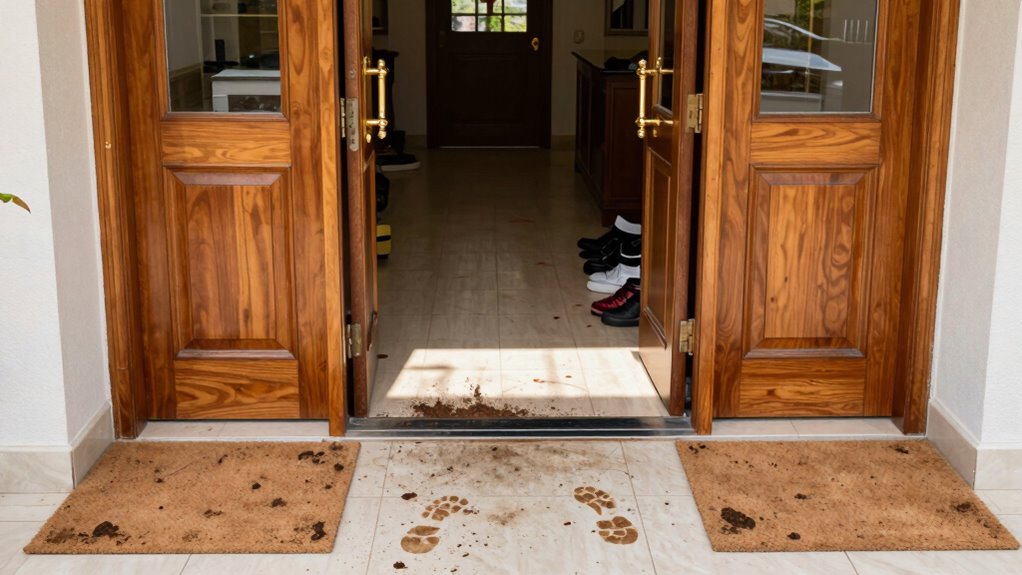
Your entryway sets the tone for your entire building’s cleanliness. A tidy entrance with effective mats, shoe policies, and regular upkeep traps dirt and prevents it from spreading inside. Higher foot traffic brings more dirt and germs, so maintaining the entryway is essential. Proper cleaning and hygiene practices at this point reduce dirt buildup elsewhere, making the whole space look cleaner and more inviting. Keep exploring how a well-maintained entryway can make a big difference.
Key Takeaways
- Entryways are the first line of defense, trapping dirt and contaminants before they spread inside.
- Proper maintenance of entry areas reduces the amount of dirt tracked into the building.
- Measures like mats and shoe policies limit initial dirt entry, controlling overall cleanliness.
- Regular cleaning and inspection of entryways prevent dirt accumulation that could spread further.
- A clean and well-maintained entrance sets a standard for overall building hygiene and cleanliness.

Your entryway is the first impression visitors get of your building, making it an essential area for cleanliness and organization. It’s the gateway that sets the tone for the entire space, and how clean it stays directly impacts how tidy the rest of the building appears. When foot traffic is high, dirt, debris, and moisture get tracked inside, making the entryway a prime zone for messes. If you don’t actively manage this area, dirt can quickly spread, leading to a more challenging cleaning process throughout the building.
Foot traffic plays a significant role in determining how quickly your entryway becomes dirty. The more people come and go, the more likely it is that dirt, mud, and other pollutants are carried in on their footwear. Without proper measures, these contaminants aren’t confined to the entry; they migrate further into hallways, offices, and common areas, compounding the cleaning effort needed later. To combat this, implementing entrance mats or rugs is essential—they trap dirt and moisture at the door, preventing it from dispersing further inside. Regularly cleaning and replacing these mats is equally important to keep their effectiveness intact.
Footwear hygiene becomes a key factor in maintaining overall building cleanliness. You want visitors and staff to be mindful of their shoes before entering, perhaps by offering shoe covers or encouraging the removal of shoes at the door. This simple step drastically reduces the amount of dirt and germs tracked inside. Additionally, providing designated areas for shoe storage helps keep the entryway organized and reduces clutter, which can harbor dirt and dust. Proper footwear hygiene practices are crucial in maintaining a cleaner environment.
An unkempt entryway not only looks bad but also signals neglect, prompting visitors to question the overall cleanliness of your building. On the other hand, a clean, well-maintained entryway demonstrates your commitment to hygiene and organization. Consistent sweeping, mopping, and disinfecting ensure that dirt doesn’t accumulate, especially in high-traffic zones. It’s also wise to establish a routine for inspecting and cleaning entryway surfaces, focusing on spots that tend to gather the most dirt. In addition, educating staff and visitors about foot traffic management can significantly reduce the amount of dirt tracked inside.
Furthermore, understanding the importance of building cleanliness can motivate ongoing efforts to keep this area pristine, as it directly influences perceptions of your entire space. Ultimately, your entryway is a frontline defense against dirt spreading throughout your building. By controlling foot traffic, encouraging footwear hygiene, and maintaining cleanliness, you create a cleaner environment that’s healthier and more inviting. When visitors see a tidy, well-kept entrance, they’re more likely to feel confident about the overall standards of your space. In the end, how you treat your entryway directly influences how dirty the rest of your building gets—and taking proactive steps makes all the difference.
entryway entrance mats
As an affiliate, we earn on qualifying purchases.
As an affiliate, we earn on qualifying purchases.
Frequently Asked Questions
How Often Should Entryways Be Professionally Cleaned?
You should have your entryways professionally cleaned at least once a month to control dirt tracking and shoe contamination. Regular deep cleaning removes accumulated dirt and prevents it from spreading further into the building. If you have high traffic or a busy entrance, consider scheduling professional cleanings more frequently, like bi-weekly. This helps maintain a cleaner environment, reduces maintenance efforts, and keeps your space healthier for everyone inside.
What Materials Best Resist Dirt in Entryway Design?
You should choose durable materials like porcelain tiles, natural stone, or rubber mats for your entryway, as they resist dirt and wear effectively. These materials offer high durability and are easy to clean, helping maintain a tidy appearance. Additionally, they can be selected for aesthetic appeal, ensuring your entryway looks inviting while staying practical. Prioritizing such materials helps reduce dirt transfer, keeping the rest of your building cleaner longer.
Do Entryway Size Impact Overall Building Cleanliness?
In the grand scheme of your building, entrance aesthetics and visitor flow are key, and size definitely impacts cleanliness. A larger entryway can manage more visitors, reducing crowding and dirt buildup, but it also requires more maintenance. Conversely, a smaller space might stay cleaner longer but can cause congestion. Properly designed, a well-sized entryway guarantees smooth visitor flow, keeping dirt at bay and maintaining overall cleanliness. Think of it as a well-placed portal in a fantasy saga.
How Do Entry Mats Influence Dirt Control?
Entry mats play a crucial role in dirt control by trapping debris before it enters your building. They enhance entrance aesthetics while reducing the amount of dirt tracked inside, keeping floors cleaner longer. Regular mat maintenance ensures they stay effective, preventing dirt buildup and preserving their appearance. By investing in quality mats and maintaining them properly, you create a welcoming, clean environment that minimizes the need for frequent cleaning and enhances overall building hygiene.
Can Changing Entryway Layouts Reduce Dirt Spread?
Yes, changing your entryway layout can reduce dirt spread. By encouraging shoe removal right at the entrance, you prevent dirt from tracking inside. Installing designated shoe storage keeps shoes organized and easy to access, making it more likely people will remove them. Adding mats and creating a clear pathway also helps trap dirt before it spreads further, keeping the rest of your building cleaner and reducing maintenance efforts.
shoe covers for entryway
As an affiliate, we earn on qualifying purchases.
As an affiliate, we earn on qualifying purchases.
Conclusion
Remember, your entryway is the gatekeeper to the rest of your building, much like a front porch guards a home. When you keep it tidy and well-maintained, it sets the tone for cleanliness throughout. Think of it as the first brushstroke on a canvas—if you start with a clean foundation, the entire picture stays brighter. So, take charge of your entryway; it’s the first step in keeping your whole space sparkling.
doorway shoe storage bench
As an affiliate, we earn on qualifying purchases.
As an affiliate, we earn on qualifying purchases.
industrial entryway cleaning supplies
As an affiliate, we earn on qualifying purchases.
As an affiliate, we earn on qualifying purchases.