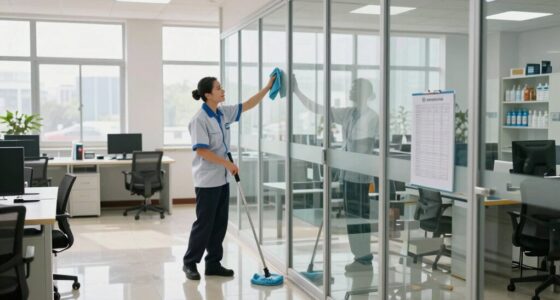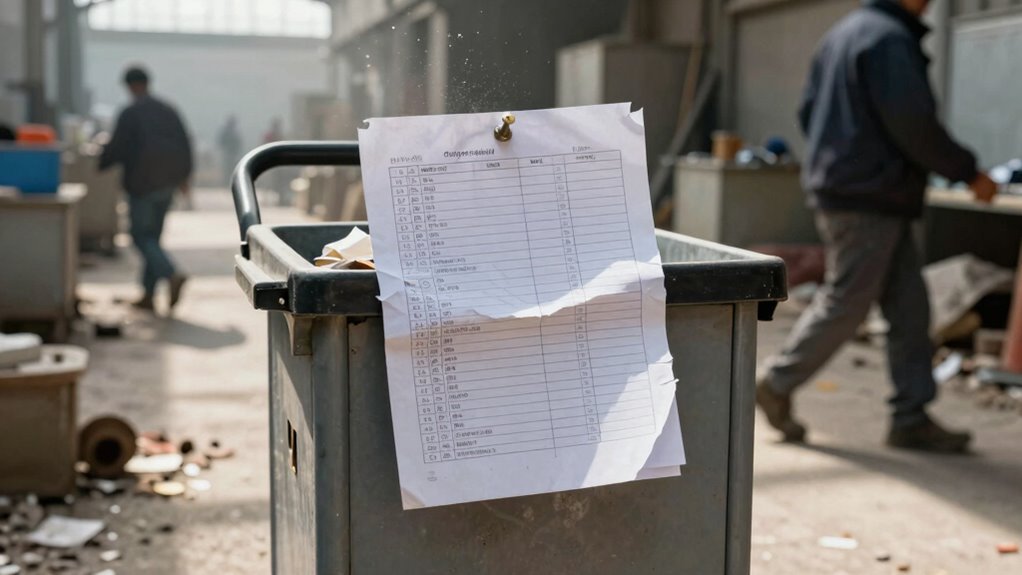

On busy sites, your commercial cleaning checklists can break down because they aren’t customized to fit the environment’s specific needs. High traffic, complex layouts, and time pressures make it easy to overlook important details or rush through tasks. Without proper training, staff rely on memory or shortcuts, causing inconsistencies. To keep your cleaning effective, you need tailored protocols and solid staff training—keep going to discover how to prevent these issues.
Key Takeaways
- High traffic and complex layouts overwhelm staff, making it difficult to follow detailed checklists consistently.
- Generic checklists lack site-specific customization, causing overlooked tasks under pressure.
- Insufficient staff training leads to reliance on memory, increasing errors during busy periods.
- Environmental challenges and time constraints reduce adherence to protocols.
- Lack of real-time updates and practical procedures causes checklists to become ineffective during high-demand situations.
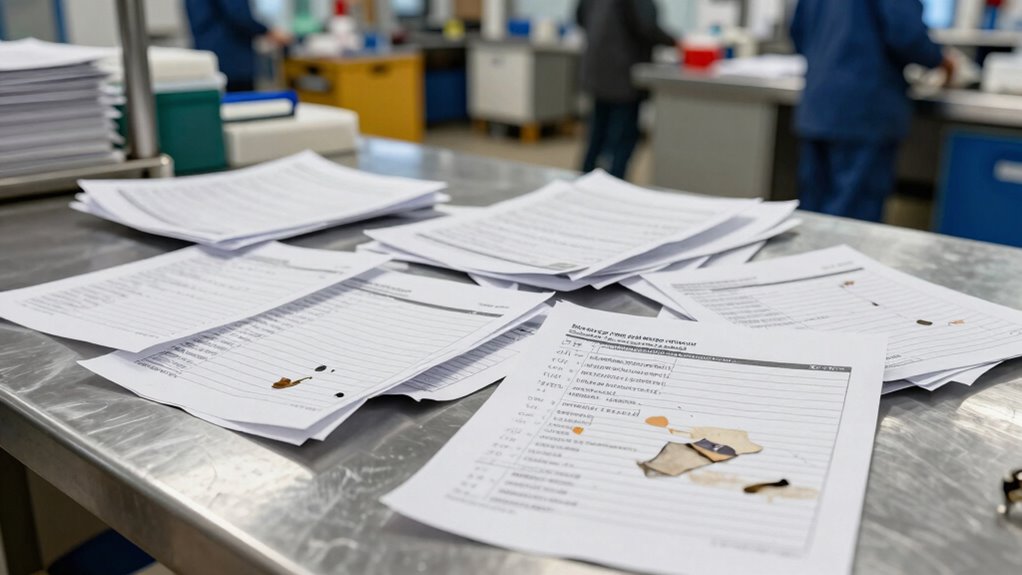
Checklist customization is equally *essential*. Every commercial space has its own unique requirements—high-traffic areas, sensitive equipment, specialized cleaning needs, and more. When checklists aren’t tailored to reflect these specific conditions, they can become too generic, leading staff to overlook important details or spend too much time on irrelevant tasks. On busy sites, this mismatch can cause delays, reduce cleaning quality, or result in overlooked hazards. Proper checklist customization ensures that cleaning protocols align with the actual environment, making the process smoother and more effective.
When both staff training and checklist customization aren’t prioritized, checklists tend to break down under pressure. Staff may rely on memory or shortcuts, especially when overwhelmed, resulting in inconsistent results. Managers might also struggle to identify where the breakdown is occurring if the checklist isn’t designed with the site’s specific needs in mind or if staff aren’t adequately trained to follow it precisely. This disconnect ultimately damages the reputation of the cleaning service and can lead to costly rework or client dissatisfaction. Additionally, environmental factors such as high foot traffic or complex layouts further complicate the cleaning process, emphasizing the need for adaptable and well-understood protocols. Recognizing and addressing these factors is crucial for developing effective cleaning strategies. Implementing standardized procedures can help mitigate some of these challenges and promote consistency across different sites.
Furthermore, understanding cleaning protocols and how they adapt to different environments can make a significant difference in maintaining standards. To prevent these issues, focus on *integral* cleaning staff training that emphasizes the importance of following checklists exactly. Regular refreshers and updates ensure that staff stay aligned with best practices. Simultaneously, customize checklists to suit the unique demands of each site, making them practical and easy to follow. When training and checklist design work hand-in-hand, even the busiest sites can enjoy consistent, high-quality cleaning results without breakdowns.
Commercial Cleaning Business Checklist: Daily and Weekly Cleaning Duty Checklists for Commercial and Janitorial Services
As an affiliate, we earn on qualifying purchases.
As an affiliate, we earn on qualifying purchases.
Frequently Asked Questions
How Can Checklists Be Customized for Different Industries?
You can customize checklists by incorporating industry-specific protocols, guaranteeing each task aligns with safety and hygiene standards unique to that industry. Tailored cleaning routines address the specific needs of different environments, like medical facilities or food service areas. By involving staff in developing these checklists, you guarantee practicality and thoroughness. This approach helps prevent breakdowns during busy times and keeps your cleaning process efficient and compliant with industry regulations.
What Technology Tools Assist in Checklist Management?
You can use technology tools like digital management platforms and mobile apps to help with checklist management. These tools enable digital integration, making it easy to update and share checklists in real-time. Mobile accessibility allows your team to access and complete checklists from anywhere, ensuring consistency even on busy sites. This seamless technology integration reduces errors, improves communication, and keeps your cleaning processes efficient and reliable under hectic conditions.
How Often Should Cleaning Checklists Be Reviewed and Updated?
You should review and update your cleaning checklists at least quarterly to guarantee checklist accuracy and adapt to changing site needs. Regular review frequency helps catch outdated tasks and incorporates new cleaning standards or safety protocols. By proactively maintaining your checklists, you prevent breakdowns on busy sites, ensuring cleaning processes remain efficient and thorough, even during peak times. Consistent updates keep your team aligned and your site consistently clean.
What Training Is Needed for Staff to Follow Checklists Effectively?
You need to train your staff like superhero cleaners with laser-sharp focus on checklist accuracy and accountability. Provide detailed, hands-on training sessions that emphasize the importance of following every step precisely, even during chaos. Regular refreshers keep skills sharp, ensuring your team understands how critical their role is in maintaining spotless standards. When staff are confident and accountable, checklists become a reliable tool, not a chaotic mess.
How to Handle Unexpected Cleaning Emergencies During Busy Times?
When unexpected cleaning emergencies happen during busy times, you should activate your emergency protocols immediately. Implement crisis management strategies to prioritize urgent tasks and allocate resources quickly. Stay calm, communicate clearly with your team, and guarantee safety first. Having a well-trained staff familiar with emergency procedures helps manage crises efficiently, preventing chaos and ensuring that both cleaning standards and safety protocols are maintained, even under pressure.
Conclusion
In busy sites, even the most detailed commercial cleaning checklists can break down like a fragile chain, risking overlooked tasks and missed spots. To keep everything running smoothly, stay flexible and adapt your checklist as needed. Think of it like a GPS—sometimes you need to reroute to reach your destination efficiently. By staying attentive and adjusting your approach, you’ll *guarantee* your cleaning stays thorough, even when the pace picks up.