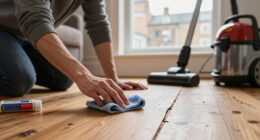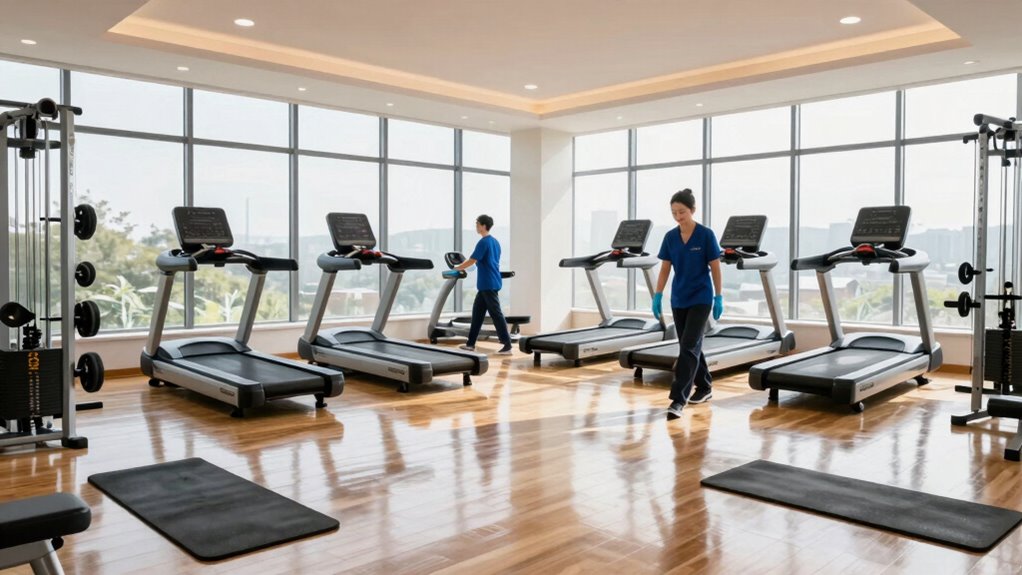

Gym cleaning differs from other facilities because you need to focus on high-touch surfaces, equipment sanitation, and areas with heavy physical activity. You must clean frequently and thoroughly to prevent germs from spreading, especially on equipment like treadmills and weights. Sweat, oils, and dirt build up quickly, requiring specialized cleaning products and protocols. Staying consistent and well-trained guarantees members feel safe and comfortable. If you keep exploring, you’ll discover more ways to optimize your gym’s hygiene standards.
Key Takeaways
- High-frequency cleaning is essential due to constant equipment use and member turnover.
- Equipment sanitation requires specialized disinfection protocols to eliminate bacteria and viruses effectively.
- Surfaces like mats, weights, and touchpoints demand thorough, frequent disinfection to prevent cross-contamination.
- Areas such as showers and lockers need intensive cleaning to manage sweat, oils, and bacteria buildup.
- Staff must be trained in rapid, effective cleaning techniques tailored to the high activity levels of gyms.
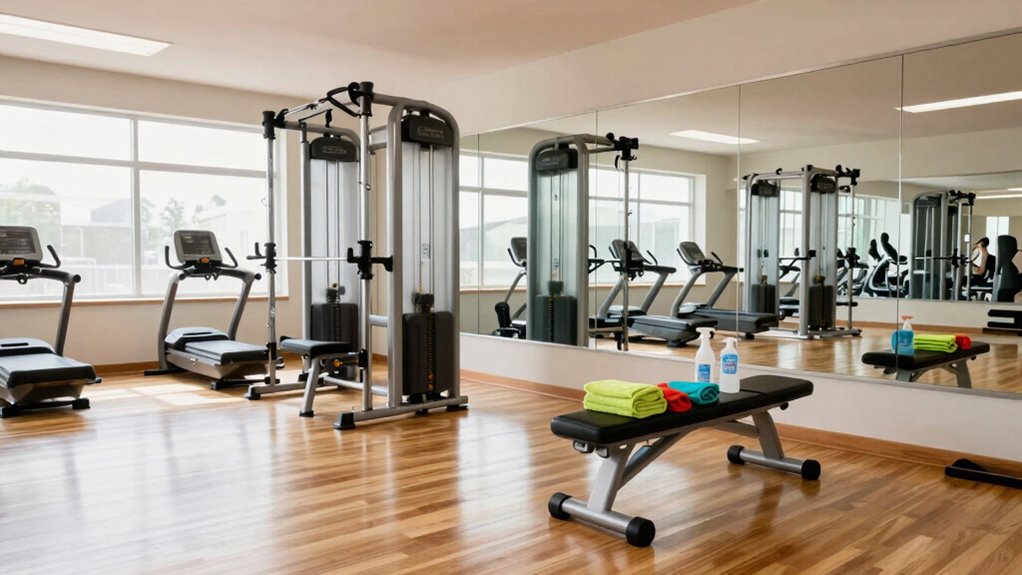
Have you ever wondered why gym cleaning routines vary so much from one facility to another? It’s because gyms operate under unique demands that set them apart from other types of establishments. Unlike offices or restaurants, gyms are spaces where people break a sweat, and that directly impacts how cleaning needs to be approached. The core difference lies in the emphasis on equipment sanitation and maintaining high hygiene standards. These factors aren’t just about cleanliness; they’re about preventing the spread of germs and ensuring members feel safe and comfortable during their workouts.
In gyms, equipment becomes the centerpiece of cleanliness protocols. Each treadmill, weight machine, or yoga mat is touched by dozens of hands daily. That means your cleaning routine must prioritize disinfecting high-touch surfaces thoroughly and frequently. It’s not enough to do a quick wipe; you need specialized cleaning agents that eliminate bacteria and viruses effectively. Proper equipment sanitation isn’t just about aesthetics—it’s essential for health and safety. Because gyms often have shared equipment, the risk of cross-contamination is higher than in other facilities, making rigorous hygiene standards *vital*. Additionally, understanding biodiversity and implementing sustainable cleaning practices can help reduce chemical waste and environmental impact in gym environments.
The nature of workout environments demands a different approach to cleaning. Sweat, oils, and dirt build up quickly, so routine cleaning has to be more intense and consistent. Floors, lockers, and shower areas require regular attention to prevent mold and bacteria growth. These areas aren’t just for appearance—they’re critical for hygiene. The standards for cleanliness are often more strict in gyms because members expect a sanitized space where they can focus on their fitness goals without worrying about germs. Furthermore, the high turnover of visitors and the physical intensity of workouts make it necessary to implement specialized cleaning protocols. Staff must be trained to identify areas that need extra attention and to use the correct cleaning products. This focus on hygiene standards extends beyond just cleanliness; it’s also about creating a healthy environment that encourages members to come back. Proper training and awareness of hygiene protocols are essential for maintaining these elevated standards.

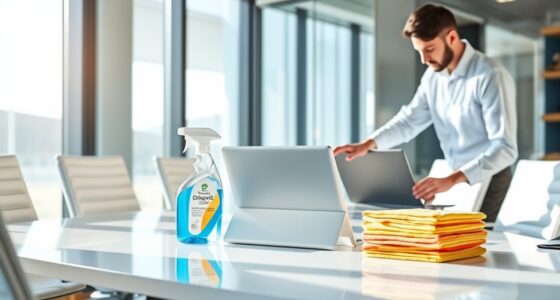
Clear Gear Disinfectant and Deodorizer For Sports Equipment, 32 Oz Bottle
- Made in USA and EPA-Registered: Safe, non-toxic disinfectant formula
- Versatile Healthcare Use: Disinfects and deodorizes medical equipment
- Odor Elimination: Lightly-scented, neutralizes bad odors
As an affiliate, we earn on qualifying purchases.
As an affiliate, we earn on qualifying purchases.
Frequently Asked Questions
How Often Should Gym Equipment Be Sanitized?
You should sanitize gym equipment after each use to prevent the spread of germs. Regular equipment dusting and wiping down high-touch surfaces keep things clean, especially during busy hours. Additionally, floor mopping helps maintain hygiene and safety. By staying consistent with sanitation routines, you guarantee a healthier environment for everyone. Frequent cleaning not only reduces germs but also makes your gym more inviting, encouraging members to keep coming back.
What Cleaning Products Are Safest for Gym Environments?
You should use eco-friendly disinfectants and non-toxic cleaning agents in your gym to guarantee safety for everyone. These products effectively sanitize surfaces without harmful chemicals, making them ideal for high-touch areas like equipment and mats. By choosing environmentally conscious cleaners, you protect your members’ health and the environment while maintaining a clean, welcoming space. Always verify that cleaning products are approved for gym use and follow manufacturer instructions for best results.
How Do Cleaning Protocols Prevent the Spread of Germs?
Think of cleaning protocols as your frontline warriors against invisible enemies. You apply disinfectants with precision, boosting their effectiveness to wipe out germs lurking on surfaces. Regular, thorough cleaning acts like a shield, preventing contamination from spreading across gym equipment and shared spaces. By maintaining strict protocols, you create a fortress of hygiene, ensuring each workout zone is safer and healthier, reducing the risk of germ transmission effectively.
Are There Special Cleaning Procedures for Locker Rooms?
Yes, locker rooms require special cleaning procedures. You should focus on thorough disinfection of high-touch surfaces like benches, lockers, and faucets. Proper locker room ventilation helps prevent mold and odor buildup, so guarantee good airflow. Additionally, enforce personal hygiene protocols, such as encouraging users to shower after workouts and wash hands frequently. Regular cleaning combined with these measures keeps locker rooms safe, clean, and hygienic for everyone.
How Is Gym Hygiene Maintained During Peak Hours?
During peak hours, you maintain gym hygiene by making sure staff regularly clean and disinfect high-touch equipment, promoting equipment maintenance to prevent germs. You also train staff to promptly respond to any hygiene issues, encouraging members to wipe down equipment after use. This active approach keeps the environment safe and clean, even during busy times. Proper staff training ensures everyone knows the protocols, making hygiene a top priority at all hours.
Conclusion
So, next time you’re sweating it out at the gym, remember—your sweat and germs get wiped away, but somehow, the germs of neglect often stick around longer than you’d think. It’s ironic, isn’t it? You work so hard to stay fit, yet the very place meant to boost your health might be the sneakiest source of germs. Keep an eye on cleanliness—because your muscles aren’t the only things that need toning.