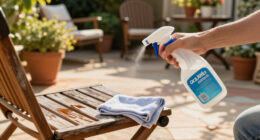
Air movement can make surfaces feel dry and cold, but it doesn’t always mean moisture has fully evaporated. Strong airflow may remove surface moisture but trap internal dampness inside porous materials or areas with high humidity. True drying requires not just air circulation but also low humidity and proper moisture escape. If you want to understand how to accurately gauge drying progress and improve your process, explore further to learn more about environmental factors and techniques.

Get cleaning gear delivered free with Prime
- Fast, free delivery on millions of items
- Prime Video, Amazon Music and more included
- Member-only deals all year
Key Takeaways
- Air movement can remove surface moisture but may leave internal moisture trapped inside porous materials.
- True drying depends on reducing humidity, not just increasing airflow.
- High humidity levels hinder evaporation, making surface feel dry while moisture remains inside.
- Cold surfaces with airflow indicate moisture inside, despite the surface appearing dry.
- Effective drying requires controlling environmental factors, including humidity and ventilation, beyond just air movement.
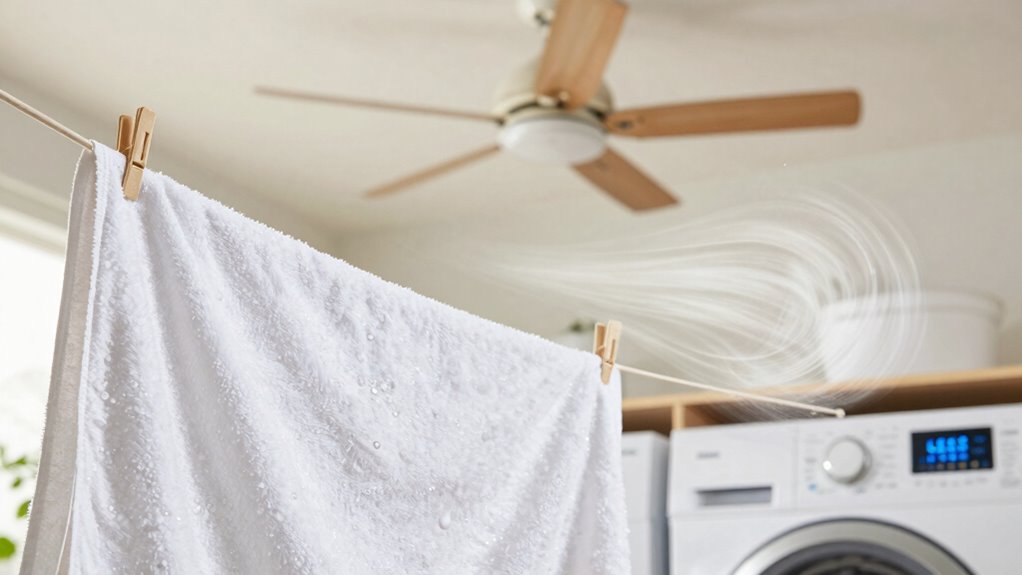
When it comes to drying wet surfaces, understanding the distinction between air movement and actual drying progress is essential. You might see a space with fans blowing air around and assume that it’s drying quickly, but that’s not always the case. Air movement can help, but it doesn’t guarantee that the surface is truly dry. To grasp what’s happening, you need to consider humidity levels and surface porosity, which directly influence how moisture evaporates.
Humid environments slow down drying because moisture from the surface can’t escape into the air efficiently. Even with strong air currents, if the surrounding humidity remains high, the moisture stays trapped in the material. This is why simply increasing air movement isn’t enough—if the humidity levels stay elevated, the surface may feel dry to the touch but still retain moisture beneath. You should monitor humidity levels with a hygrometer to determine whether the air is genuinely conducive to drying or if additional dehumidification is necessary.
High humidity traps moisture, making air movement alone insufficient; monitor with a hygrometer and dehumidify for effective drying.
Surface porosity also plays a critical role. Surfaces with high porosity, like porous wood or drywall, absorb and hold moisture more than smooth, non-porous materials like glass or metal. When you’re trying to dry such surfaces, air movement might remove surface moisture quickly, but moisture can seep deeper into the material’s pores. This means that superficial drying can be achieved without the surface being truly dry internally. Conversely, non-porous surfaces allow moisture to evaporate more evenly, making air movement more effective at drying the entire surface.
You need to recognize that air movement only accelerates the evaporation process when humidity levels are low enough to allow moisture to escape. If you notice that despite strong airflow, the surface remains damp or feels cold, it’s likely because the moisture is still trapped within the material’s pores or because the air is too humid. To improve drying, you should control the environment by reducing humidity levels and increasing air circulation, especially in porous materials. Using dehumidifiers, for instance, can significantly reduce humidity, making air movement more effective at drying.
Additionally, understanding the importance of environmental conditions can help you tailor your drying strategy more effectively, ensuring that all factors are optimized for complete moisture removal. In essence, true drying progress isn’t just about airflow; it’s about creating the right conditions for moisture to leave the surface entirely. By understanding how humidity levels, surface porosity, and environmental factors interact, you gain a clearer picture of what’s happening beneath the surface, enabling you to take more effective steps toward complete drying. Additionally, proper ventilation strategies can help maintain optimal conditions for moisture removal over time. Recognizing the importance of environmental control can make a significant difference in achieving thorough drying.
digital hygrometer for humidity monitoring
As an affiliate, we earn on qualifying purchases.
As an affiliate, we earn on qualifying purchases.
Frequently Asked Questions
How Can I Tell if My Materials Are Truly Dry?
You can tell if your materials are truly dry by checking humidity levels with a moisture meter or hygrometer, ensuring they reach the recommended range for your material. Look for consistent drying indicators like no dampness, a firm texture, and no residual moisture smell. At the same time, trust your senses and monitor environmental conditions, as low humidity levels and proper air circulation help confirm that the drying process is complete.
What Tools Are Best for Measuring Actual Drying Progress?
You should use a moisture meter or a pin-type hygrometer to measure actual drying progress. These tools help you monitor humidity levels and temperature control, which are critical for accurate readings. By tracking these factors regularly, you can determine if your materials are truly dry, beyond just observing air movement. Proper measurements guarantee you’re not prematurely considering your materials dry, saving time and preventing potential damage.
Does Increased Air Movement Always Speed up Drying?
Think of drying as a delicate dance; increased air movement often quickens the pace, but only if humidity control and airflow optimization are in harmony. Pushing air too hard can stall progress, trapping moisture like a stubborn shadow. To truly speed up drying, you need to master the balance—boost airflow without compromising humidity levels—allowing moisture to escape gracefully and your space to dry efficiently.
Can Air Movement Cause Damage to Delicate Materials?
Yes, air circulation can cause damage to delicate materials. When you increase air movement, it might accelerate drying, but for sensitive materials, it can also lead to surface abrasion or uneven drying. You need to take into account material sensitivity and adjust air circulation accordingly. Using gentle airflow and avoiding direct, high-speed fans helps protect delicate surfaces while still promoting effective drying. Always monitor materials closely during the process.
How Long Does Real Drying Typically Take Compared to Air Movement?
Real drying typically takes longer than just air movement alone, often several hours to days depending on humidity levels and material thickness. Air movement speeds up surface drying but doesn’t remove moisture deep within, so humidity levels play a essential role. To achieve complete dryness, you need consistent drying times that consider humidity, temperature, and material type, rather than relying solely on air movement, which can be misleading about actual moisture removal.
Conclusion
Understanding the difference between air movement and actual drying progress is essential. While good airflow speeds up evaporation, it doesn’t guarantee your item is truly dry, especially if underlying moisture remains. Did you know that over 60% of mold issues stem from improper drying techniques? By focusing on both air movement and thorough drying, you protect your belongings and health. Stay mindful, and don’t rush the process—true dryness takes patience and proper effort.
Halloween Picks
halloween
As an affiliate, we earn on qualifying purchases.