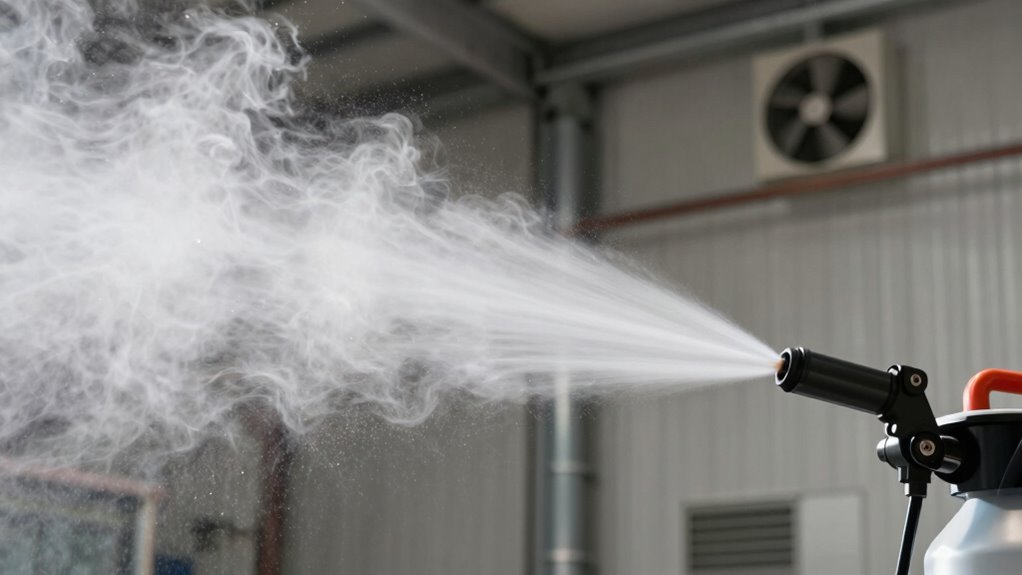
ULV foggers produce tiny droplets that help disinfect hard-to-reach areas, but controlling droplet size is essential for safety and effectiveness. Smaller droplets drift more easily, especially outdoors or in windy conditions, so proper calibration and environmental controls are critical. Ventilation helps disperse residual fog and minimize inhalation risks. By understanding how droplet size, drift, and ventilation interact, you’ll be better equipped to use ULV foggers safely and efficiently—discovering more about optimizing your fogging techniques.
Key Takeaways
- Proper droplet size in ULV foggers ensures effective coverage, penetration, and reduces drift risks.
- Calibration and maintenance are essential for consistent droplet size and optimal fogging performance.
- Controlling environmental factors like wind minimizes droplet drift and enhances safety during outdoor applications.
- Adequate ventilation after fogging disperses residual chemicals, reducing inhalation hazards.
- Using appropriate PPE and following safety guidelines protects operators from inhalation and contact hazards.
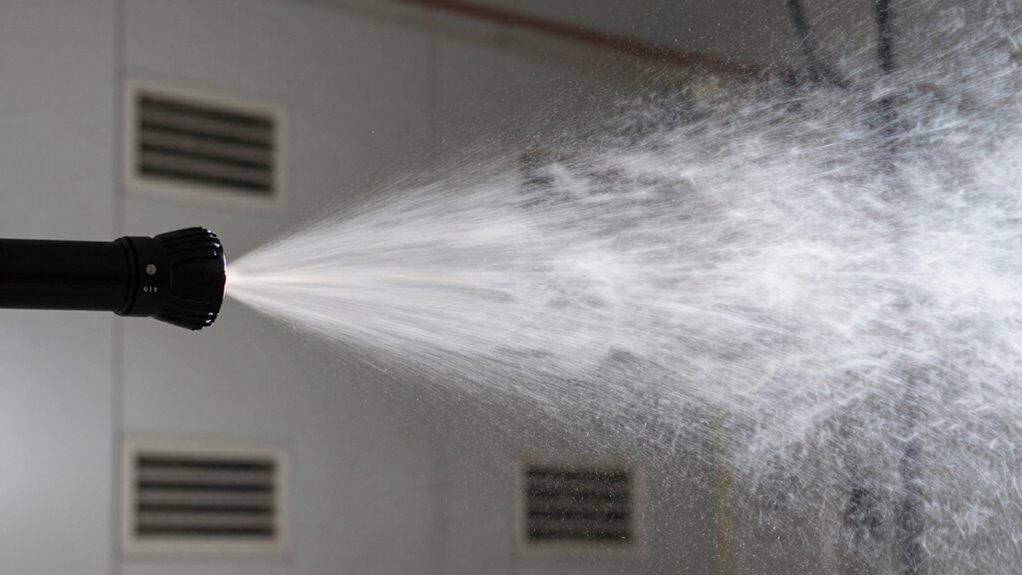
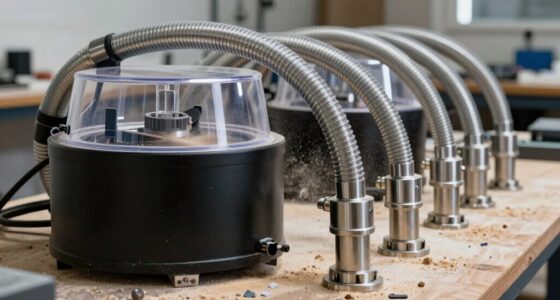
Ultra Low Volume (ULV) foggers are powerful tools used to disperse disinfectants, pesticides, and other liquids in the form of fine mist, making them highly effective for sanitation and pest control. When operating these devices, understanding the droplet size they produce is vital, as it directly impacts chemical efficacy. Smaller droplets can penetrate hard-to-reach areas and remain suspended longer, increasing coverage and effectiveness. However, producing a consistent droplet size requires careful calibration and proper handling. If the droplets are too large, they may settle quickly and reduce the fog’s reach. Conversely, excessively small droplets might drift away or escape containment, reducing the intended concentration on the target surface. To maximize chemical efficacy, you need to select the right settings based on the substance being applied and the environment. Proper calibration and maintenance are essential to ensure the fogger operates within the optimal parameters for droplet size and distribution.
Safety precautions become even more essential when working with ULV foggers because the fine mist can pose inhalation risks, especially with potent chemicals. Always wear appropriate personal protective equipment, including masks or respirators, gloves, and eye protection. Confirm proper ventilation during and after application to prevent inhalation of airborne particles. You should also familiarize yourself with the product’s safety data sheet, which provides specific handling, storage, and disposal instructions. When setting up, avoid operating the fogger near open flames or heat sources, as many disinfectants and pesticides are flammable. Keep children and pets away from the treated area until the fog has settled and the space has been adequately ventilated. Additionally, understanding how cloud dispersion impacts droplet drift can help optimize application safety and coverage. Another key safety measure involves understanding how the droplet size influences drift—the unintended movement of the chemical away from the target zone. Smaller droplets are more susceptible to drift, especially in outdoor environments or areas with air currents. To minimize this, you should control wind conditions and choose the right nozzle settings. Proper ventilation also helps to disperse residual fog safely and prevents accumulation of airborne chemicals indoors. Always follow manufacturer instructions for operation and maintenance to ensure the fogger functions correctly and safely over time.
Frequently Asked Questions
How Do ULV Foggers Compare to Traditional Sprayers?
ULV foggers offer better droplet precision than traditional sprayers, ensuring more targeted application. This leads to higher application efficiency, as you can cover areas quickly without over-spraying or missing spots. Unlike conventional sprayers, ULV foggers produce fine droplets that reach hard-to-access spaces, reducing waste. You’ll find they’re ideal for disinfecting, pest control, or sanitizing large areas efficiently, saving you time and resources while improving coverage accuracy.
What Maintenance Is Required for ULV Foggers?
Think of your ULV fogger as a trusted partner that needs regular care. You should perform storage hygiene by cleaning it thoroughly after each use to prevent buildup. Check and maintain the battery, ensuring it’s charged and free of corrosion. Regularly inspect nozzles and filters for clogs, and follow manufacturer guidelines for replacing worn parts. This routine keeps your fogger running smoothly, like a well-oiled machine.
Are ULV Foggers Suitable for Outdoor Use?
Yes, ULV foggers are suitable for outdoor application, allowing you to effectively treat larger areas like gardens, parks, or farms. Using them outdoors minimizes environmental impact because the droplets disperse quickly, reducing overspray and drift. Make certain you follow safety guidelines and consider wind conditions to prevent unintended spread. Proper ventilation and strategic placement help maximize efficiency while protecting nearby environments and people from unnecessary exposure.
Can ULV Foggers Be Used With Organic or Eco-Friendly Solutions?
Think of your ULV fogger as a magic wand for eco-conscious pest control—you can absolutely use it with organic compatibility and eco-friendly solutions. These solutions are gentle on the environment but tough on pests. Just guarantee your chosen products are compatible with your fogger’s materials. With the right eco-friendly solutions, you’ll create a safer, greener space, making pest control a responsible and effective ritual.
What Safety Precautions Should Operators Follow When Using ULV Foggers?
When using ULV foggers, you should always wear protective gear like gloves, masks, and goggles to prevent exposure to chemicals. Follow safety protocols such as operating in well-ventilated areas and avoiding direct contact with fog. Make sure to read the manufacturer’s instructions carefully, and keep others away during application. By taking these precautions, you guarantee safe and effective use of the fogger while minimizing health risks.
Conclusion
So, next time you think ULV foggers are just tiny sprayers, remember—they’re more like sneaky ninjas, dropping droplets that drift unnoticed and linger longer than you’d like. It’s ironic how such small devices can cause such big headaches with drift and ventilation. But hey, at least you now know the secrets behind their tiny droplets—who knew that size really does matter? Just don’t forget to breathe easy, or you might be inhaling more than you bargained for.