To keep your trash and recycling rooms clean, establish a routine that includes regular disposal, cleaning, and inspection. Line bins securely, replace bags promptly, and use disinfectants to eliminate germs. Handle hazardous waste with care, wearing PPE and storing it safely. Perform deep cleanings periodically by scrubbing floors and sanitizing containers. Document your tasks to guarantee consistency and compliance. Continuing with these steps will help you master a thorough cleaning process that promotes safety and hygiene.
Key Takeaways
- Establish a regular cleaning schedule detailing tasks, frequency, and responsible personnel for trash and recycling areas.
- Use appropriate PPE and proper disposal techniques when handling hazardous waste containers.
- Properly segregate recyclables and ensure trash bins are lined, emptied, and disinfected promptly.
- Conduct routine inspections to identify leaks, damage, or contamination, and perform deep cleaning as needed.
- Document cleaning activities and maintain records to ensure compliance and support routine maintenance.
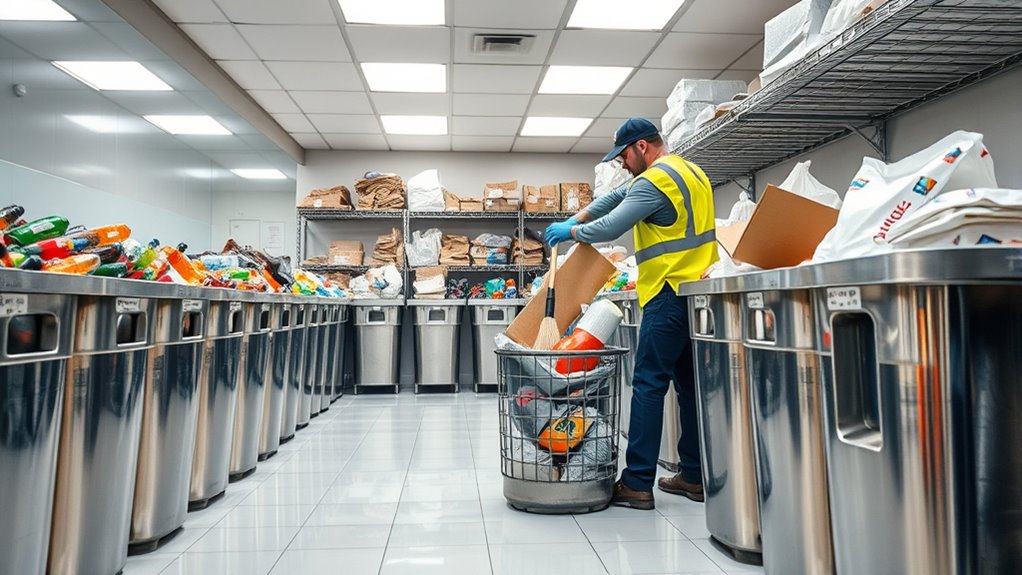
Cleaning the trash and recycling rooms regularly is vital to maintain a safe and hygienic environment. These areas often contain various waste types, including hazardous waste, which can pose health and safety risks if not managed properly. To guarantee safety, you need to establish a detailed cleaning schedule that addresses all aspects of waste management. This schedule should specify how often the rooms are cleaned, what cleaning tasks are involved, and who is responsible for each task. Regular cleaning prevents the buildup of dirt, bacteria, and unpleasant odors, making the space safer and more pleasant to work in. It also helps identify potential issues early, such as leaks or damage to containers, which could lead to spills or exposure to hazardous materials.
Regular cleaning of trash and recycling rooms ensures safety, hygiene, and early detection of hazards.
When developing your cleaning schedule, prioritize the disposal and cleaning of hazardous waste containers. Hazardous waste, such as chemicals, batteries, or medical waste, requires special handling and disposal procedures. Ensure these containers are emptied frequently, cleaned thoroughly, and stored in designated areas to prevent contamination or accidental exposure. Use appropriate personal protective equipment (PPE) during cleaning, such as gloves and masks, especially when dealing with hazardous waste. This not only protects your health but also complies with safety regulations. Regularly inspecting the containers for leaks, cracks, or corrosion is essential, as damaged containers can spill hazardous materials, creating serious safety concerns.
In addition to hazardous waste, general trash and recyclables should be emptied and cleaned on a consistent basis. Make sure that trash bins are lined with sturdy bags and that these bags are replaced promptly to prevent overflow. Recycling areas should be kept tidy, with sorted materials placed in the correct bins to promote recycling efforts and avoid cross-contamination. When cleaning, use suitable disinfectants to eliminate germs and bacteria, especially in areas prone to spills or leaks. Pay particular attention to high-touch surfaces like door handles, light switches, and trash can lids, which are common contact points and can harbor pathogens. Implementing proper waste segregation practices can also improve overall safety and recycling efficiency.
Maintaining a strict cleaning schedule also involves documenting completed tasks and scheduling regular deep cleans. Deep cleaning might include scrubbing floors, washing walls, and sanitizing containers to remove residues and prevent odors. Keeping detailed records ensures you stay on top of routine maintenance and helps with compliance during inspections. Overall, a well-structured cleaning routine minimizes health risks, guarantees compliance with safety standards, and maintains an environment where waste is managed efficiently and safely. Additionally, understanding proper waste management practices can further enhance the effectiveness of your cleaning procedures.
Frequently Asked Questions
How Often Should the Trash and Recycling Rooms Be Inspected?
You should inspect trash and recycling rooms at least twice a week to guarantee proper ventilation and pest control. Regular inspections help you identify any buildup of odors, blockages, or pest activity early. By staying vigilant, you prevent health hazards and maintain a clean environment. Consistent checks allow you to address issues quickly, ensuring the rooms remain hygienic and compliant with safety standards.
Who Is Responsible for Scheduling Cleaning Services?
You’re in charge of ensuring smooth operations, so you should coordinate cleaning schedules with your team. Staff responsibilities include setting up regular intervals for cleaning services, so the rooms stay tidy and hygienic. To keep everything running seamlessly, establish clear communication channels and assign specific tasks. By doing so, you make sure the cleaning gets done on time, creating a more pleasant environment for everyone involved.
What Safety Equipment Is Required During Cleaning?
You need to wear protective gear, including gloves, masks, and eye protection, to safeguard yourself during cleaning. Make certain proper ventilation by opening windows or using exhaust fans to reduce airborne contaminants. Follow ventilation requirements to maintain a safe environment. Always check for specific safety protocols before starting, and make sure all safety equipment is in good condition to prevent exposure to hazardous materials and ensure a safe cleaning process.
How Are Spillages or Hazardous Waste Handled?
When you encounter spillages or hazardous waste, you must immediately contain the spill using spill containment materials to prevent spreading. Then, follow proper hazardous waste disposal procedures, ensuring the waste is correctly labeled and placed in designated containers. Always wear the required safety equipment and notify your supervisor. Proper containment and disposal help protect you, others, and the environment from potential harm.
Are There Specific Guidelines for Recycling Material Separation?
Did you know that proper material separation can increase recycling efficiency by up to 30%? You should follow specific recycling guidelines to guarantee correct material separation. Always sort recyclables like plastics, metals, and paper into designated bins, avoiding contamination. Check local policies for any special instructions, and make sure to clean items before discarding. Following these guidelines helps reduce waste sent to landfills and supports environmental sustainability.
Conclusion
By following these cleaning procedures diligently, you keep the trash and recycling room safe, clean, and welcoming. Remember, a tidy space reflects your commitment to community well-being. Just as a single drop can create ripples, your efforts can inspire others to maintain cleanliness too. When you take responsibility, you turn ordinary tasks into acts of care—proving that even small actions can make a big difference, shaping a healthier environment for everyone.