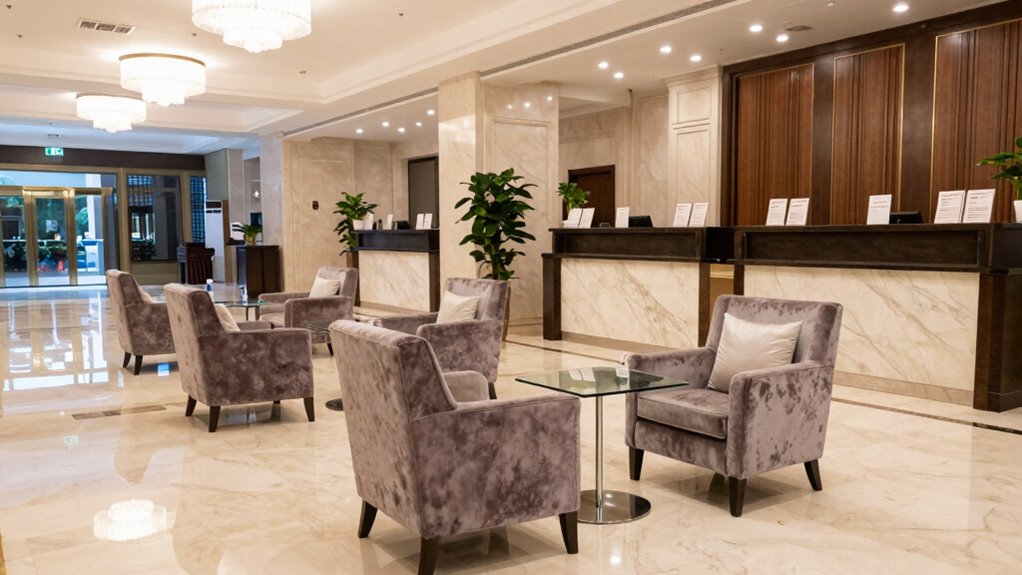

To guarantee your reception area and lobby look professional and hygienic, focus on overlooked details like regular sanitization of the desk and high-touch surfaces, consistent trash removal, and cleaning entry mats. Use reliable equipment and follow a strict schedule for daily, weekly, and monthly tasks. Proper staff training ensures tasks are performed correctly and consistently. Paying attention to these small but important tasks will improve your space’s overall cleanliness. Keep going to discover more tips for maintaining top standards.
Key Takeaways
- Regularly sanitize high-touch surfaces like reception desks, door handles, and light switches.
- Ensure entry mats are cleaned or replaced frequently to prevent dirt tracking.
- Implement a detailed cleaning schedule for daily, weekly, and monthly tasks in the lobby.
- Use appropriate equipment and techniques for cleaning different flooring types and upholstery.
- Train staff on proper cleaning procedures and conduct routine quality inspections for consistency.

Have you ever considered how often your reception area’s cleaning standards are overlooked? It’s easy to focus on more visible areas, like desks or carpets, but the reception and lobby areas are the first impression visitors get. If these spaces aren’t consistently clean, it can send the wrong message about your business’s professionalism and attention to detail. One key factor in maintaining high standards is guaranteeing your janitorial equipment is up to the task. Outdated or worn tools won’t do a thorough job and can even spread germs or dirt. You need reliable, well-maintained equipment—mops, vacuums, microfiber cloths, and disinfectants—that are suited for high-traffic areas. Regularly inspecting and replacing these tools is essential to keep the cleaning effective and efficient.
Ensure your janitorial tools are reliable and well-maintained to keep your reception area spotless and professional.
A proper cleaning schedule is equally important. Too often, reception areas are neglected during routine cleaning, or cleaning is only performed sporadically. You should establish a detailed cleaning timetable that addresses daily, weekly, and monthly tasks. Daily cleaning might include wiping down surfaces, disinfecting door handles, and vacuuming carpets, while weekly tasks could involve deep cleaning upholstery or polishing glass surfaces. Monthly chores might focus on detailed dusting or cleaning light fixtures. Following a consistent schedule guarantees no area is overlooked and that cleanliness is maintained at all times. It’s also vital to assign responsibilities clearly, whether to your in-house cleaning staff or an external service provider. Additionally, investing in appropriate janitorial equipment ensures that cleaning tasks are performed effectively and without unnecessary effort or risk of contamination. Regular staff training on proper cleaning techniques can further improve the quality and consistency of your cleaning efforts. Incorporating proper cleaning techniques that emphasize thorough sanitation can help prevent the spread of germs and maintain a healthier environment. Ensuring that staff are knowledgeable about cleaning standards can help uphold the desired level of cleanliness consistently.
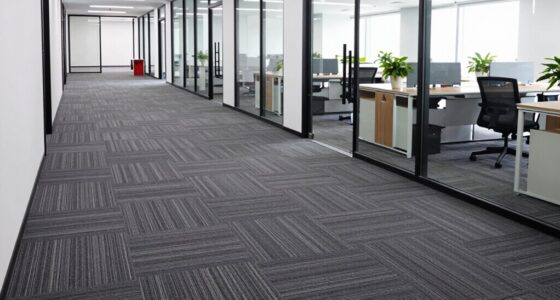
Beyond routine tasks, attention to specific details can profoundly influence cleanliness perception. For example, the reception desk is touched constantly; it needs to be sanitized regularly to prevent germs from spreading. The flooring, whether tile, carpet, or wood, should be cleaned with appropriate janitorial equipment to remove dirt and debris effectively. Trash bins should be emptied frequently, and entry mats should be cleaned or replaced regularly to trap dirt and prevent it from spreading inside. These small, often overlooked tasks can make a big difference in maintaining a pristine appearance. Ensuring that cleaning staff are well-trained in cleaning techniques can help sustain high standards and improve overall hygiene. Furthermore, implementing quality control procedures, such as routine inspections, can help identify areas that need additional attention before they become noticeable issues.
Finally, your staff should be trained on proper cleaning techniques and the importance of maintaining high standards. Proper training ensures that everyone understands how to use janitorial equipment correctly and follows the cleaning schedule diligently. When everyone takes responsibility, the reception area stays spotless, welcoming, and professional. Remember, your reception isn’t just the first point of contact; it’s a reflection of your entire business. Overlooking cleaning standards might seem minor, but it can have a lasting impact on how clients and visitors perceive you.

MAR-V-CIDE Spray Disinfectant, 16.5 oz – Hospital-Grade Disinfectant & Deodorizer Spray, Kills Germs, Bacteria, Viruses, Fungus & Mildew – For Salons, Barbershops, Gyms & Homes
- Hospital-Grade Disinfection: Kills 99.9% of germs and viruses
- Fast-Acting Formula: Disinfects surfaces in minutes
- Multi-Surface Use: Suitable for salons, gyms, and homes
As an affiliate, we earn on qualifying purchases.
As an affiliate, we earn on qualifying purchases.
Frequently Asked Questions
How Often Should Reception Area Carpets Be Deep Cleaned?
You should deep clean reception area carpets at least every 6 to 12 months, depending on foot traffic and use. Regular carpet maintenance includes vacuuming and spot cleaning, but for thorough care, schedule deep cleaning based on your frequency scheduling needs. High-traffic areas may require more frequent deep cleans to maintain appearance and hygiene. This helps uphold the carpet’s quality and ensures a welcoming environment for visitors.
What Cleaning Products Are Safest for High-Touch Reception Surfaces?
You should opt for eco-friendly disinfectants and antimicrobial surface treatments that are safe for high-touch reception surfaces. These products actively combat germs without harsh chemicals, making your space safer and greener. Imagine a world where your guests shake hands without worry, thanks to cleaning products that protect both health and the environment. Choosing these safe options guarantees your reception area stays pristine, inviting, and free of harmful residues.
How to Prevent Cross-Contamination in Reception Cleaning Routines?
To prevent cross-contamination in reception cleaning routines, you should regularly use surface disinfectants on high-touch areas like counters and door handles. Make certain your staff practice good hygiene by washing hands frequently and wearing gloves when cleaning. Assign specific cleaning tools to each area, and disinfect them after use. Proper training helps staff understand the importance of these routines, reducing the risk of spreading germs and maintaining a hygienic environment.
Are There Specific Standards for Cleaning Reception Area HVAC Vents?
You might think HVAC vents in reception areas come with strict standards, but surprisingly, they often don’t. Regular air filtration checks and vent maintenance are your best bets. Clean vents prevent dust buildup and improve air quality, creating a healthier environment. Prioritize these tasks to reduce allergens and guarantee proper airflow—because neglecting them means inviting dust and germs into your welcoming space.
How Can Staff Be Trained on Overlooked Cleaning Procedures?
You can train staff on overlooked cleaning procedures by developing thorough staff training programs that emphasize cleaning protocols specific to reception areas and lobbies. Use hands-on demonstrations, visual aids, and clear checklists to reinforce proper techniques. Regular refresher sessions help maintain standards, and encouraging feedback ensures staff stay informed about updates. This approach guarantees your team consistently follows best practices and keeps the environment clean and welcoming.
Conclusion
Remember, your reception area is the welcoming smile of your space—shine it bright by not overlooking those essential cleaning standards. Think of it as tending a garden; regular care keeps it vibrant and inviting. When you prioritize cleanliness, you’re not just tidying up—you’re creating a warm, sparkling handshake that greets every visitor. So, don’t let those overlooked details hide in the shadows. Instead, illuminate your space with spotless standards that leave a lasting, positive impression.