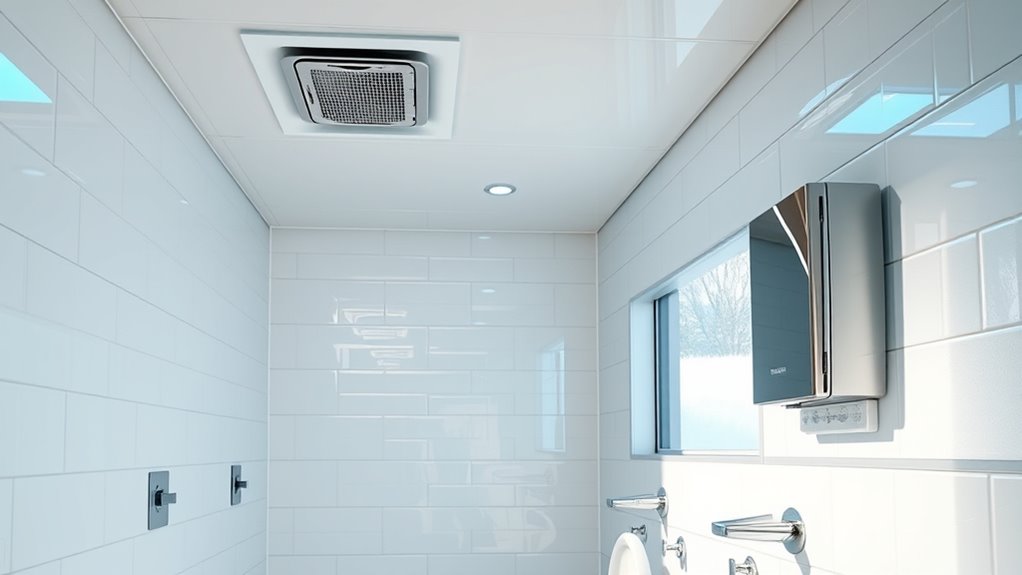

To effectively control odors in your commercial restrooms, combine continuous air freshening systems with upgraded ventilation. Use steady scent dispensers that release inviting fragrances without overpowering the space. Enhance airflow with high-quality exhaust fans or sensors that activate based on occupancy. Regular maintenance, including filter checks and dispenser refills, guarantees consistent results. By integrating these strategies, you create a cleaner, fresher environment that leaves a positive impression—learn more about optimizing your restroom’s scent and airflow strategies.
Key Takeaways
- Implement continuous air freshener systems with steady fragrance release to maintain a fresh atmosphere.
- Upgrade ventilation systems to improve airflow and remove odors effectively.
- Regularly clean and replace filters, and refill dispensers for consistent odor control.
- Use occupancy sensors to activate ventilation and freshening systems during peak restroom use.
- Combine scent strategies with enhanced ventilation for a comprehensive approach to odor management.
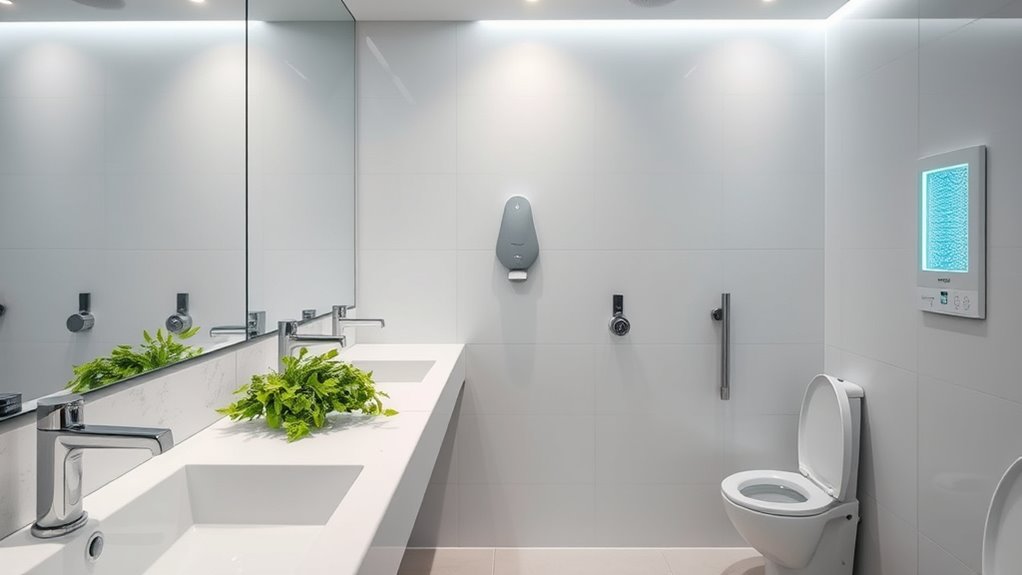
Maintaining a fresh-smelling restroom is essential for comfort and hygiene, but controlling odors can be challenging without the right strategies. One effective approach is to implement proper air freshener techniques. Instead of relying solely on sprays that offer temporary relief, consider continuous air freshener systems that release subtle scents throughout the day. These systems can be programmed to deliver consistent coverage, preventing odors from becoming overpowering. Choose fragrances that are clean and inviting, and avoid overly strong scents that might irritate or offend users. Additionally, gel-based or automatic dispensers can help maintain a pleasant atmosphere without requiring manual application, ensuring the restroom always smells fresh.
Beyond air freshener techniques, upgrading your ventilation system plays a crucial role in odor control. An efficient ventilation system removes airborne odors promptly, reducing their linger time and preventing them from spreading. If your current system is outdated or underpowered, consider investing in upgrades that increase airflow and improve filtration. High-quality exhaust fans or air exchange units can significantly reduce humidity and eliminate smells at their source. Properly designed ventilation not only controls odors but also improves overall air quality, making the space more comfortable for users. Installing sensors that activate ventilation when occupancy is detected can optimize airflow and ensure odors are managed effectively without wasting energy. Incorporating sound design principles into ventilation systems—such as quiet fans and soundproofing—can enhance user comfort by minimizing noise disruptions.
Combining air freshener techniques with ventilation upgrades creates a comprehensive odor control strategy. Regular maintenance of both systems is vital; clean or replace filters in your ventilation system routinely to keep it functioning efficiently. Likewise, check dispensers and replace refills as needed to maintain consistent scent levels. Training staff to understand the importance of these systems ensures they’re used properly and maintained diligently. It’s also wise to monitor odor levels periodically, especially during peak usage times, to identify any areas needing additional attention.
Ultimately, controlling restroom odors is about creating a balanced environment. By focusing on effective air freshener techniques and investing in ventilation system upgrades, you’re taking proactive steps toward a cleaner, more inviting space. These measures not only improve hygiene standards but also leave a positive impression on your visitors or customers. When odors are managed properly, your restroom becomes a place that feels fresh and welcoming, reinforcing your commitment to cleanliness and comfort.
Frequently Asked Questions
How Often Should Restroom Air Filters Be Replaced?
You should replace restroom air filters every 3 to 6 months, depending on usage and air quality. The air filter lifespan varies based on environment and filter type, but regular replacement guarantees peak odor control and air quality. Keep an eye on signs like reduced airflow or persistent odors, which indicate it’s time for a replacement. Following recommended replacement frequency maintains a fresh, clean restroom environment.
Are Natural Odor Absorbers Effective Long-Term Solutions?
Natural odor absorbers can be effective in the short term, but their long-term effectiveness varies. You’ll find that natural absorbers, like baking soda or activated charcoal, help neutralize odors temporarily, but they need regular replenishment to maintain their impact. For sustained odor control, it’s best to combine natural absorbers with proper ventilation and routine cleaning, ensuring you get consistent results without relying solely on natural solutions.
Can Restroom Design Influence Odor Control Efficiency?
Think of your restroom design as a well-orchestrated symphony; it can greatly influence odor control efficiency. By implementing effective ventilation strategies, you guarantee stale air escapes, like a conductor guiding harmony. An odor barrier acts as a shield, preventing smells from spreading. When these elements work together, your restroom becomes a fresh, inviting space, showcasing how thoughtful design directly impacts odor management and overall user experience.
What Are the Latest Technological Advances in Odor Neutralization?
You should explore the latest advances like air purification systems that actively filter and neutralize odors, ensuring a fresher restroom environment. Scent technology now offers customizable, subtle fragrances that mask unpleasant smells without overwhelming users. These innovations work together to improve odor control efficiency, making your restroom more pleasant and hygienic. By adopting these technologies, you create a cleaner, more inviting space that enhances user satisfaction and maintains a professional appearance.
How Do Cleaning Schedules Impact Odor Management?
Ever wonder how cleaning schedules influence odor management? Regular cleaning keeps surfaces fresh and prevents odor buildup, making ventilation strategies more effective. By consistently removing waste and disinfecting, you reduce sources of odor and minimize reliance on scent masking. A well-planned schedule guarantees that restroom air stays cleaner longer, enhancing overall odor control. Keeping up with routine cleaning not only maintains hygiene but also creates a more pleasant environment for everyone.
Conclusion
You’ve seen how proper odor control transforms a restroom from a source of discomfort into a welcoming space. Think of it like a gulp of invigorating air clearing a stuffy room—you notice the difference immediately. When you implement effective ventilation, odor-neutralizing products, and regular cleaning, you’re not just masking smells; you’re creating an environment that invites people in. Just like a breath of fresh air, good odor control leaves a lasting, positive impression.