
Hazard communication for cleaning teams involves understanding chemical labels, recognizing hazard symbols, and following safety procedures to prevent accidents. You should regularly check labels for clarity and accuracy, use recommended protective gear, and follow storage and disposal guidelines. Proper training helps you interpret risks and respond effectively during spills or emergencies. Staying vigilant about label details and safety protocols guarantees a safer work environment—keep going to discover more tips for safe chemical handling.
Key Takeaways
- Properly read and interpret chemical labels to identify hazards and necessary precautions before use.
- Provide regular safety training to cleaning staff on hazard symbols, hazard statements, and safe handling procedures.
- Ensure labels are visible, legible, and maintained; replace damaged or missing labels immediately.
- Follow label instructions by using appropriate PPE, proper ventilation, and safe storage practices.
- Report any unlabeled, damaged, or missing labels to maintain a safe cleaning environment.
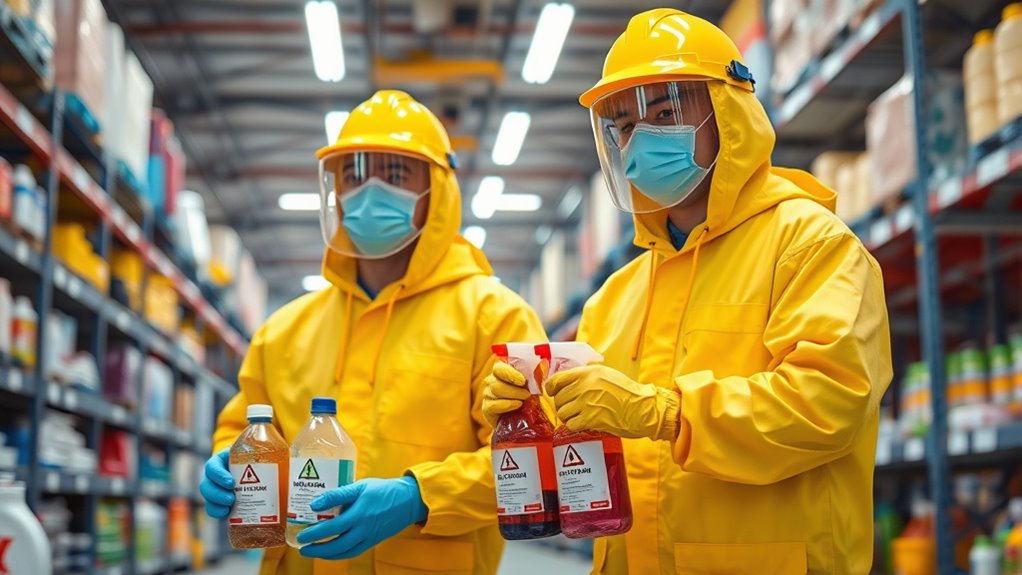
Cleaning teams play a essential role in maintaining safe and healthy work environments, but they also face exposure to a variety of hazards. One of the most important aspects of hazard communication is understanding how to interpret chemical labeling. Properly labeled chemicals provide critical information about potential risks, safe handling procedures, and necessary precautions. When you see labels with standardized symbols, hazard statements, and precautionary measures, you can quickly assess the dangers and take appropriate actions to protect yourself and others. Missing or unclear labels increase the risk of accidents, injuries, or chemical exposures, so ensuring labels are accurate and visible is necessary.
Proper chemical labeling is vital for safety and hazard awareness in cleaning work environments.
Equally indispensable is safety training, which equips you with the knowledge and skills needed to handle chemicals safely. Through thorough training, you learn how to read labels correctly, recognize hazard symbols, and understand the meaning behind various warning phrases. Safety training also covers proper storage, disposal, and spill response procedures, reducing the likelihood of incidents. By participating actively in training sessions, you develop confidence in managing hazardous substances and are better prepared to respond to emergencies.
Your employer has a responsibility to provide detailed safety training, but you must also take the initiative to stay informed. Regular refreshers help you stay up-to-date on new chemicals or updated labeling systems. When you understand the importance of chemical labeling, you become more vigilant about checking labels before using any product. This habit helps prevent accidental misuse or mixing of incompatible chemicals, which could lead to dangerous reactions.
Effective hazard communication isn’t just about reading labels; it’s about implementing what you learn in daily routines. Always follow instructions from labels and safety training, such as wearing appropriate personal protective equipment (PPE) and working in well-ventilated areas. If a label is damaged or missing, don’t assume the chemical is safe—report it immediately and seek guidance. Your awareness and adherence to labeling standards and safety training make a significant difference in reducing workplace accidents.
Frequently Asked Questions
How Often Should Hazard Communication Training Be Updated?
You should update hazard communication training at least every year to guarantee your team stays current. Regular training refreshers help reinforce safety practices, and updates on hazard labels are essential for recognizing new or changed risks. Keep an eye on any label updates or safety data sheet revisions, and incorporate them into your training sessions promptly. This proactive approach helps your team remain informed, safe, and compliant with regulations.
Are There Specific PPE Requirements for Different Cleaning Chemicals?
Yes, you need specific personal protective equipment (PPE) for different cleaning chemicals. For example, wear gloves and goggles when handling strong acids or bleach, following chemical handling protocols. Always check the Safety Data Sheet (SDS) for each chemical to determine the appropriate PPE. Your goal is to protect yourself from splashes, fumes, and skin contact, so adapt your PPE based on the hazards associated with each cleaning agent.
How Should Chemical Spills Be Safely Managed by Cleaning Staff?
Did you know that over 80% of chemical spills can be contained quickly with proper training? When managing spills, you should first alert others and wear appropriate PPE. Use spill containment materials like absorbents to control the leak, and follow your emergency response plan to ensure safety. Always ventilate the area and dispose of waste properly. Your swift, organized actions help prevent accidents and protect everyone involved.
What Should I Do if I Experience a Chemical Allergy?
If you experience allergy symptoms like sneezing, itching, or difficulty breathing, you should immediately stop exposure and alert your supervisor. Follow your workplace’s emergency response procedures, which may include moving to fresh air and seeking medical help. Use any prescribed medication, such as an epinephrine auto-injector, if available, and report the incident. Prompt action helps prevent severe reactions and guarantees your safety.
How Can Non-English Speaking Staff Understand Hazard Labels Effectively?
Imagine colorful, eye-catching visual signage and multilingual labels that speak directly to your team. To help non-English speaking staff understand hazard labels effectively, you should provide clear, easy-to-understand multilingual labels and visual signage. Use pictures, symbols, and color codes to communicate hazards instantly. Regular training sessions and translated safety materials guarantee everyone, regardless of language, recognizes dangers, keeps safe, and works confidently.
Conclusion
By understanding hazard communication, you’re not just protecting yourself—you’re preventing accidents for everyone around you. When you stay informed and follow safety procedures, it’s like a chain reaction of safety that benefits your entire team. Truly, the moment you prioritize clear communication and proper handling, you realize safety isn’t just a guideline; it’s a habit that keeps everyone safe. Sometimes, the smallest step you take can make the biggest difference in preventing harm.