
To effectively clean construction dust, use air scrubbers with HEPA filters to trap 99.97% of particles and run them continuously during and after work. Regularly check and replace filters to keep performance high, and establish containment zones with plastic sheeting to prevent dust spread. Always wear PPE and seal debris before disposal. Mastering these routines guarantees a safer, cleaner space—stick around to discover the proven steps that make this process work every time.
Key Takeaways
- Use HEPA-filtered air scrubbers operated continuously during and after construction for maximum dust removal.
- Regularly inspect and replace filters to maintain optimal scrubber performance.
- Seal work areas with plastic sheeting to contain dust and prevent spread.
- Ensure all personnel wear PPE and follow safety protocols during cleanup.
- Monitor air quality and filter status to adjust routines and ensure a safe indoor environment.
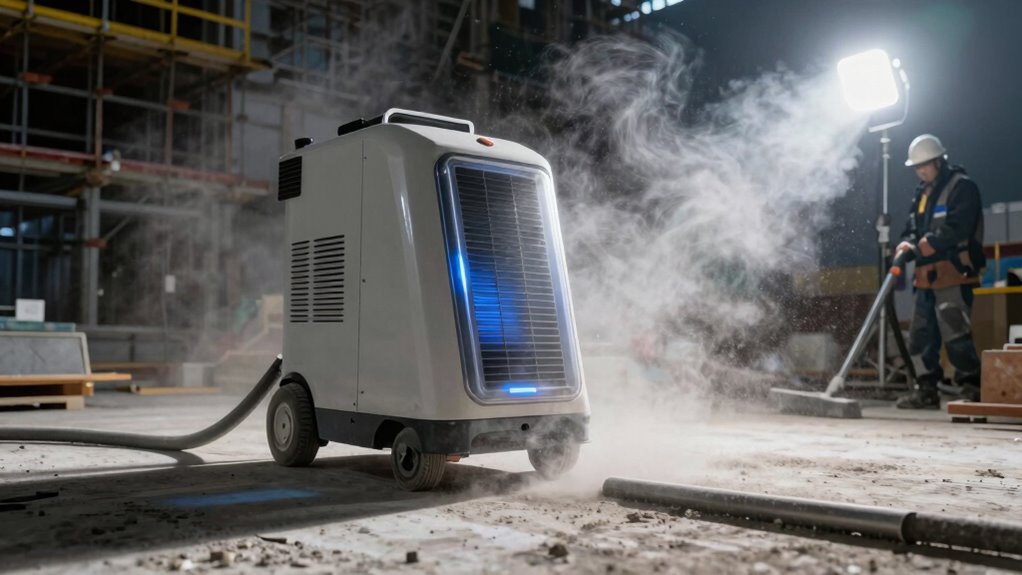
Are you overwhelmed by the dust left behind after construction projects? It’s a common problem, but you don’t have to accept dust as inevitable. The key to effective cleanup lies in a well-planned air scrubber routine that prioritizes air filtration and strict safety protocols. When you focus on these elements, you can considerably reduce airborne particles, making the environment safer and cleaner.
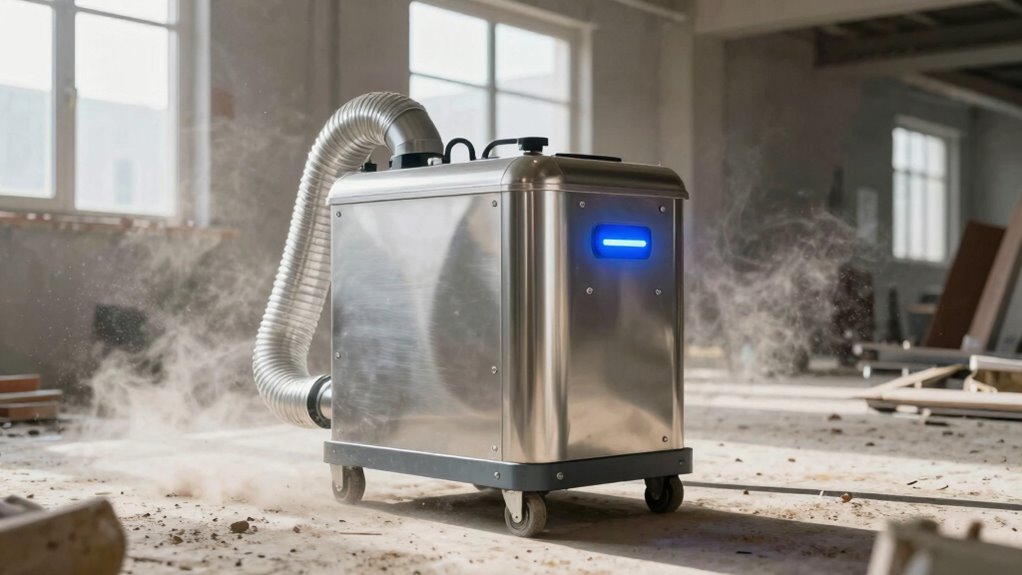
Air filtration plays a fundamental role in construction dust cleanup. You want to ensure that your air scrubbers are equipped with high-efficiency particulate air (HEPA) filters. These filters are designed to trap 99.97% of particles as small as 0.3 microns, including fine dust, allergens, and other contaminants. Using the right filters maximizes dust removal, preventing it from recirculating into the air you breathe. Regularly replacing or cleaning these filters is essential to maintaining peak performance. If you neglect this step, the scrubbers become less effective, and dust levels remain high. Efficient air filtration is not a one-time task; it requires ongoing attention to sustain a safe indoor environment. Incorporating air quality monitoring can help you track dust levels in real-time and adjust your routine accordingly.
Ensure your air scrubbers use HEPA filters and replace them regularly for optimal dust removal and a safer environment.
Alongside proper equipment, adhering to safety protocols is necessary. When operating air scrubbers and handling dusty debris, always wear appropriate personal protective equipment (PPE), like masks, goggles, and gloves. This protects you from inhaling harmful particles and minimizes health risks. Additionally, establish clear safety procedures for dust containment and disposal. For example, seal off work areas with plastic sheeting, and ensure dust-laden debris is bagged and sealed before removal. Maintaining good ventilation during cleanup is another safety measure—it helps disperse dust and prevents buildup in enclosed spaces. Always follow manufacturer instructions and safety guidelines to avoid accidents or equipment malfunctions. Proper training on the use of air filtration systems and safety protocols ensures everyone involved knows how to operate equipment safely and effectively.
Implementing a routine that combines effective air filtration with strict safety protocols makes a noticeable difference. It’s not just about cleaning; it’s about creating a healthier environment. Regularly running air scrubbers during and after construction, monitoring filter status, and enforcing PPE use help keep dust levels in check. When you prioritize these steps, you’re reducing the risk of respiratory issues, minimizing cleanup time, and ultimately guaranteeing the safety of everyone on site. With discipline and attention to detail, your construction dust cleanup can be more efficient and less overwhelming. Remember, the secret is consistent, mindful practices that emphasize both air quality and safety—the foundation of a successful cleanup routine.

BlueDri Air Shield 550 HEPA Air Scrubber, Water Damage Restoration Equipment Air Purifier, Covers 1400 Sq. Ft, Daisy Chain Capable, For Commercial Use, Blue, BD-AS-550
- High CFM Air Purification: Delivers 40% more airflow than competitors
- Multi-Stage Filtration: Pre-filter, HEPA filter, and stages for thorough cleaning
- Effective Particle Removal: Removes 99.97% of particles down to 0.3 microns
As an affiliate, we earn on qualifying purchases.
As an affiliate, we earn on qualifying purchases.
Frequently Asked Questions
How Often Should Air Scrubbers Be Maintained During Construction?
You should maintain your air scrubbers daily during construction, checking filters and performance. Follow a strict maintenance schedule, replacing filters as needed—typically every 1-2 weeks or sooner if they look dirty. Regular filter replacement guarantees maximum dust removal. Keep an eye on the scrubber’s operation, and perform routine maintenance to prevent dust buildup and maintain air quality throughout the project.
Are Air Scrubbers Effective Against All Types of Construction Dust?
Think of air scrubbers like filters catching different-sized fish; some catch small dust particles, others larger debris. Yes, air scrubbers are effective against many types of construction dust, but their efficiency depends on the air scrubber types used and the dust particle size. HEPA filters, for example, excel at trapping tiny particles, ensuring cleaner air. Regular maintenance boosts their effectiveness, keeping your space safer during construction.
What Is the Average Cost of Using an Air Scrubber for Cleanup?
The average cost of using an air scrubber for cleanup ranges from $50 to $200 per day, depending on size and features. You should do a cost comparison between purchasing and equipment rental, but rental is often more affordable for short-term projects. Keep in mind, investing in a quality air scrubber can save you money in the long run by ensuring thorough dust removal and healthier indoor air quality.
Can Air Scrubbers Eliminate Odors Caused by Construction Materials?
You might think odors from construction materials are unstoppable, but a good air scrubber can surprise you. It works by enhancing ventilation efficiency and removing airborne particles that carry smells. Keep in mind, regular filter replacement is essential for sustained odor elimination. With consistent use, you’ll notice fresher air and a significant reduction in lingering odors, making your space more comfortable faster than you expected.
How Do I Choose the Right Air Scrubber for My Project Size?
You should choose an air scrubber based on its capacity relative to your project size. For larger spaces, opt for a unit with higher air change rates and greater filtration power to guarantee effective dust and odor removal. Consider your project size considerations, like room dimensions and contamination levels. Smaller projects may need compact models, while bigger jobs demand heavy-duty scrubbers to maintain clean, safe environments efficiently.
Conclusion
With diligent dust removal, your space stays safe and spotless. By diligently deploying your dependable air scrubber, you double down on dust destruction, banishing bothersome airborne particles. Consistent cleanup guarantees clarity, curb chaos, and create comfort. Remember, routine and responsibility restore freshness, leaving your environment inviting and immaculate. Stay steadfast, scrub smart, and see dust disappear, revealing a pristine, peaceful space where productivity prevails and purity persists.