
Instead of just tracking hours worked, focus on metrics like cleaning efficiency and customer satisfaction, as they reveal how well your team performs and how happy clients are. Efficiency measures how thoroughly and swiftly tasks are completed, helping you find ways to improve processes. Customer feedback shows if your efforts translate into real value. By prioritizing these indicators, you’ll better understand operational success and stand out in a competitive market. Keep going to discover more ways to optimize your cleaning performance.

Get cleaning gear delivered free with Prime
- Fast, free delivery on millions of items
- Prime Video, Amazon Music and more included
- Member-only deals all year
Key Takeaways
- Focus on cleaning efficiency and quality outcomes rather than just hours worked.
- Measure customer satisfaction to assess service effectiveness from the end-user perspective.
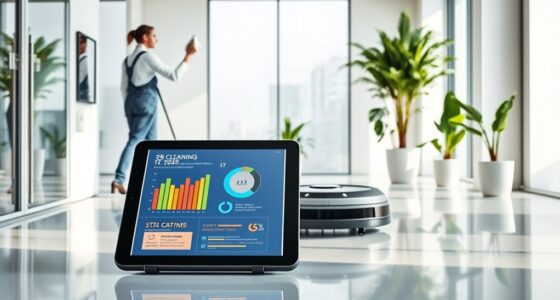
- Use data-driven insights and technology to monitor performance and identify improvement areas.
- Prioritize key indicators like thoroughness, speed, and client feedback over raw labor hours.
- Demonstrate value through metrics that highlight results, not just time spent on tasks.
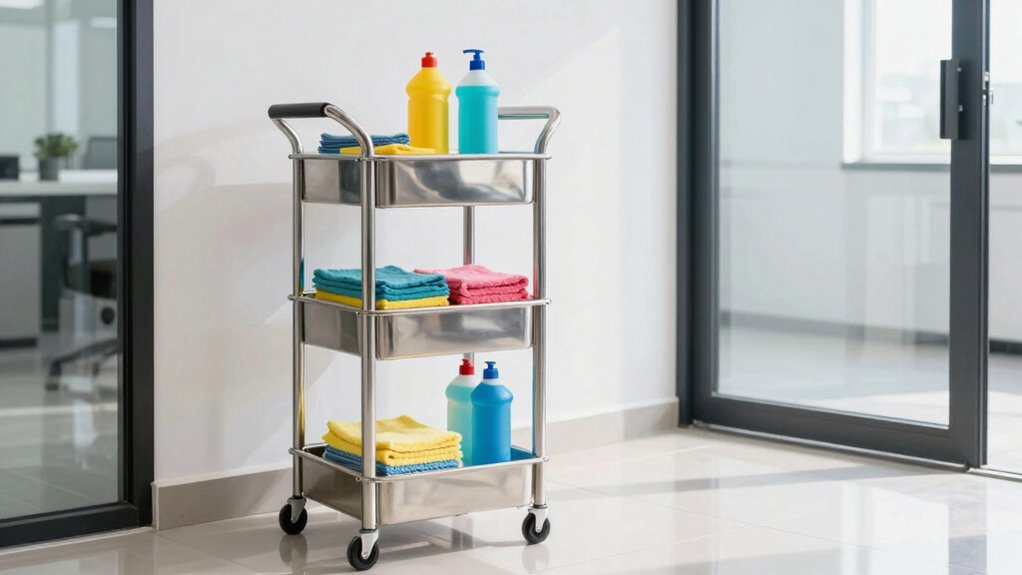
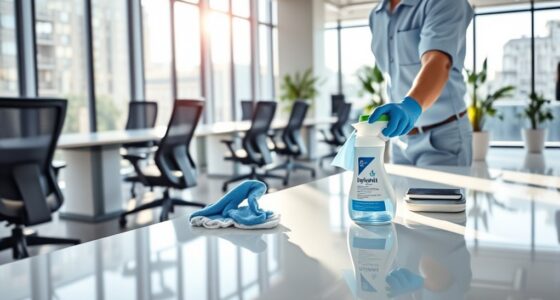
When it comes to maintaining a clean environment, understanding which metrics truly matter can make all the difference. Instead of focusing solely on hours worked, you should prioritize metrics that directly impact the quality of your cleaning services. Two of the most important are cleaning efficiency and customer satisfaction. These indicators give you a clearer picture of how well your team is performing and whether your clients are happy with the results.
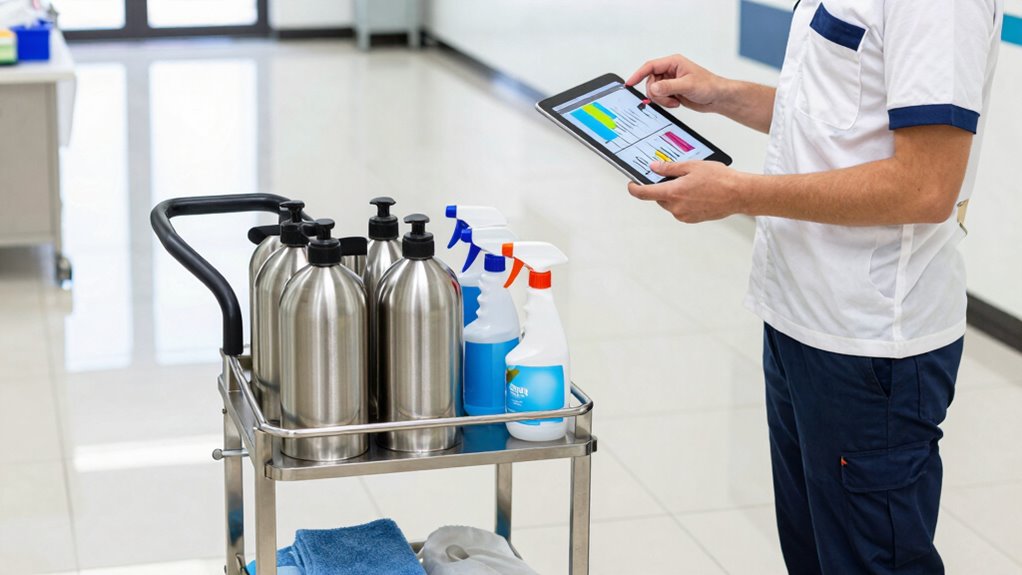
Cleaning efficiency measures how effectively your cleaning team completes their tasks within a given timeframe. It’s not just about speed but about how thoroughly each area is cleaned during each session. High cleaning efficiency means your team is maximizing productivity without sacrificing quality. When you track this metric, you can identify areas where processes might be optimized—perhaps through better training, improved equipment, or streamlined routines. This focus helps you deliver consistent, high-quality results without necessarily increasing labor hours, which ultimately enhances your operational performance. Additionally, analyzing performance data can reveal patterns that help you make more informed decisions and drive continuous improvement. Understanding the role of performance metrics in measuring success can further refine your approach to service quality. Incorporating technology-driven insights can also assist in identifying inefficiencies and opportunities for automation, leading to smarter management strategies.
High cleaning efficiency balances productivity and quality, enabling optimized processes without increasing labor hours.
Customer satisfaction, on the other hand, is perhaps the most critical metric because it reflects the end user’s experience. No matter how fast or efficient your team is, if clients aren’t satisfied with the outcome, your service isn’t meeting its goals. Regular feedback, surveys, and direct communication can help you gauge how well your cleaning efforts resonate with your clients’ expectations. When customer satisfaction is high, it indicates that your cleaning efficiency is translating into real value for your clients. Conversely, if satisfaction drops, it’s a sign that you need to adjust your approach—whether that means revisiting cleaning protocols, addressing specific complaints, or improving communication.
Focusing on these metrics shifts your attention from just tracking hours to understanding the quality and effectiveness of your cleaning services. This approach allows you to make smarter decisions about resource allocation, training, and process improvements. You’ll find that emphasizing cleaning efficiency and customer satisfaction leads to better retention, positive reviews, and a stronger reputation. These metrics also help you demonstrate your value to clients, showing that you prioritize outcomes over mere hours worked.
In addition, adopting smart home technology can help you monitor and enhance cleaning performance through real-time data collection and automation. This technology can also assist in maintaining consistent standards across different sites, further improving your overall service quality. In essence, the key to success in commercial cleaning isn’t how long your team spends on each job but how well they do their job and how happy your clients are with the results. By tracking and improving these core metrics, you ensure that your cleaning services are both effective and appreciated, setting your business apart in a competitive market.
professional cleaning efficiency tools
As an affiliate, we earn on qualifying purchases.
As an affiliate, we earn on qualifying purchases.
Frequently Asked Questions
How Do Cleaning Metrics Impact Client Satisfaction?
Cleaning metrics directly impact client satisfaction by highlighting areas where your team excels or needs improvement. When you focus on employee training, your staff can deliver consistent, high-quality results. Additionally, paying attention to customer feedback helps you adjust your services to meet clients’ expectations better. By tracking these metrics, you demonstrate your commitment to excellence, ensuring clients feel valued and satisfied with your cleaning services.
What Technology Can Improve Cleaning Performance Measurement?
You can improve cleaning performance measurement with technology like automated tracking systems, which monitor tasks in real-time, ensuring accountability and efficiency. Data analytics then process this information, providing insights into performance trends and areas needing improvement. By integrating these tools, you gain precise, actionable data that helps optimize cleaning operations, boost quality, and enhance client satisfaction without relying solely on hours worked.
Are There Industry Standards for Cleaning Quality Metrics?
Yes, industry standards for cleaning quality metrics do exist, and they’re as precise as a surgeon’s scalpel. You can rely on detailed cleaning audits to evaluate performance consistently, ensuring every corner shines. Staff training plays a vital role, transforming your team into cleaning superheroes. These standards help you measure success beyond hours worked, making sure your cleaning quality is nothing short of legendary.
How Often Should Cleaning Metrics Be Reviewed and Updated?
You should review and update cleaning metrics regularly, ideally every three to six months, to verify they reflect current standards and cleaning frequency needs. Incorporate staff training during these reviews to address any gaps and improve performance. Frequent assessments help you identify areas for improvement, adapt to changing client requirements, and maintain high cleaning quality. Consistent updates ensure your team stays aligned with industry standards and best practices.
Can Cleaning Metrics Predict Future Business Growth?
Cleaning metrics like cleaning efficiency and staff productivity can indeed help predict future business growth. By tracking these metrics, you can identify areas where your team performs best and where improvements are needed. When efficiency increases, and staff productivity rises, it often signals operational strength that attracts more clients and boosts revenue. Monitoring these metrics regularly allows you to make informed decisions that directly support sustained growth.
Conclusion
Remember, focusing on the right cleaning metrics can transform your business. Instead of just tracking hours worked, pay attention to customer satisfaction scores or the number of repeat clients. For example, studies show that companies prioritizing quality metrics see a 20% increase in client retention. By measuring what truly matters, you’ll improve service quality, boost efficiency, and grow your reputation—making these metrics more valuable than simply counting hours.
Halloween Picks
halloween
As an affiliate, we earn on qualifying purchases.