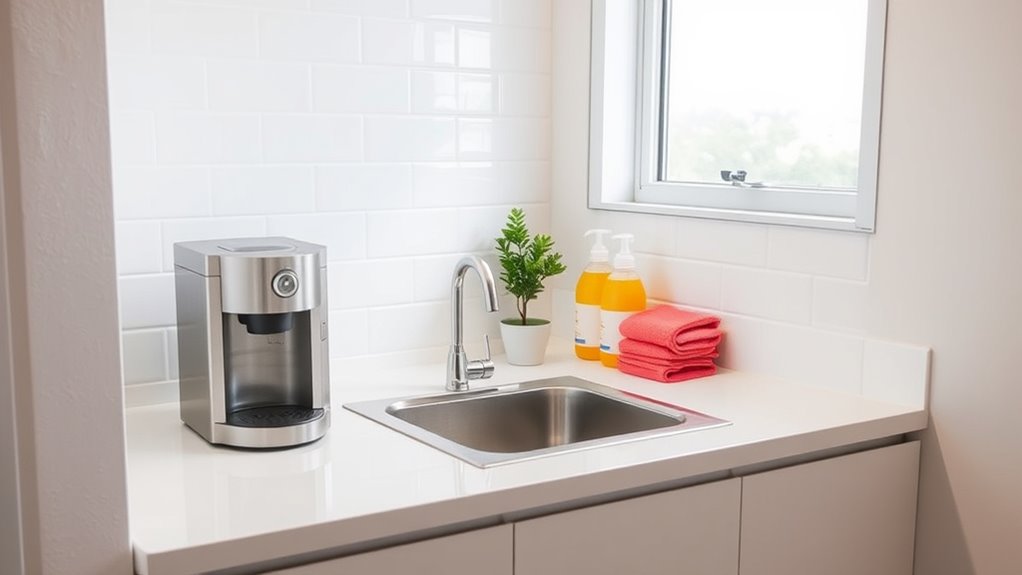

To meet breakroom cleaning standards for hygiene, you should regularly disinfect surfaces, appliances, and high-touch areas using appropriate cleaning agents. Keep waste managed properly by using designated bins and promptly cleaning spills to prevent germs and pests. Make supplies like hand sanitizers and disinfectant wipes easily accessible and encourage their frequent use. Establish routine cleaning schedules and ensure proper ventilation to improve air quality. Continuing along, you’ll discover effective steps to maintain a healthier break environment.
Key Takeaways
- Regularly disinfect high-touch surfaces, appliances, and shared equipment using appropriate cleaning agents.
- Implement a consistent cleaning schedule with checklists to ensure all areas are maintained properly.
- Provide accessible hand sanitizers and disinfectant wipes, encouraging employees to use them frequently.
- Properly dispose of waste and promptly clean spills to prevent contamination and pest attraction.
- Ensure adequate ventilation and air quality management to reduce airborne germs and improve overall hygiene.

Maintaining high standards of cleanliness in breakrooms is essential for ensuring a hygienic environment for all employees. Regular cleaning protocols should include disinfecting surfaces, appliances, and shared equipment to prevent the spread of germs. Proper waste disposal and prompt cleaning of spills also contribute to a safer space. Additionally, providing adequate supplies such as hand sanitizers and disinfectant wipes encourages employees to participate in maintaining cleanliness. Implementing a routine schedule and clear guidelines helps sustain these standards over time. Ensuring proper ventilation and air quality is also vital, as it can reduce airborne contaminants and improve overall hygiene. Cleaning techniques and staff training are key components to effectively uphold these standards and promote a healthy workplace.
Frequently Asked Questions
How Often Should Breakrooms Be Cleaned During Peak Hours?
During peak hours, you should clean the breakroom every 2 to 3 hours to maintain hygiene standards. Focus on breakroom maintenance by wiping down surfaces, sanitizing high-touch areas, and restocking supplies promptly. This frequent cleaning prevents germs from spreading and keeps the space sanitary for everyone. Make sure to remind staff to dispose of trash properly and encourage good hygiene practices to support a clean environment throughout busy periods.
What Disinfectants Are Most Effective Against Common Germs?
Think of disinfectants as your frontline warriors against germs. Quaternary ammonium compounds and bleach-based solutions excel at germ elimination strategies, targeting bacteria and viruses effectively. These disinfectant types are most effective when you adhere to proper application protocols—like thorough coverage and adequate contact time. By choosing the right disinfectants, you guarantee your breakroom stays hygienic, creating a safer space where cleanliness and health go hand in hand.
Are There Specific Cleaning Protocols for Shared Appliances?
You should implement specific cleaning protocols for shared appliances, focusing on shared appliance maintenance and cleaning schedule coordination. Always wipe down surfaces after each use with effective disinfectants, and establish a routine cleaning schedule to guarantee consistency. Regularly sanitize key touchpoints like handles and buttons, and clearly communicate these protocols to everyone. This proactive approach helps minimize germ spread and maintains a hygienic environment for all users.
How Can Employees Maintain Hygiene Between Professional Cleanings?
You can maintain hygiene between professional cleanings by practicing good personal hygiene and using hand sanitization regularly. Always wash your hands thoroughly after handling shared appliances or eating. Wipe down surfaces you touch, like microwaves and countertops, with disinfectant wipes. Encourage others to follow these practices too, creating a clean environment. Staying vigilant and proactive helps reduce germs and keeps the breakroom hygienic for everyone.
What Are the Best Practices for Waste Disposal in Breakrooms?
You should follow recycling guidelines carefully, sorting waste into appropriate bins to reduce contamination. Always dispose of food scraps and trash promptly to prevent odors and pests. If spills occur, practice spill management immediately by cleaning them up with suitable materials to maintain a safe environment. Regularly empty trash and recycling bins to prevent overflow, and encourage colleagues to adhere to these practices for a cleaner, healthier breakroom.
Conclusion
By maintaining these breakroom cleaning standards, you keep the space safe, welcoming, and free of germs. Consistent cleaning isn’t just about appearances—it’s about protecting everyone’s health and ensuring a productive environment. Think of it as hitting two birds with one stone: cleanliness boosts morale and prevents illness. When you make cleaning a priority, you’re not just tidying up—you’re creating a space where everyone can thrive. Keep up the good work and stay on top of it!