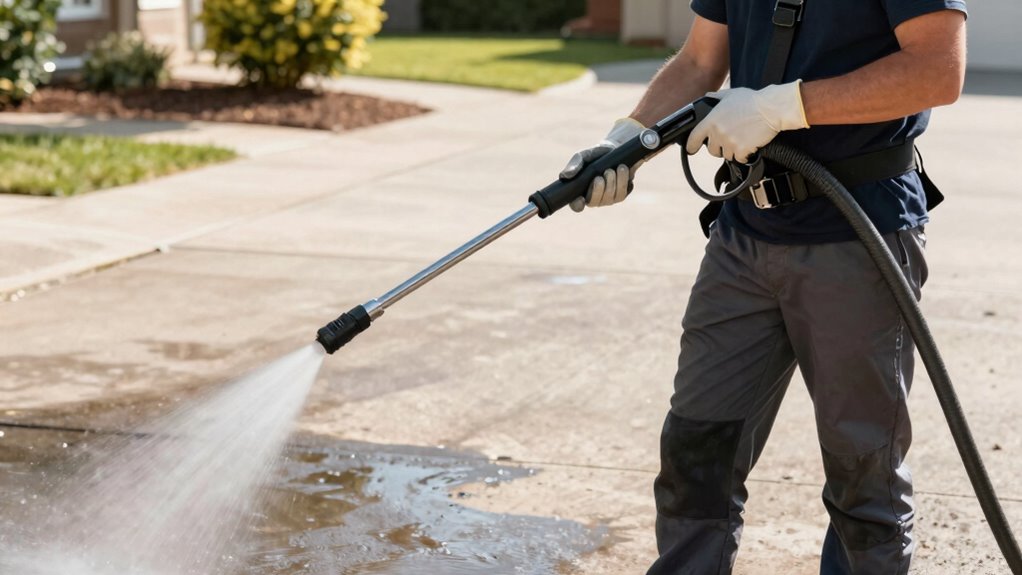

To prevent pressure washer wand fatigue on long jobs, focus on using lightweight, ergonomic tools with padded grips that fit comfortably in your hand. Keep your elbows close to your body and use your whole body to guide the wand, not just your arms. Maintain a stable stance, engage your core, and avoid awkward reaching. Regularly switch grips and take breaks to stretch. For more tips, continue exploring ways to work smarter and protect your muscles.

Get cleaning gear delivered free with Prime
- Fast, free delivery on millions of items
- Prime Video, Amazon Music and more included
- Member-only deals all year
Key Takeaways
- Use lightweight, ergonomic wands and grips to reduce hand and arm strain during extended use.
- Adjust water pressure and nozzle size to minimize effort and improve maneuverability.
- Maintain a stable stance and engage your core to support proper body mechanics.
- Switch grips and take regular breaks to prevent muscle fatigue and promote circulation.
- Focus on smooth whole-body movements rather than reaching or leaning to reduce strain.

Using a pressure washer can make tough cleaning jobs easier, but without proper technique, you risk experiencing wand fatigue that can lead to discomfort or injury. To prevent this, it’s essential to focus on equipment ergonomics and operator techniques that promote comfort and safety during extended use. First, pay attention to how you hold and maneuver the wand. Keep your grip firm but relaxed, avoiding tight grips that can strain your hands and forearms. Position the wand so that your elbows stay close to your body, reducing unnecessary stress on your joints. This ergonomic approach helps distribute the weight evenly and minimizes fatigue over long periods. Incorporating proper equipment ergonomics can significantly ease the strain on your muscles and joints during extended use.
Adjusting the pressure and spray nozzle can also make a noteworthy difference. Using the lowest effective pressure reduces the strain on your arms and shoulders. Narrower spray nozzles concentrate the water stream, allowing you to work more efficiently without forcing yourself into awkward positions. When possible, use both hands to operate the wand, switching between grips to prevent muscle fatigue. Operator techniques such as maintaining a stable stance and using your entire body to guide the wand help conserve your energy and reduce localized fatigue. Additionally, understanding pressure settings and how to optimize them can further improve your comfort and efficiency. Practicing proper technique can help you work longer without discomfort.
Another key aspect is your body positioning and movement. Instead of leaning forward or reaching excessively, move your whole body smoothly with the wand. Keep your core engaged to support your back and shoulders, which helps prevent strain. Take frequent breaks during long jobs to stretch your arms, shoulders, and back. This not only reduces muscle tension but also keeps your focus sharp and your movements precise. Incorporating ergonomic tools designed for prolonged use, such as adjustable wands and grips, can also make a significant difference in reducing fatigue. Properly adjusting equipment ensures that you maintain a comfortable working posture and avoid unnatural positions. Being mindful of your overall body mechanics can further decrease the risk of fatigue and injury during extended tasks.
Finally, using equipment ergonomics to your advantage involves selecting tools designed with user comfort in mind. Look for pressure washers with lightweight wands and grips that fit well in your hand. Consider padded or textured grips to enhance control and comfort during prolonged use. Incorporate proper operator techniques consistently, such as maintaining a neutral wrist position and avoiding excessive force. These small adjustments can considerably decrease fatigue, allowing you to work longer with less discomfort and reducing the risk of injury. By combining thoughtful equipment ergonomics with effective operator techniques, you’ll enhance your efficiency and keep pressure washer wand fatigue at bay.
lightweight pressure washer wand
As an affiliate, we earn on qualifying purchases.
As an affiliate, we earn on qualifying purchases.
Frequently Asked Questions
What Are Common Signs of Wand Fatigue During Pressure Washing?
You might notice wand fatigue through signs like decreased pressure stability, making your cleaning less effective. You may feel increased difficulty in maneuvering the wand or experience vibrations that indicate reduced wand durability. As the wand weakens, it can flex or bend more during use, leading to potential damage. Recognizing these signs early helps you prevent further wear, ensuring consistent pressure and maintaining overall pressure washer performance during long jobs.
How Does Wand Weight Affect User Fatigue Over Extended Periods?
Think of your wand as a tightrope walker—if it’s too heavy, you’ll struggle to stay balanced. The weight directly impacts your fatigue, making your arms tire quickly. Wand balance is essential; a well-balanced wand feels lighter and more manageable. Grip enhancement, like padded or ergonomic grips, helps distribute the effort evenly, reducing strain. Choosing a lightweight, balanced wand with a comfortable grip keeps you steady and less fatigued during long jobs.
Can Specific Wand Materials Reduce Fatigue?
Yes, choosing wands made from lightweight, durable materials like aluminum or composites can reduce fatigue. These wand materials not only offer durability but also improve ergonomic design, making extended use more comfortable. An ergonomic wand design minimizes strain by fitting naturally in your hand and reducing awkward movements. By selecting a wand with the right material and ergonomic features, you can work longer without tiring, increasing efficiency and safety during long pressure washing jobs.
Are There Ergonomic Accessories to Lessen Pressure on the Wand?
Sure, ergonomic accessories like an ergonomic grip and a lightweight design are game-changers, turning your pressure washing marathon into a breeze. Imagine a wand so comfortable it makes you forget you’re working—no more aching hands or tired arms. These accessories distribute weight evenly, reduce strain, and keep you focused on the dirt, not your discomfort. Elevate your game, and make long jobs feel like quick, effortless cleanups.
How Often Should I Take Breaks During Long Pressure Washing Jobs?
You should take a break every 20 to 30 minutes during long pressure washing jobs. This helps prevent wand fatigue and reduces strain. Remember to perform wand maintenance during these breaks to keep your equipment in ideal condition. Prioritizing pressure washer safety also means listening to your body and avoiding overexertion. Regular breaks ensure you stay focused, minimize fatigue, and work more efficiently without risking injury or damage to the wand.
Conclusion
To keep your pressure washer wand from wearing out like a tired soldier, listen to your body and take regular breaks. Switch grips, adjust your stance, and don’t let fatigue build up like a storm on the horizon. Think of your wand as an extension of yourself — treat it with care, and it’ll stand strong through long battles. Stay vigilant, and you’ll keep your cleaning empire running smoothly, one spray at a time.
Halloween Picks
halloween
As an affiliate, we earn on qualifying purchases.