To set priorities for your cleaning visit, start by evaluating the space and identifying high-traffic or heavily soiled areas. Focus on tasks that make the most impact visually or hygienically, and delegate work wisely if you’re not alone. Use a checklist to organize tasks by importance and set timers to stay on track. Stay flexible to adapt as needed, and by following these steps, you’ll maximize efficiency and achieve a cleaner, more focused environment. Keep going to learn more details.
Key Takeaways
- Identify high-traffic and high-impact areas that require immediate attention.
- Assess client concerns and focus on tasks with the greatest visual or hygienic importance.
- Create a prioritized checklist, starting with essential and high-impact tasks.
- Delegate tasks based on team strengths and balance workload for efficiency.
- Use time management techniques like timers and stay flexible to adapt to unexpected issues.
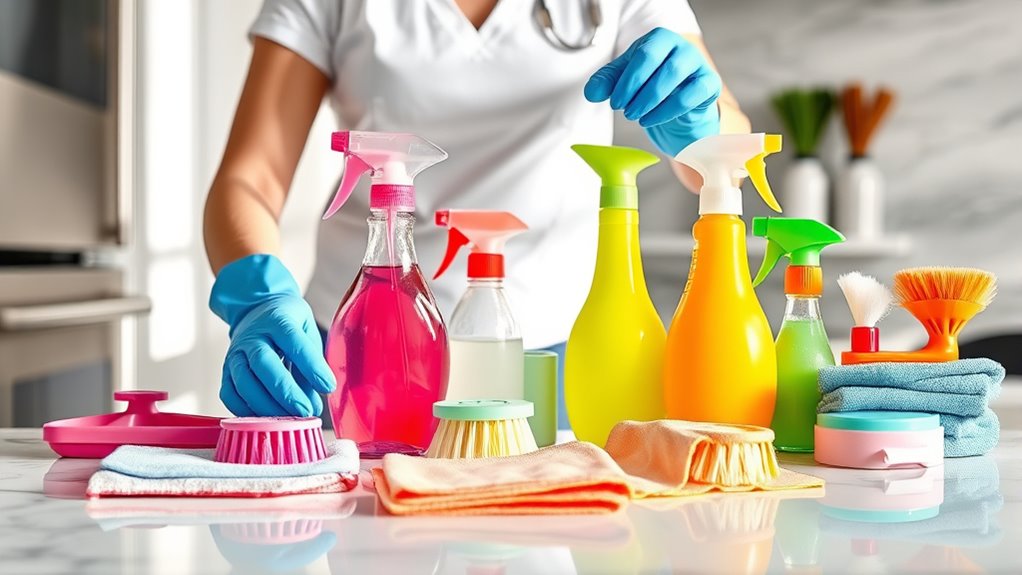
Have you ever wondered how to make your cleaning visit more efficient and effective? The key lies in setting clear priorities from the start. When you approach a cleaning session with a plan, you can manage your time better and ensure that the most important tasks get done first. Good time management begins with understanding what needs immediate attention and what can wait. Take a moment to evaluate the space—identify high-traffic areas, spots that tend to get dirty quickly, or any specific concerns your client has raised. This helps you focus your energy on the tasks that will make the biggest impact, avoiding wasted effort on less critical areas.
Setting clear priorities from the start boosts cleaning efficiency and effectiveness.
Task delegation also plays a crucial role in prioritizing. If you’re working with a team, assign responsibilities based on each person’s strengths and areas of expertise. Delegating tasks ensures that the workload is balanced and that each part of the cleaning process is handled efficiently. For example, someone might take charge of vacuuming while another handles bathroom sanitation. Not only does this save time, but it also promotes a smoother workflow, preventing bottlenecks. If you’re working alone, consider what tasks can be simplified or broken into smaller steps, and focus on completing the most urgent ones first.
Creating a checklist before starting can help solidify your priorities. Write down the tasks in order of importance, starting with those that have the most significant visual or hygienic impact. This way, even if time runs short, you’ve already completed the essentials. Remember, it’s better to do a few things well than to rush through everything and miss key spots. As you progress, keep evaluating your time and adjust your plan if needed. Sometimes, unexpected issues arise that demand immediate attention, and being flexible allows you to adapt without losing focus on your overall priorities.
Effective time management also involves setting a timer for each task. This prevents you from spending too much time on minor details and helps you stay on schedule. Prioritizing isn’t just about what gets done first but also about ensuring that the most important areas receive the appropriate amount of attention. Additionally, being aware of website performance metrics can help you understand how well your cleaning process is working and where improvements can be made. By delegating tasks when possible and managing your time wisely, you set yourself up for a productive cleaning visit. This approach not only results in a cleaner, healthier space but also leaves you with a sense of accomplishment, knowing you tackled the most critical aspects efficiently. In the end, setting clear priorities transforms a potentially overwhelming chore into a manageable, streamlined process.
Frequently Asked Questions
How Often Should I Reassess My Cleaning Priorities?
You should reevaluate your cleaning priorities whenever your cleaning schedule or task urgency changes. Regularly review your tasks weekly or monthly to make certain you’re focusing on the most urgent and important areas. If you notice new messes or your routine shifts, update your priorities promptly. This keeps your cleaning plan efficient and effective, preventing overlooked tasks and ensuring your space stays tidy and organized.
Can I Change Priorities Mid-Cleaning Session?
Yes, you can change priorities mid-cleaning session. If you notice something urgent, adjust your cleaning schedule accordingly. You might delegate tasks to others to handle new priorities or shift focus from less critical chores. Flexibility helps make sure you tackle the most important areas first, keeping your cleaning efficient and effective. Remember, adapting your plan as needed keeps your cleaning organized and responsive to unexpected needs.
What Tools Help in Prioritizing Cleaning Tasks Effectively?
You can use cleaning checklists and effective time management tools to prioritize tasks efficiently. Checklists help you clearly see what needs urgent attention, while timers or scheduling apps keep you on track. By breaking tasks into manageable steps and allocating specific time slots, you guarantee essential areas get cleaned first. These tools streamline your process, reduce stress, and make your cleaning visit more productive and organized.
How Do Priorities Differ for Residential vs. Commercial Spaces?
Ever wonder why cleaning priorities differ so much between homes and businesses? You focus on space-specific cleaning for residential spaces, like kitchens and bedrooms, aligning with client preferences for comfort and hygiene. In commercial spaces, you prioritize high-traffic areas and safety-critical zones, ensuring efficiency and compliance. By understanding these differences, you can tailor your approach, making each cleaning visit effective and satisfying your clients’ unique needs.
Is It Better to Focus on Deep Cleaning or Surface Tidying First?
You should start with surface cleaning to quickly remove dust, dirt, and clutter, making the space look tidy. Once surfaces are clean, focus on deep sanitation to eliminate germs and bacteria, guaranteeing a healthier environment. Prioritizing surface tidying first creates a clean foundation, making deep cleaning more effective. This approach saves time and ensures your space looks presentable while also being thoroughly sanitized for safety.
Conclusion
By prioritizing your cleaning tasks, you’ll see faster, more satisfying results. Think of it like a map guiding you through a maze—focusing on the most important areas first clears the path for everything else. Just as investigating a theory reveals the truth behind complex ideas, setting clear priorities uncovers what truly needs attention. Stay organized, tackle high-impact tasks first, and enjoy a cleaner, more comfortable space with less stress and more efficiency.