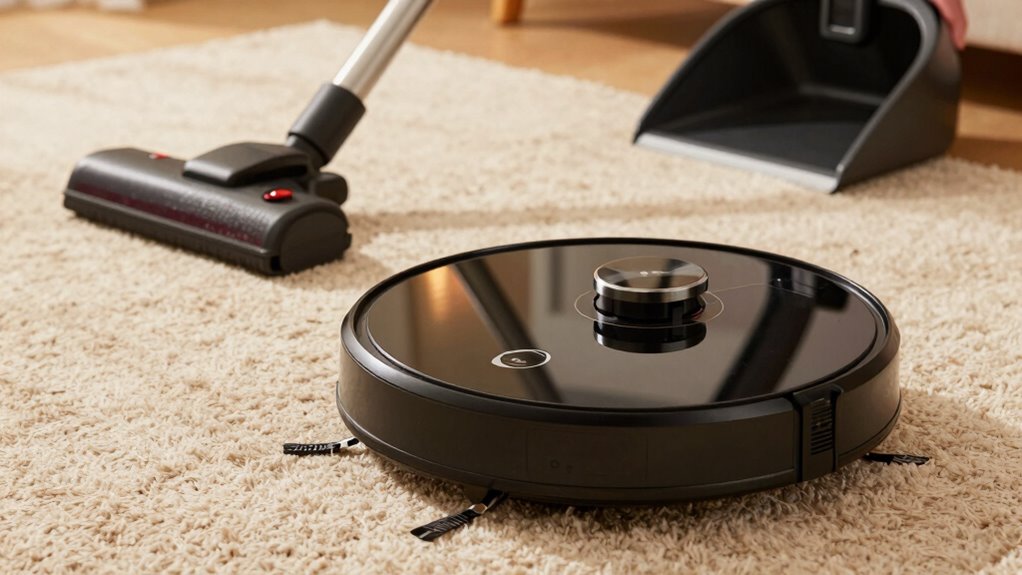
Robot vacuums are great for daily upkeep, helping you keep surface dust, pet hair, and crumbs under control with ease. They save you time and effort but can’t match the thoroughness of deep cleaning, which removes embedded dirt, allergens, and bacteria. While they’re perfect for regular maintenance, they shouldn’t replace occasional deep cleans with traditional vacuums or steamers. Keep going to discover how combining both methods can keep your home truly spotless.
Key Takeaways
- Robot vacuums efficiently handle daily surface cleaning but lack the power for deep grime removal.
- They are ideal for regular maintenance but cannot reach embedded dirt in carpets or rugs.
- Deep cleaning is necessary to remove allergens, bacteria, and deeply settled dirt that robots can’t access.
- Combining robot vacuum use with periodic deep cleaning maintains better overall hygiene and air quality.
- Relying solely on robot vacuums overlooks the need for thorough sanitation and intensive dirt removal.
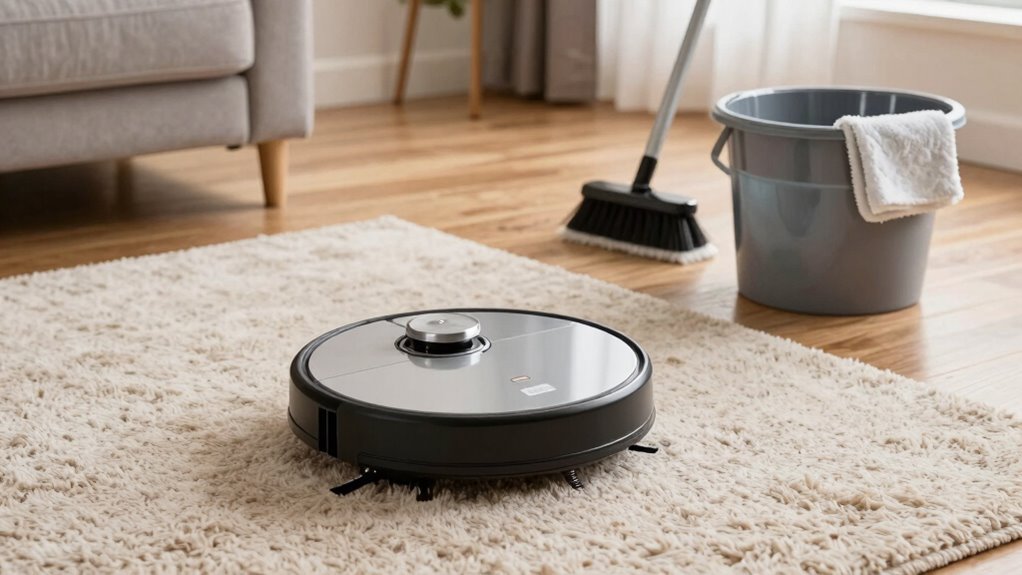
Have you ever wondered if robot vacuums can truly handle thorough cleaning? The truth is, while these devices are fantastic for maintaining cleanliness day-to-day, they do have limitations. Robot vacuum limitations mean they’re not designed to replace the meticulousness of traditional cleaning methods. They excel at quickly sweeping up surface dust, pet hair, and crumbs from floors, but when it comes to deep cleaning, they can’t reach all the stubborn dirt hiding in carpets or beneath furniture. Their sensors and brushes are optimized for surface debris, not for extracting deeply embedded grime or sanitizing thoroughly. That’s where the deep cleaning benefits of a traditional vacuum or professional cleaning come into play.
Robot vacuums are excellent for regular maintenance, helping you stay on top of daily messes without much effort. You can set them to run automatically, and they’ll keep your floors looking tidy. This convenience means you spend less time sweeping or vacuuming manually, freeing you up for other chores or relaxation. However, because of their limited suction power compared to upright or canister vacuums, they often leave behind dirt that’s settled deep in carpets or rugs. They’re also less effective on uneven surfaces, area rugs, or heavily soiled spots. So, while they do a great job at maintaining cleanliness, they shouldn’t be relied upon solely for exhaustive deep cleaning.
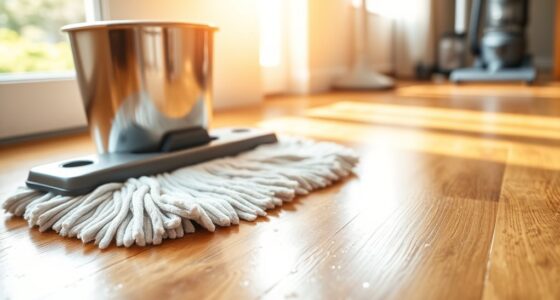
Deep cleaning benefits go beyond surface dirt. When you deep clean, you remove allergens, bacteria, and embedded grime that regular vacuuming can’t reach. This process improves air quality and prolongs the life of your carpets and flooring. Using a traditional vacuum or steam cleaner allows you to focus on those problem areas that accumulate dirt over time, something robot vacuums simply can’t do. They lack the power and thoroughness needed for this kind of cleaning, highlighting the importance of combining regular robot vacuum maintenance with periodic deep cleaning sessions. Additionally, understanding air quality improvement can motivate you to incorporate thorough cleaning routines into your home care. Incorporating backup power solutions can ensure that your cleaning devices, especially during power outages, remain operational for consistent maintenance. Furthermore, recognizing the importance of Biodiversity and conservation can inspire more environmentally conscious cleaning practices that minimize chemical use and waste.
Ultimately, robot vacuums serve as a valuable tool for everyday upkeep, but they’re not a replacement for deep cleaning. They help maintain a tidy home, reduce the frequency of intensive cleaning sessions, and save you time. Still, to truly ensure your home is hygienic and free of hidden dirt, you’ll need to schedule deep cleans with traditional methods. Incorporating proper cleaning tools and techniques can significantly enhance your overall home hygiene. Additionally, understanding that regular cleaning routines are crucial for maintaining a healthy environment can help you develop a balanced cleaning schedule. When you understand their limitations and benefits, you can use robot vacuums to complement your cleaning routine effectively, rather than relying on them to do all the heavy lifting.

Eureka Lightweight Powerful Upright Vacuum Cleaner for Carpet and Hard Floor, PowerSpeed, New Model,Blue,black/New Model
- Cyclone System: Handles large debris and microscopic dust
- Powerful Pick-up: Deep cleans carpets and floors
- Lightweight Design: Easy to maneuver and carry
As an affiliate, we earn on qualifying purchases.
As an affiliate, we earn on qualifying purchases.
Frequently Asked Questions
Can Robot Vacuums Clean Carpets Better Than Traditional Vacuums?
Robot vacuums can’t clean carpets better than traditional vacuums because of their limitations in suction power and brush design. You might notice they struggle with deeply embedded dirt, especially on thick or shaggy carpets. While they handle surface dust well, they often miss debris hidden deep within fibers. For thorough cleaning, traditional vacuums remain essential, especially to overcome common cleaning challenges like stubborn dirt and carpet pile depth.
How Often Should I Manually Deep Clean After Using a Robot Vacuum?
You should manually deep clean your home every one to three months after using a robot vacuum. Imagine manually scrubbing stubborn spots and reaching hidden corners, preventing dust buildup and allergens. This routine enhances allergy prevention and guarantees your space stays fresh. Regular manual cleaning keeps your floors pristine, complements the robot’s maintenance, and creates a healthier environment, especially if you or family members have allergies or respiratory sensitivities.
Do Robot Vacuums Work Well on Hardwood or Tile Floors?
Robot vacuums work well on hardwood and tile floors, especially with good floor changes. They efficiently clean surface dust and debris, enhancing your floor’s appearance. However, battery life can impact their effectiveness on larger spaces, so make certain they have enough charge to finish the job. Regular maintenance and clearing floor passages help prevent issues, letting your robot vacuum perform at its best without replacing deep cleaning for stubborn dirt.
Are Robot Vacuums Effective at Removing Pet Hair?
Robot vacuums are fairly effective at pet hair removal, especially on hard floors, but they do have limitations. They can pick up a good amount of loose pet hair, reducing daily messes. However, their suction power and brush design can struggle with stubborn or embedded pet hair in carpets. Rely on manual cleaning for deep removal, as robot vacuum limitations mean they don’t fully replace thorough, deep cleaning sessions.
What Maintenance Is Required to Keep Robot Vacuums Functioning Properly?
To keep your robot vacuum functioning properly, you need to regularly clean the dust bin and check for clogs. Make sure the battery lifespan remains ideal by avoiding overcharging and charging it correctly. Replace the battery when it shows signs of decreased performance. Keep the brushes and filters clean, and update the software if applicable. Regular maintenance like this helps your robot vacuum perform efficiently and prolongs its lifespan.
Conclusion
Robot vacuums are like your trusty sidekicks, effortlessly keeping up with daily dirt and dust. But just like a skilled gardener needs to tend their plants deeply, you need deep cleaning to truly refresh your home. Together, they form a perfect team—one handles the surface, while the other digs deeper. Think of it as a dance where both partners move in harmony, ensuring your space stays sparkling and fresh, no matter how busy life gets.