To maintain your floors between professional visits, make sure to sweep or vacuum regularly to remove dirt and debris. Use gentle, pH-balanced cleaners suited for your floor type and avoid harsh chemicals. Place mats at entry points to trap grit, move furniture to prevent scratches, and promptly address any signs of damage. Keep a consistent routine and protect high-traffic areas to extend your floor’s life. Stay with us to learn more tips for keeping your floors pristine.
Key Takeaways
- Sweep or vacuum floors regularly to remove dirt and debris, preventing scratches and buildup.
- Use a damp mop with a pH-balanced cleaner suitable for your floor type to maintain shine.
- Place mats or rugs at entry points to trap dirt and reduce wear in high-traffic areas.
- Move furniture periodically and use pads to prevent scratches and gouges.
- Address minor damage promptly and keep pathways clear to facilitate effective cleaning.

Ever wonder how to keep your floors looking clean and well-maintained between professional visits? It all starts with establishing effective cleaning routines and managing wear and tear. Developing a consistent approach helps prevent dirt buildup and minimizes damage over time, ensuring your floors stay inviting and in top shape longer. Regularly sweeping or vacuuming is fundamental. It removes loose dirt, dust, and debris that can cause microscopic scratches or dullness if left unattended. Aim to do this daily or every few days, depending on foot traffic. Use a soft-bristled broom or a vacuum with a suitable floor attachment to avoid unnecessary scratches. Incorporating vertical storage solutions can also help keep clutter off floors, reducing tripping hazards and keeping pathways clear for cleaning.
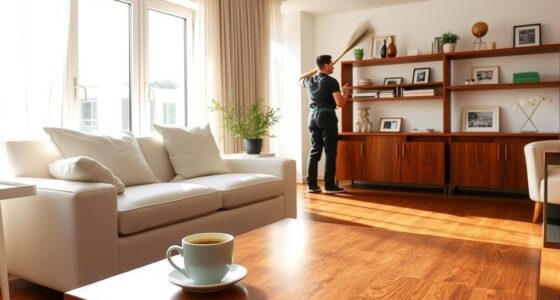
Regular sweeping or vacuuming prevents dirt buildup and keeps floors looking fresh.
In addition to sweeping, establish a routine for mopping with a gentle, pH-balanced cleaner appropriate for your floor type. Avoid harsh chemicals that can degrade finishes or cause discoloration. When mopping, don’t oversaturate the surface—excess water can seep into seams or beneath flooring material, accelerating wear and tear. Instead, use a damp mop and dry the floor thoroughly afterward. This practice not only keeps floors looking shiny but also reduces the risk of damage from moisture.
Managing wear and tear is equally vital. High-traffic areas tend to show signs of deterioration faster, so consider placing rugs or mats at entry points to trap dirt and grit before they scratch or dull the surface. Moving furniture slightly or using furniture pads prevents scuff marks and indentations. Regularly inspecting your floors for early signs of damage allows you to address issues before they worsen, saving money on repairs or refinishing. For example, if you notice small scratches or dull patches, gentle buffing or specialized floor polishes can restore their appearance.
Implementing these routines and wear and tear management strategies helps extend your floors’ lifespan. Avoid dragging heavy objects across the surface, as this can cause gouges or scratches. Instead, lift or slide items carefully. Also, control indoor humidity levels; excessive moisture can cause warping or swelling, especially on wooden floors. Using dehumidifiers or air conditioners during humid months can make a significant difference.
Frequently Asked Questions
Can I Use Household Cleaning Products on My Floors?
You can use household cleaners on your floors, but you should choose products carefully. Not all household cleaners are suitable, as some can cause floor damage or dull the finish. Always check the label and opt for gentle, pH-neutral cleaners. Test a small area first to prevent damage, and avoid harsh chemicals. Properly maintained floors stay beautiful longer, so using the right cleaners helps keep your floors in great shape between professional visits.
How Often Should I Reapply Floor Sealant or Finish?
You should reapply the floor sealant or finish every 1 to 3 years, depending on foot traffic and wear. Regular sealant reapplication helps maintain a protective layer, ensuring durability and shine. Keep an eye out for signs of dullness or scratches, which indicate it’s time for a finish renewal. Consistent maintenance preserves your floors’ appearance and extends their lifespan, making reapplication a essential part of ongoing floor care.
Are There Specific Mats or Rugs That Help Protect Floors?
You should choose floor mat options like rubber, coir, or microfiber mats to protect your floors effectively. Place rugs at entry points to trap dirt and moisture, preventing scratches and stains. Use rug placement tips such as securing rugs with non-slip pads and avoiding thick rugs that can trap debris. Regularly clean and reposition mats and rugs to maintain their protective benefits, keeping your floors looking new longer.
What Is the Best Way to Remove Stubborn Stains?
For stubborn stains, you should start with gentle stain removal techniques. Use cleaning tips like blotting the area with a clean cloth and applying a mixture of mild detergent and water. For tougher stains, consider a specialized floor cleaner or a vinegar solution. Always test a small, hidden area first to avoid damage. Regular maintenance and prompt stain removal will keep your floors looking their best between professional visits.
How Do I Prevent Scratches From Furniture Movement?
Think of your floor as a delicate dance floor, and furniture as dancers. To prevent scratches from furniture movement, always use furniture pads—soft cushions that act as gentle shields. These pads create a barrier, turning rough moves into smooth glides. Regularly check and replace them to keep scratch prevention first-rate. With furniture pads, you protect your floors and keep your space looking pristine, as if no movement ever occurred.
Conclusion
Keeping your floors clean between professional visits is essential for a healthy home. Regular sweeping and quick spills cleanup can extend the life of your flooring. Did you know that neglecting floor maintenance can reduce its lifespan by up to 50%? By staying proactive, you not only preserve your floors’ beauty but also save money in the long run. Make these small efforts a habit—you’ll enjoy a cleaner, more inviting space every day.