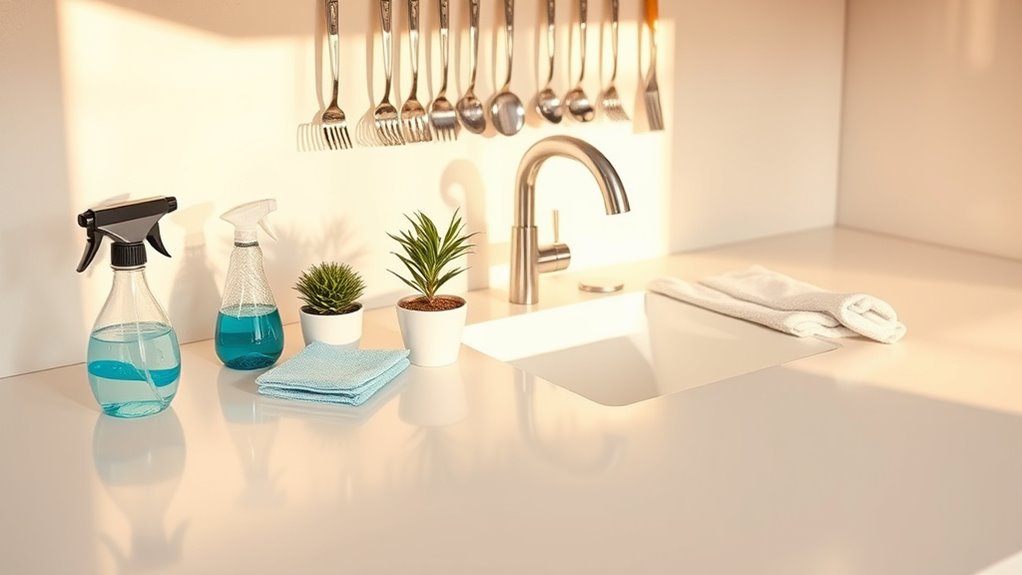

To keep surfaces tidy between visits, wipe them down daily with microfiber cloths and all-purpose sprays, especially in high-traffic zones. Use trays or small baskets to contain clutter, and place coasters or placemats to protect surfaces from spills and scratches. Make quick cleanup a habit by putting items in designated spots and inspecting protective accessories regularly. Want more tips? Keep going to learn how simple steps can make tidiness a breeze.
Key Takeaways
- Wipe down surfaces daily with microfiber cloths to remove dust and prevent buildup.
- Use storage trays or baskets to contain small items and reduce clutter.
- Implement a quick cleanup routine after each use to prevent crumbs and stains.
- Apply protective accessories like coasters and placemats to minimize damage and spills.
- Regularly inspect and clean tools and protective covers to maintain their effectiveness.
Have you ever noticed how a cluttered surface can make your entire space feel chaotic? When your tables, countertops, or desks are covered in miscellaneous items, it’s easy to feel overwhelmed even before stepping inside. To keep surfaces tidy between visits, you need a plan that’s simple, practical, and sustainable. It all begins with the right cleaning tools and understanding your surface materials. Using appropriate cleaning tools ensures you don’t damage delicate surfaces, while knowing your surface materials helps you choose the correct cleaning products and techniques.
Start by gathering essential cleaning tools like microfiber cloths, soft brushes, and gentle all-purpose sprays. Microfiber cloths are versatile and effective at trapping dust and dirt without scratching surfaces. They’re especially useful on smooth, hard surfaces like glass, wood, or laminate. For more textured or delicate surfaces—such as painted wood or marble—use soft brushes or specific cleaning pads designed for delicate materials. Avoid harsh scrubbers that can scratch or dull your surface materials and create more clutter in the long run. Keep these tools easily accessible to encourage regular tidying and quick cleanups.
When it comes to surface materials, understanding what you’re dealing with is vital. For example, hardwood surfaces require gentle cleaning with a damp cloth and a mild cleaner to prevent warping or discoloration. Marble and granite need specific pH-neutral cleaners to avoid etching or staining. Plastic surfaces can often be cleaned with a standard all-purpose spray and a microfiber cloth, but make sure the cleaner doesn’t contain abrasive ingredients. Knowing your surface materials helps you select the right cleaning tools and products, reducing the risk of damage and making your efforts more effective. Incorporating appropriate storage solutions can further simplify maintaining cleanliness and organization.
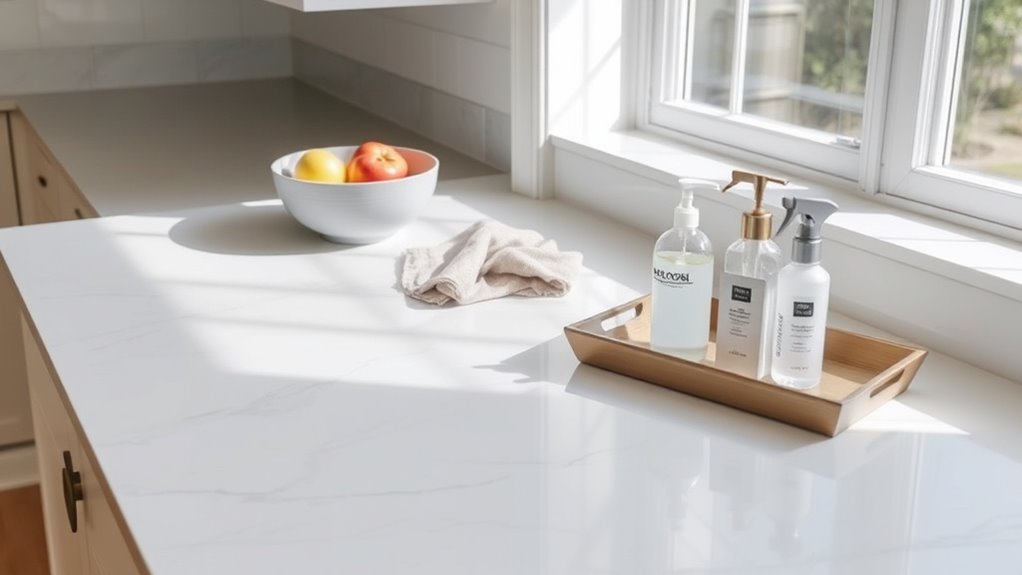
To maintain tidiness between visits, establish a quick daily routine. Wipe down surfaces with a microfiber cloth after use, especially in high-traffic areas like kitchen counters or work desks. Pick up clutter immediately—put items where they belong or designate specific spots for frequently used objects. Consider using storage solutions like trays or small baskets to contain smaller items and reduce visual clutter. This quick cleanup keeps surfaces looking neat and prevents buildup of dust and crumbs, making deep cleaning less necessary over time.
In addition to regular wiping and decluttering, consider applying protective measures, such as coasters on wooden tables or placemats on dining surfaces. These barriers shield your surface materials from spills, stains, and scratches, extending their lifespan. Ultimately, keeping surfaces tidy isn’t just about aesthetics; it’s about creating an organized, welcoming space that feels calm and clean. With the right tools and knowledge of your surface materials, you can maintain a tidy environment effortlessly between visits, making your home or workspace a more enjoyable place to be.
Frequently Asked Questions
What Are the Best Everyday Cleaning Products for Surfaces?
You should use natural cleaners like vinegar or lemon juice for daily surface cleaning, as they’re effective and eco-friendly. Disinfectant sprays are also great for killing germs quickly, especially on high-touch areas. Keep a spray bottle handy for quick wipes, and combine them with a soft cloth or microfiber towel to maintain cleanliness. These products help you keep surfaces tidy between visits without harsh chemicals, ensuring a safer, fresher space.
How Often Should I Disinfect High-Touch Surfaces?
Imagine your hands, like busy traffic, constantly touching surfaces. You should disinfect high-touch surfaces daily to follow effective disinfecting protocols, especially in high-traffic areas. This routine helps protect surface durability and reduces germs’ spread. If you notice visible dirt or after gatherings, disinfect more often. Staying consistent keeps your environment safe and clean, preventing germs from settling in and ensuring your surfaces stay durable and hygienic over time.
Are There Eco-Friendly Options for Surface Cleaning?
Yes, you can choose eco-friendly options like biodegradable sprays and reusable cloths for surface cleaning. Biodegradable sprays break down naturally, reducing environmental impact, while reusable cloths minimize waste compared to disposable wipes. You simply spray the surface and wipe with your cloth, ensuring cleanliness without harming the planet. These eco-friendly choices are effective, sustainable, and help you maintain tidy surfaces between visits responsibly.
How Can I Prevent Surface Stains and Damage?
To prevent surface stains and damage, you should regularly clean with eco-friendly products and avoid harsh chemicals. Use coasters and placemats to protect surfaces from spills and heat. Wipe up messes promptly to prevent stains from setting. Additionally, consider sealing porous surfaces to block stains and reduce damage. By being proactive, you’ll maintain your surfaces’ appearance and durability, making stain prevention and damage avoidance easier over time.
What Storage Tips Help Keep Surfaces Clutter-Free?
Did you know that clutter can reduce productivity by up to 40%? To keep surfaces clutter-free, use an organizing drawer for quick access to essentials and decorative storage to hide items out of sight. Regularly sorting and labeling these containers helps prevent buildup. Clear, designated spaces make it easier to maintain a tidy surface, ensuring your space stays clean and inviting between visits.
Conclusion
Think of your surfaces as a garden—you wouldn’t let weeds take over overnight. With just a quick daily wipe or a basket nearby for clutter, you keep things neat and inviting. I once left a coffee mug on my desk for a week, and it felt like a small riot. But when I cleaned it up daily, everything stayed calm and organized. Small daily efforts make a big difference—your tidy space is just a habit away.