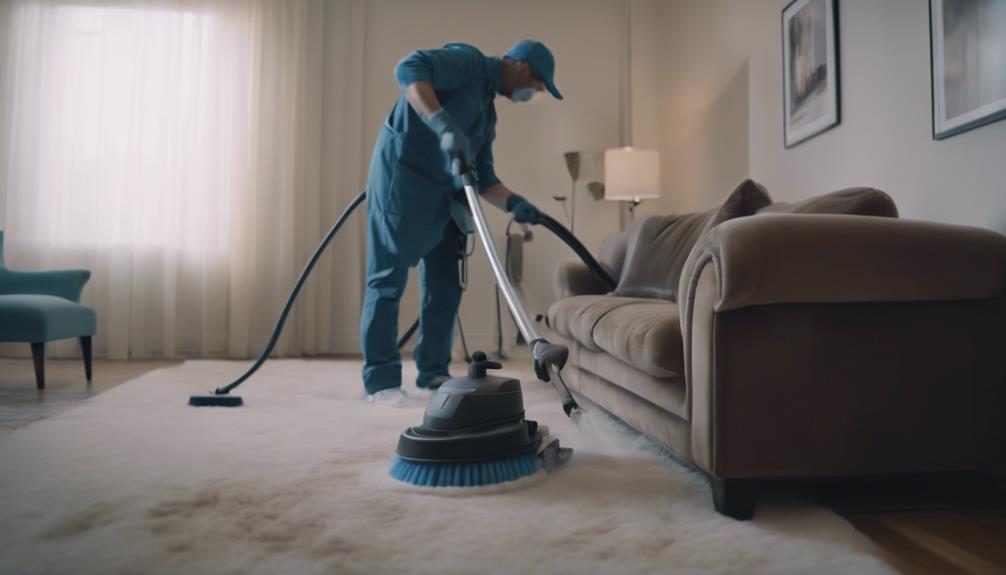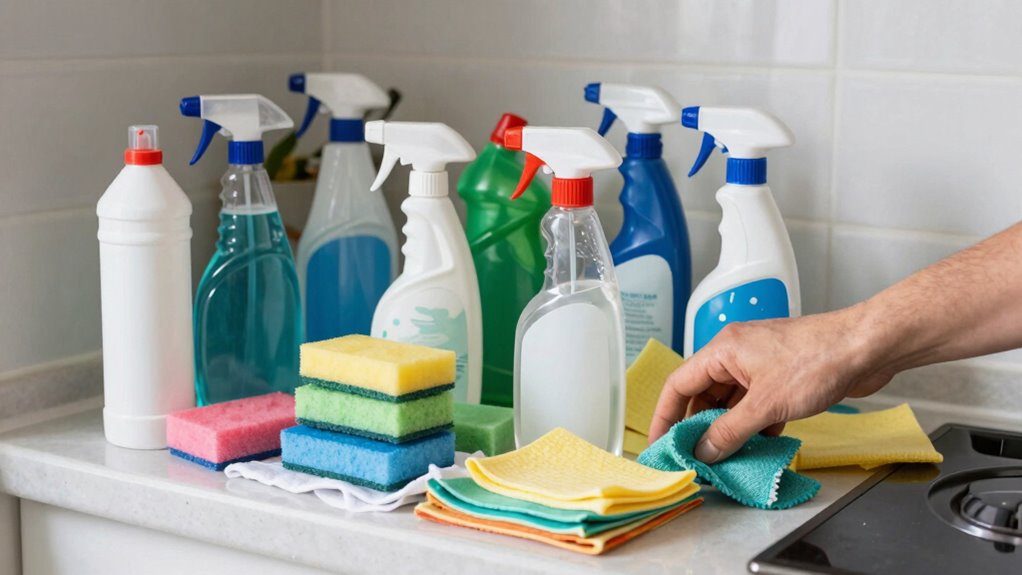

Using too much cleaning product might seem like it would clean faster, but it often leads to a sticky residue on surfaces that’s hard to remove. This leftover film attracts dirt and dust, forcing you to scrub more and spend extra time. Overapplication also causes chemical buildup, which can damage delicate surfaces and make subsequent cleanings tougher. If you keep these tips in mind, you’ll discover how proper amounts can actually save your time and effort.

Get cleaning gear delivered free with Prime
- Fast, free delivery on millions of items
- Prime Video, Amazon Music and more included
- Member-only deals all year
Key Takeaways
- Excess cleaning product creates sticky residues that attract dirt, requiring more effort to clean thoroughly.
- Overapplication leads to chemical buildup, making surfaces harder to clean and increasing scrubbing time.
- Too much product leaves residues that obscure surface clarity and may cause discoloration over time.
- Excess chemicals waste resources, prolonging rinsing and overall cleaning time.
- Using more product than necessary increases health risks and requires additional effort to remove residues properly.
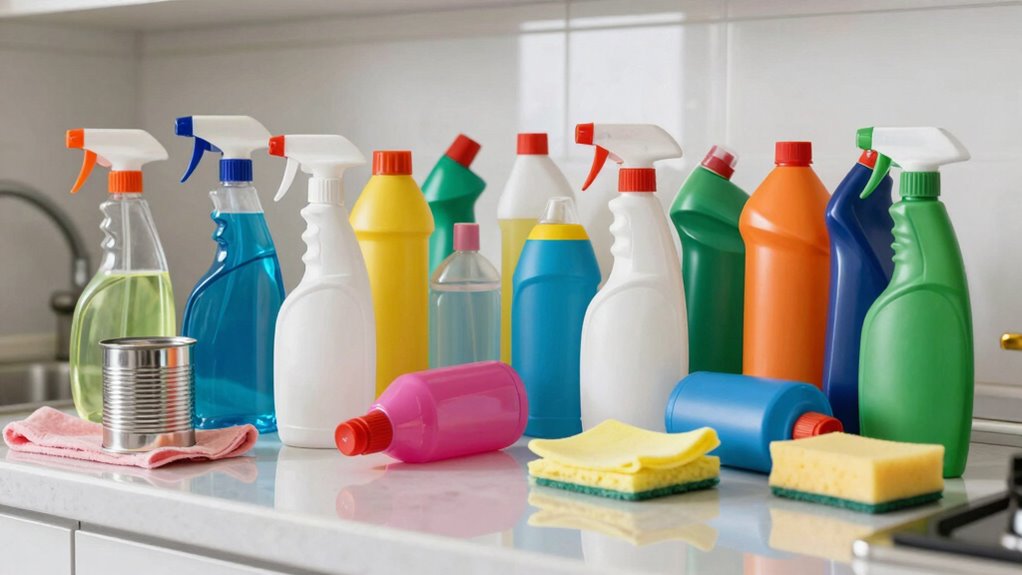
Using too much cleaning product might seem like a quick fix, but it often slows you down instead of speeding up the job. When you pour excessive amounts of cleaner, you risk creating a layer of surface residue that hampers your efforts rather than helping them. The more product you use, the more difficult it becomes to remove completely. Instead of leaving surfaces spotless, you might end up with a sticky film that attracts dirt and dust, forcing you to go over the same area multiple times. This extra effort not only wastes time but also leaves your surfaces less clean than you intended.
Using too much cleaner slows you down with sticky residue and repeated scrubbing. Less is more for a faster, cleaner job.
Another issue with overusing cleaning products is chemical buildup. When too much cleaner is applied and not properly rinsed away, it can accumulate on surfaces, creating a stubborn film. This buildup can be especially problematic on delicate materials like glass or laminate, where residue can obscure clarity or cause discoloration over time. Chemical buildup can also interfere with the next cleaning process, making it harder for new products to work effectively. You might find yourself constantly battling the residue, scrubbing longer and harder just to get rid of it. This cycle slows your progress and can even damage surfaces if you’re not careful. Additionally, using excessive product can lead to chemical residue, which may pose health risks if not properly managed. Being aware of appropriate cleaning techniques can help prevent these issues and promote safer, more effective cleaning.
Using excessive product also leads to wasted supplies, which isn’t just about cost but also about environmental impact. More product means more packaging waste and a greater chance of using harmful chemicals unnecessarily. Instead of being efficient, you’re contributing to pollution and depletion of resources. Plus, the more cleaning product you use, the more complex the rinsing process becomes. You need to spend extra time wiping and rinsing to eliminate surface residue and prevent chemical buildup. This prolongs your cleaning routine, making it less efficient and more frustrating. Properly measuring and applying cleaning solutions can help avoid overuse of chemicals, ensuring a safer and more eco-friendly cleaning process. Adopting controlled application methods not only reduces waste but also supports sustainable practices.
In addition, overusing cleaning products can also lead to potential health hazards, especially if residues are left on frequently touched surfaces. To clean effectively and quickly, it’s best to use just the right amount of product. A small amount often works better because it dissolves surface residue efficiently without leaving behind a film. Proper technique—like using a damp cloth and rinsing thoroughly—can eliminate surface residue and prevent chemical buildup. When you don’t overapply, you reduce the need for repeated scrubbing, saving both time and effort. The key is to remember that more isn’t always better; in cleaning, moderation often leads to faster, cleaner results.
As an affiliate, we earn on qualifying purchases.
Frequently Asked Questions
How Do I Know the Right Amount of Cleaning Product to Use?
You know you’re using the right amount of cleaning product when your cleaning frequency stays manageable and surfaces look clean without residue. Start with a small amount, then adjust if needed. Proper surface preparation involves using just enough product to break down dirt without overwhelming the surface. Too much can slow you down, so always follow the manufacturer’s instructions and test in a small area first.
Can Using Less Product Still Effectively Clean Surfaces?
Think of cleaning like watering a plant—you don’t need to drown it to help it thrive. Using less product can still clean surfaces effectively, especially if you choose eco-friendly alternatives and natural cleaning methods. These gentle options often require only a small amount to do the job, reducing waste and environmental impact. With the right approach, you can maintain a spotless home while being kind to the planet.
What Are the Common Mistakes When Applying Cleaning Products?
You often make mistakes when applying cleaning products by overusing them or not following instructions. Many fall for cleaning myths, thinking more product equals cleaner surface, but this leads to product overuse, which can slow down your cleaning process. Always measure your cleaning agents carefully, use the right amount, and follow label instructions. This way, you prevent product overuse, guarantee effective cleaning, and save time.
How Does Excess Product Affect the Cleaning Tools’ Performance?
Too much product can subtly hinder your cleaning tools’ performance. When you use excess, it leads to product buildup and residue accumulation on brushes, mops, and cloths. This buildup makes tools less effective, trapping dirt instead of lifting it away. As a result, cleaning takes longer, and surfaces may not get truly clean. To keep your tools working most effectively, use just enough cleaner and rinse thoroughly after each use.
Are There Specific Products That Tend to Cause Overuse Issues?
You’ll often face overuse issues with products like heavy-duty degreasers or thick disinfectants. These tend to cause product buildup and leave chemical residue on surfaces and tools, making cleaning less effective. When you overuse such products, they can be difficult to remove and slow down your cleaning process. To avoid this, use products in moderation, follow instructions carefully, and guarantee thorough rinsing to prevent residue buildup.
Conclusion
Remember, sometimes less truly is more. When you try to do too much at once, you risk clouding your efforts and slowing down progress. A gentle touch and a thoughtful approach often lead to a clearer, quicker path to cleanliness. Embrace simplicity, and you’ll find that what seems like a small change can make a big difference. After all, the best results often come from knowing when to step back and let things unfold naturally.
Fall Picks
fall essentials
As an affiliate, we earn on qualifying purchases.