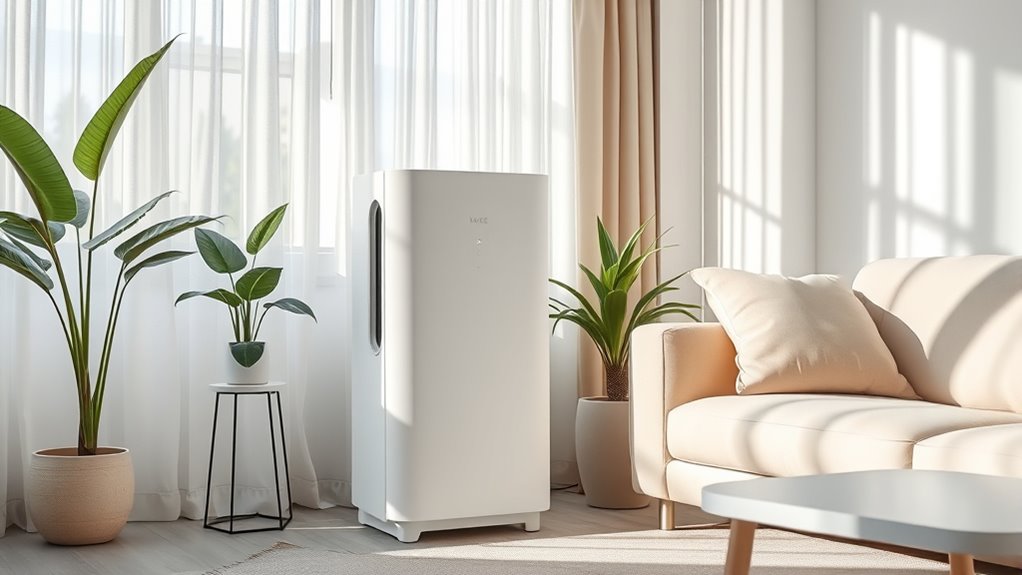
For home air purifiers for dust, I’d start with the Levoit Vital 200S-P as my best overall pick for its large-room focus and smart controls; the Winix 5520 stands out for buyers who want another large-room option, while the Levoit Core 300-P suits smaller spaces. The biggest tradeoff is between a purifier sized for broad coverage and a more compact unit that may be easier to place but serves less space. Filter replacement, fan noise, and the difference between washable prefilters and replaceable main filters also affect day-to-day value. Room-size claims are not directly comparable unless airflow and operating speed are similar. Read on for the full breakdown and guidance on matching a purifier to your room and routine.

Get cleaning gear delivered free with Prime
- Fast, free delivery on millions of items
- Prime Video, Amazon Music and more included
- Member-only deals all year
Complete the kit



Key Takeaways
- The Levoit Vital 200S-P leads this lineup for buyers prioritizing large-room use and smart controls, while compact models such as the Core Mini-P make more sense for a desk or small enclosed room.
- The Winix 5520 and other large-room models address a different need from small units: they are intended to move more air across larger spaces, but require more floor space and careful attention to fan noise.
- The VEWIOR two-pack offers a coverage strategy based on placing separate units in separate rooms; it is not the same as one purifier circulating air throughout a large open area.
- Washable prefilters can catch larger debris and reduce how often the main filter collects it, but they do not remove the need to maintain or replace the primary filter as directed.
- Smart features, aromatherapy, and extra modes add convenience or flexibility, but room fit, clean-air delivery, and filter upkeep matter more for a dust-focused purchase.
| KNKA APH4000 Air Purifier for Home, White |  | Best Overall for Dust in Mid-Sized Rooms | Model: APH4000 | Color: White | Maximum coverage: 1,695 ft² | VIEW ON AMAZON | See Our Full Breakdown |
| MOOKA Air Purifier for Home, Up to 2,200 sq. ft., White |  | Best for Quiet, Feature-Rich Everyday Use | Coverage: Up to 2,200 ft² | Filtration: Three-stage system with washable pre-filter and HEPA filter | Fan speeds: 4 | VIEW ON AMAZON | See Our Full Breakdown |
| VEWIOR Two-Pack Air Purifiers with Washable Filters, for Rooms up to 1,200 sq. ft. |  | Best for Dust Control Across Multiple Rooms | Package quantity: 2 air purifiers | Coverage area: Up to 1,200 ft² | Air circulation: 5 times per hour | VIEW ON AMAZON | See Our Full Breakdown |
| LEVOIT Vital 200S-P Smart Air Purifier for Large Rooms |  | Best for Large-Room Dust Filtration | Coverage area: Up to 1,875 ft² | CADR (smoke): 250 CFM | CADR (dust): 254 CFM | VIEW ON AMAZON | See Our Full Breakdown |
| Dhyala Air Purifier with Wi-Fi, Dual Filters, and Aromatherapy |  | Best Connected Pick for Large Spaces | Coverage: Up to 3,000 ft² at one air change per hour | CADR: Up to 265 CFM | Filtration: Dual filters; three stages per filter: pre-filter, HEPA filter, activated carbon filter | VIEW ON AMAZON | See Our Full Breakdown |
| Levoit Vital 100S-P Air Purifier for Pets |  | Best for Pet Hair and Smart Control | Filtration: 3-stage; 99.97% capture for particles sized 0.1–0.3 μm | Coverage: Up to 1,073 sq ft at 1 air change per hour | Air changes: 4.8 per hour in rooms up to 222 sq ft | VIEW ON AMAZON | See Our Full Breakdown |
| FreAire Air Purifier for Large Rooms with HEPA Filter |  | Best for Large-Room Air Monitoring | Coverage: Up to 2,600 ft² per hour | Filter: HEPA filter with washable pre-filter | Particle capture: 99.97% | VIEW ON AMAZON | See Our Full Breakdown |
| MOOKA PR1 Air Purifier for Large Rooms, White |  | Best for Families Wanting Flexible Modes | Coverage: Up to 2,200 sq ft | Filtration: Four-stage system with washable pre-filter | Fan modes: Sleep, I, II, III, Auto, and Pet | VIEW ON AMAZON | See Our Full Breakdown |
| Levoit Core 300-P Air Purifier |  | Best Simple Pick for Bedrooms | Filtration: 3-in-1; 99.97% capture for 0.1–0.3-micron particles | Dust CADR: 153 CFM | Smoke CADR: 143 CFM | VIEW ON AMAZON | See Our Full Breakdown |
| PAKEOI ZX001 HEPA Air Purifier for Large Rooms, White |  | Best for Very Quiet Large-Room Operation | Coverage: Up to 3,000 ft² per hour | Air intake: Dual-sided | Pre-filters: Two removable, washable filters | VIEW ON AMAZON | See Our Full Breakdown |
| VOOPNU Air Purifier for Home, Covers Up to 1,076 sq ft, White |  | Best Compact Pick for Quiet Dust Filtration | Coverage: Up to 1,076 sq ft | Dimensions: 6.69 × 6.69 × 9.84 in | Filtration: Triple-layer filter; claims 99.97% capture of airborne pollutants | VIEW ON AMAZON | See Our Full Breakdown |
| Levoit Core Mini-P Air Purifier |  | Best for Small Rooms and First-Time Buyers | Power: 7 W | Input: 100–240 V, 50/60 Hz | Noise level: 27–45 dB | VIEW ON AMAZON | See Our Full Breakdown |
| Winix 5520 Air Purifier for Large Rooms |  | Best Large-Room Pick with Automatic Sensing | Coverage: Up to 1,882 sq ft in 1 hour | Filtration: Four-stage system with True HEPA, carbon filter, and washable fine mesh pre-filter | Particle capture: Claims 99.99% capture of airborne allergens as small as 0.01 microns | VIEW ON AMAZON | See Our Full Breakdown |
| ECOSELF HEPA Air Purifier for Large Rooms up to 1,800 sq. ft. |  | Best for Quiet, Feature-Rich Dust Control | Coverage area: Up to 1,800 sq ft | Filtration: Pre-filter, HEPA filter, and activated carbon layer | Air intake: 360° | VIEW ON AMAZON | See Our Full Breakdown |
| home air purifiers for dust | Filtration | Coverage |
|---|---|---|
| KNKA APH4000 Air Purifier for | Dual three-stage filters: washable pre-filter, high-efficiency filter, activated carbon filter | — |
| MOOKA Air Purifier for Home | Three-stage system with washable pre-filter and HEPA filter | Up to 2,200 ft² |
| VEWIOR Two-Pack Air Purifiers | Three-stage: washable pre-filter, H13 filter, activated carbon | — |
| LEVOIT Vital 200S-P Smart Air | — | — |
| Dhyala Air Purifier with Wi-Fi | Dual filters; three stages per filter: pre-filter, HEPA filter, activated carbon filter | Up to 3,000 ft² at one air change per hour |
| Levoit Vital 100S-P Air Purifi | 3-stage; 99.97% capture for particles sized 0.1–0.3 μm | Up to 1,073 sq ft at 1 air change per hour |
| FreAire Air Purifier for Large | — | Up to 2,600 ft² per hour |
| MOOKA PR1 Air Purifier for Lar | Four-stage system with washable pre-filter | Up to 2,200 sq ft |
| Levoit Core 300-P Air Purifier | 3-in-1; 99.97% capture for 0.1–0.3-micron particles | Up to 1,073 sq ft |
| PAKEOI ZX001 HEPA Air Purifier | — | Up to 3,000 ft² per hour |
| VOOPNU Air Purifier for Home | Triple-layer filter; claims 99.97% capture of airborne pollutants | Up to 1,076 sq ft |
| Levoit Core Mini-P Air Purifie | — | — |
| Winix 5520 Air Purifier for La | Four-stage system with True HEPA, carbon filter, and washable fine mesh pre-filter | Up to 1,882 sq ft in 1 hour |
| ECOSELF HEPA Air Purifier for | Pre-filter, HEPA filter, and activated carbon layer | — |
More Details on Our Top Picks
KNKA APH4000 Air Purifier for Home, White
The KNKA APH4000 is my strongest all-round pick for dust when the main room is closer to 350 square feet than to its headline maximum. Its stated 226 CFM dust CADR and up to 4.8 air changes per hour in a 350-square-foot room give buyers a clearer basis for choosing it than coverage figures alone. Dual three-stage filters combine washable pre-filters with high-efficiency media and activated carbon, so routine hair and larger debris can be removed from the pre-filter while the main filters handle finer particles. Compared with the MOOKA 2,200-square-foot model, KNKA provides a more explicit room-refresh rate for focused cleaning; the MOOKA instead emphasizes broader nominal coverage and extra controls. KNKA’s tradeoff is that its 1,695-square-foot maximum means only one refresh per hour, and filter replacement is recommended every 3–6 months.
Pros:- Stated dust CADR of 226 CFM and 4.8 air changes per hour in rooms up to 350 square feet
- Dual three-stage filters include washable pre-filters and activated carbon
- Real-time air-quality display and automatic mode help guide fan operation
- Sleep mode is rated at 22–24 dB
Cons:- The 1,695-square-foot maximum coverage is rated at just one air change per hour
- Main filters are recommended for replacement every 3–6 months
- Four fan speeds offer less adjustment than models with more granular controls
Best for: Households seeking frequent dust filtration in a living room or bedroom up to about 350 square feet, especially those who want a washable pre-filter and air-quality display.
Not ideal for: Buyers who need frequent air changes across a very large open-plan space; its maximum stated coverage is only one refresh per hour.
- Model:APH4000
- Color:White
- Maximum coverage:1,695 ft²
- Air changes:4.8 per hour in rooms up to 350 ft²; 1 per hour up to 1,695 ft²
- Smoke/Dust/PM2.5 CADR:226 CFM (384 m³/h)
- Filtration:Dual three-stage filters: washable pre-filter, high-efficiency filter, activated carbon filter
- Sleep mode noise:22–24 dB
- Filter replacement interval:3–6 months
Our verdict“Choose the KNKA APH4000 for a well-specified, frequent-refresh dust purifier in a mid-sized room, not for rapid cleaning across its largest claimed area.”
MOOKA Air Purifier for Home, Up to 2,200 sq. ft., White
The MOOKA suits dust-conscious households that want automatic operation and bedroom-friendly settings without relying on a complicated setup. Its PM2.5 display and auto mode let the purifier respond to detected air quality, while the washable pre-filter can catch larger debris before it reaches the HEPA filter. At 20 dB in sleep mode, it has a quieter stated low setting than the KNKA APH4000, making it a better fit for light sleepers. The MOOKA also adds timers, a child lock, and an aromatherapy pad, though scent is an optional extra rather than a dust-control benefit. Its 2,200-square-foot coverage claim lacks a stated air-change rate, so I would not treat it as equivalent to fast cleaning across that whole area. Buyers who prioritize documented CADR and refresh rates may prefer KNKA instead.
Pros:- Washable pre-filter helps collect larger dust and debris before the HEPA filter
- Auto mode adjusts fan speed using detected air quality
- Sleep mode is rated as low as 20 dB, with lights off
- Includes a PM2.5 display, child lock, and multiple timer settings
Cons:- No CADR or air-change rate is provided in the supplied specifications
- Replacement filters are still needed to maintain filtration performance
- Aromatherapy requires adding essential oil and does not improve dust removal
Best for: Light sleepers and families who want auto operation, a washable pre-filter, child lock, and timer options for everyday dust control.
Not ideal for: Buyers choosing primarily by verified room-cleaning speed; the supplied product data gives no air-change rate or CADR to clarify performance at its maximum coverage.
- Coverage:Up to 2,200 ft²
- Filtration:Three-stage system with washable pre-filter and HEPA filter
- Fan speeds:4
- Timer settings:2, 4, 6, or 8 hours
- Sleep mode noise:As low as 20 dB
- Maximum-speed energy use:0.63 kWh per 24 hours
- Features:PM2.5 display, auto mode, child lock, aromatherapy pad, filter reminder
- Certifications:CARB, ETL, DOE
Our verdict“Pick the MOOKA for quiet, convenient daily use and family-friendly controls, but favor the KNKA APH4000 if stated dust CADR and room-refresh rates matter more.”
VEWIOR Two-Pack Air Purifiers with Washable Filters, for Rooms up to 1,200 sq. ft.
Two separate units give this VEWIOR package a useful advantage for buyers dealing with dust in more than one room: each purifier can sit close to the source rather than asking a single machine to serve the whole home. The 360-degree intake and three-stage filtration combine a washable pre-filter, H13 filter, and activated carbon, while the PM2.5 display and auto mode add basic feedback and hands-off fan adjustment. Its stated five air changes per hour and coverage up to 1,200 square feet sound appealing, but actual results depend on room conditions, and the supplied data does not explain how the coverage applies across two units. Compared with the single-unit KNKA APH4000, VEWIOR offers more placement flexibility and a lower stated sleep-mode noise level; KNKA gives a clearer dust CADR for judging performance in one room. Replacement filters remain a recurring task.
Pros:- Two units allow dust filtration in separate rooms or flexible placement
- Three-stage filtration includes a washable pre-filter, H13 filter, and activated carbon
- PM2.5 monitoring and auto mode support automatic fan adjustment
- Sleep mode is rated as low as 15 dB
Cons:- Replacement filters are recommended every 3–6 months
- The relationship between the 1,200-square-foot coverage claim and two-unit setup is unclear
- Claimed air circulation may vary with room conditions
Best for: Households that want separate purifiers for two rooms, such as a bedroom and home office, and value washable pre-filters and quiet sleep operation.
Not ideal for: Buyers who want one clearly rated unit for a large room; the two-pack coverage claim and room-by-room performance are not fully specified.
- Package quantity:2 air purifiers
- Coverage area:Up to 1,200 ft²
- Air circulation:5 times per hour
- Filtration:Three-stage: washable pre-filter, H13 filter, activated carbon
- Filter care:Washable pre-filter; recommended filter replacement every 3–6 months
- Air-quality monitoring:PM2.5 display and air-quality indicator
- Timer settings:2, 4, or 8 hours
- Sleep mode noise:As low as 15 dB
Our verdict“Choose VEWIOR when two-room placement matters more than a clearly stated single-unit dust CADR.”
LEVOIT Vital 200S-P Smart Air Purifier for Large Rooms
For buyers whose dust problem spans a large living area, the LEVOIT Vital 200S-P makes a stronger case than models that offer broad coverage claims without a dust CADR. It lists a 254 CFM dust CADR and coverage up to 1,875 square feet, giving a useful performance reference for comparing it with the KNKA APH4000. KNKA specifies faster air changes in a smaller room, while the LEVOIT pairs a higher stated dust CADR with large-room positioning. Its traditional and U-shaped air inlets are designed to take in dust, hair, and dander from different directions, a practical fit for pet households where loose hair can collect near the purifier. The supplied information does not list noise levels, energy use, or detailed filter replacement intervals, which makes it harder to judge ongoing use. Optional filter types also add choice, but require matching the filter to the household’s needs.
Pros:- Stated dust CADR of 254 CFM supports comparison with other large-room models
- Designed for coverage up to 1,875 square feet
- Traditional and U-shaped inlets address dust, hair, and dander intake
- AHAM independently tested, with optional filters for different household concerns
Cons:- Noise levels and energy use are not specified in the supplied data
- Filter replacement details and costs are not provided
- Its large-room claim does not include a stated air-change rate
Best for: Owners of large rooms or open living spaces who want a stated dust CADR and a purifier designed to handle household dust alongside pet hair and dander.
Not ideal for: Noise-sensitive buyers or households seeking clear energy-use and filter-maintenance details before choosing a purifier.
- Coverage area:Up to 1,875 ft²
- CADR (smoke):250 CFM
- CADR (dust):254 CFM
- CADR (pollen):289 CFM
- Air inlets:Traditional inlet and U-shaped inlet
- Replacement filter options:Toxin Absorber, Smoke Remover, and Pet Allergy
Our verdict“Choose the Vital 200S-P for large-room dust control backed by a stated dust CADR, and look elsewhere if operating details are a deciding factor.”
Dhyala Air Purifier with Wi-Fi, Dual Filters, and Aromatherapy
The Dhyala is aimed at buyers who want remote control and a large stated coverage area in one purifier. Its dual three-stage filters pair washable pre-filters with HEPA and activated carbon media, while Wi-Fi, app control, voice assistants, and automatic PM2.5 monitoring make it easier to adjust operation without walking over to the unit. The listed CADR reaches 265 CFM, higher than the LEVOIT Vital 200S-P’s stated 254 CFM dust CADR, though the figures are not directly interchangeable because Dhyala does not identify the CADR particle category. Its 3,000-square-foot figure is explicitly for one air change per hour, so it should not be read as fast dust removal throughout that area. The 15 dB sleep rating and tilt shutoff add household-friendly touches, but washable pre-filters do not remove the need to replace the main HEPA and carbon filters.
Pros:- Dual three-stage filters include washable pre-filters, HEPA media, and activated carbon
- Wi-Fi app control and Alexa or Google Assistant voice control
- Automatic PM2.5 monitoring adjusts fan operation
- Sleep mode is rated as low as 15 dB, with tilt shutoff and child lock
Cons:- The 3,000-square-foot coverage claim is for one air change per hour
- Main HEPA and activated carbon filters still require replacement
- The CADR figure is not identified as a dust-specific measurement
Best for: Tech-oriented households with a large open area that want app or voice control, automatic air-quality response, and dual-filter intake.
Not ideal for: Buyers who need frequent dust-focused air changes across a very large room or a clearly categorized dust CADR; the coverage figure is based on one refresh per hour and CADR type is unspecified.
- Coverage:Up to 3,000 ft² at one air change per hour
- CADR:Up to 265 CFM
- Filtration:Dual filters; three stages per filter: pre-filter, HEPA filter, activated carbon filter
- Connectivity:Wi-Fi app control; Alexa and Google Assistant voice control
- Air-quality sensor:PM2.5
- Fan speeds:4 manual speeds; automatic mode
- Sleep mode noise:As low as 15 dB
- Certifications:ETL, EPA, FCC, CE, CARB
Our verdict“Pick the Dhyala for connected controls and broad, low-frequency coverage, but choose the LEVOIT Vital 200S-P for a clearly stated dust CADR.”
Levoit Vital 100S-P Air Purifier for Pets
For dusty homes with pets, I’d put the Vital 100S-P ahead of the simpler Core 300-P when convenience matters as much as particle capture. Its washable pre-filter catches larger debris such as fur before it reaches the main filter, while the three-stage system is rated to capture 99.97% of particles sized 0.1–0.3 microns, including dust. App scheduling, voice control, and Auto mode make it easier to keep filtration running around household routines; Sleep mode reaches 25 dB. The tradeoff is that its headline coverage—1,073 square feet—means one air change per hour, while the faster 4.8 changes per hour applies only to rooms up to 222 square feet. Choose it for a smaller room needing frequent cleaning, not rapid turnover across a large open space.
Pros:- Washable pre-filter catches fur and larger dust before it reaches the main filter.
- Three-stage filtration is rated for 99.97% capture of 0.1–0.3-micron particles.
- App, scheduling, Alexa, and Google Assistant support make operation flexible.
- Sleep mode runs as low as 25 dB.
Cons:- The 1,073-square-foot figure corresponds to one air change per hour, not rapid cleaning.
- Continued fine-particle filtration requires replacement filters.
- The 4.8-air-changes-per-hour room limit is only 222 square feet.
Best for: Pet owners who want washable fur pre-filtration, app scheduling, and frequent air cleaning in a bedroom or living area up to 222 square feet.
Not ideal for: Buyers prioritizing strong air turnover throughout a large open-plan room; the stated 4.8 air changes per hour is limited to rooms up to 222 square feet.
- Filtration:3-stage; 99.97% capture for particles sized 0.1–0.3 μm
- Coverage:Up to 1,073 sq ft at 1 air change per hour
- Air changes:4.8 per hour in rooms up to 222 sq ft
- CADR:143 CFM
- Pre-filter:Washable
- Noise:As low as 25 dB
- Controls:VeSync app, buttons, Amazon Alexa, and Google Assistant
- Power:42 W, AC
Our verdict“I’d choose the Vital 100S-P for pet households that want smart scheduling and washable fur capture in a modest-sized room.”
FreAire Air Purifier for Large Rooms with HEPA Filter
The FreAire’s case for dust control is its combination of large stated coverage and a live PM2.5 display that can trigger automatic fan adjustments. That gives it a more hands-off approach than the Levoit Core 300-P, which relies on manual fan selection and has no Auto mode. A washable pre-filter can catch larger debris, while the HEPA filter is rated to capture 99.97% of airborne particles. Its 22 dB Sleep mode is also quieter on paper than the Vital 100S-P’s 25 dB setting. I’d treat the 2,600-square-foot figure cautiously, though: it is stated as coverage per hour, and the listing notes that room size and performance vary. Replacement HEPA filters are recommended every three to six months, so upkeep is part of the decision.
Pros:- HEPA filtration is rated to capture 99.97% of airborne particles.
- PM2.5 monitoring and Auto mode can adjust operation as air quality changes.
- Washable pre-filter helps catch larger dust and debris.
- Sleep mode is rated at 22 dB.
Cons:- The 2,600-square-foot coverage is stated per hour, without a room-specific air-change rate.
- Replacement HEPA filters are recommended every 3–6 months.
- The listing cautions that room size and purification performance may vary.
Best for: People furnishing a large room who want an air-quality readout and automatic fan changes rather than manual adjustments.
Not ideal for: Buyers who need a clearly specified air-change rate for a particular room or want to avoid frequent filter replacements.
- Coverage:Up to 2,600 ft² per hour
- Filter:HEPA filter with washable pre-filter
- Particle capture:99.97%
- Air-quality sensor:PM2.5 monitoring
- Fan speeds:4
- Sleep noise:22 dB
- Timer:2, 4, 6, or 8 hours
- Recommended filter replacement:Every 3–6 months
Our verdict“I’d pick the FreAire for a large room where automatic PM2.5 monitoring matters more than a precise published air-change rate.”
MOOKA PR1 Air Purifier for Large Rooms, White
The MOOKA PR1 is the most mode-rich option here: six fan settings include Auto, Pet, and Sleep, giving households more ways to balance dust pickup, pet debris, and nighttime noise. Its washable pre-filter targets larger material before it loads the four-stage filter, while the PM2.5 display and automatic adjustment provide more feedback than the basic Levoit Core 300-P. But the listed coverage of up to 2,200 square feet comes without an air-change rate, so it is harder to judge how quickly it will clear a specific dusty room than the Vital 100S-P, whose faster-cleaning room limit is stated. The 26 dB Sleep mode is quiet, though not as low as the FreAire’s stated 22 dB. I’d favor the PR1 for flexible household use, not for shoppers who need tightly specified room performance.
Pros:- Four-stage filtration includes a washable pre-filter for pet hair and larger dust.
- PM2.5 display and Auto mode adjust fan operation to detected air quality.
- Pet, Sleep, and four other settings offer flexible operation.
- Sleep mode is rated as low as 26 dB.
Cons:- The 2,200-square-foot coverage figure is not paired with an air-change rate.
- The main filter is recommended for replacement every 3–6 months.
- The air-quality indicator flashes during a one-minute startup preheating period.
Best for: Families with pets who want a washable pre-filter, automatic dust monitoring, and dedicated modes for different daily routines.
Not ideal for: Buyers who need a stated air-change rate for their room or want the quietest published sleep setting in this group.
- Coverage:Up to 2,200 sq ft
- Filtration:Four-stage system with washable pre-filter
- Fan modes:Sleep, I, II, III, Auto, and Pet
- Noise:As low as 26 dB
- Air-quality sensor:PM2.5 sensor with real-time display
- Additional features:Timer, child lock, aroma function, and filter replacement reminder
- Certifications:CARB, ETL, DOE, and FCC
- Color:White
Our verdict“I’d choose the MOOKA PR1 for a family that values pet-specific modes and automatic monitoring more than a precise room-cleaning rate.”
Levoit Core 300-P Air Purifier
I’d steer buyers toward the Core 300-P when straightforward controls and published particle-cleaning data matter more than app features. Its 143 CFM smoke CADR is matched by stated dust and pollen CADRs, making the performance information more specific than the broad per-hour coverage claims for the FreAire and PAKEOI. The compact 8.7-by-8.7-inch footprint and 7.9-pound weight also make it easier to place or move between rooms. Sleep mode reaches 24 dB, quieter on paper than the Vital 100S-P, but this model has no Auto mode or smart connectivity, so fan adjustments are manual. Its stated coverage reaches 1,073 square feet, but the listing does not give an air-change rate for that area. For a bedroom or smaller space, its simple operation is a strength; for changing dust conditions, the MOOKA PR1 offers more automation.
Pros:- Dust CADR of 153 CFM gives a specific performance figure for dust.
- Sleep mode is rated at 24 dB.
- Compact dimensions and 7.9-pound weight make room placement flexible.
- Three-in-one filtration is rated to capture 99.97% of 0.1–0.3-micron particles.
Cons:- No Auto mode or smart connectivity; fan changes are manual.
- Replacement filters are recommended every 6–8 months.
- The 1,073-square-foot coverage figure is not paired with an air-change rate.
Best for: People who want a compact purifier with published dust CADR data and quiet sleep operation, without app setup or smart controls.
Not ideal for: Buyers who want automatic fan adjustment, remote scheduling, or smart-home control.
- Filtration:3-in-1; 99.97% capture for 0.1–0.3-micron particles
- Dust CADR:153 CFM
- Smoke CADR:143 CFM
- Pollen CADR:167 CFM
- Coverage:Up to 1,073 sq ft
- Sleep noise:24 dB
- Dimensions and weight:8.7 × 8.7 × 14.2 inches; 7.9 pounds
- Controls and power:Touch controls; AC, 120 V; 56 W
Our verdict“I’d choose the Core 300-P for a bedroom or smaller room where quiet, simple controls and dust-specific CADR data outweigh automation.”
PAKEOI ZX001 HEPA Air Purifier for Large Rooms, White
The PAKEOI ZX001’s distinguishing feature is its stated sleep noise of 15 dB or less, paired with dual-side intake and a PM2.5 sensor that can adjust the fan automatically. For a large room where the purifier may run overnight, that quiet rating gives it an edge over the MOOKA PR1’s 26 dB Sleep mode and the FreAire’s 22 dB setting. Two washable pre-filters can catch larger dust before it reaches the HEPA filter, and the listing gives a six-to-eight-month replacement interval—longer than the FreAire’s recommended three-to-six months. The main uncertainty is the headline 3,000-square-foot-per-hour coverage: no air-change rate is supplied, and continuous operation is recommended for air turnover. I’d choose it for quiet, ongoing use, while buyers needing verifiable room-specific performance should look at the Levoit Core 300-P’s CADR figures.
Pros:- Sleep mode is rated at 15 dB or less.
- Dual-sided intake and two washable pre-filters support dust and larger-debris capture.
- PM2.5 color display and Auto mode adjust fan speed to detected air quality.
- Recommended HEPA filter replacement interval is every 6–8 months.
Cons:- Coverage is stated as 3,000 square feet per hour without an air-change rate.
- The listing recommends continuous operation for air turnover.
- Continued HEPA filtration requires replacement filters.
Best for: Light sleepers seeking a large-room purifier with automatic PM2.5 response and washable pre-filters for ongoing dust control.
Not ideal for: Buyers who need a published CADR or air-change rate to judge performance in a specific room.
- Coverage:Up to 3,000 ft² per hour
- Air intake:Dual-sided
- Pre-filters:Two removable, washable filters
- Fan speeds:4
- Sleep noise:≤15 dB
- Air-quality monitor:PM2.5 sensor with color display
- Modes and extras:Auto and Sleep modes, aromatherapy pad, and filter replacement reminder
- Recommended filter replacement:Every 6–8 months
Our verdict“I’d pick the ZX001 for a large room where quiet overnight operation and automatic adjustment matter more than published CADR data.”
VOOPNU Air Purifier for Home, Covers Up to 1,076 sq ft, White
The VOOPNU pairs a small 6.69-inch footprint with stated coverage up to 1,076 sq ft, making it a space-conscious option for buyers who want broad reach without a large unit. Its 360° airflow and triple-layer filter are aimed at circulating and capturing airborne particles, while the 22 dB low setting is suited to quiet rooms. Compared with the Levoit Core Mini-P, VOOPNU offers a stated coverage figure and lower minimum noise, so it is easier to match to a room; the Levoit, however, includes sleep mode and auto-off display details. The main compromise is the recommendation to run it continuously for best results, which can mean ongoing filter use. Buyers should also factor in the manufacturer’s guidance to use official replacement filters.
Pros:- 360° airflow supports intake from around the compact unit.
- Triple-layer filtration is claimed to capture 99.97% of airborne pollutants.
- Low operating noise is listed at 22 dB.
- Small footprint and an essential oil tray suit space-conscious rooms.
Cons:- The manufacturer recommends continuous operation for best results.
- Official replacement filters are recommended, limiting filter-choice flexibility.
- The stated coverage is not paired with a room-cleaning-time figure.
Best for: People who want a compact purifier with a stated large coverage area and quiet operation for a bedroom or shared living space.
Not ideal for: Buyers who want independently detailed room-cleaning rates or flexible third-party filter choices; the supplied information gives no cleaning-time breakdown and recommends official filters.
- Coverage:Up to 1,076 sq ft
- Dimensions:6.69 × 6.69 × 9.84 in
- Filtration:Triple-layer filter; claims 99.97% capture of airborne pollutants
- Airflow:360°
- Noise level:As low as 22 dB
- Essential oil tray:Add 3–5 drops
- Certifications:DOE, ETL, FCC, CARB, CE, RoHS
Our verdict“Choose VOOPNU if you want a compact, quiet unit with stated broad coverage, but skip it if you need clear cleaning-rate data or non-proprietary filter options.”
Levoit Core Mini-P Air Purifier
The Levoit Core Mini-P makes the most sense as a small-room dust helper for a desk, bedside table, or compact kitchen—not as a whole-home solution. Its pre-filter and main filter are described as capturing lint, hair, pet dander, smoke particles, and fine airborne pollutants, which gives it a broader everyday cleanup role than a unit focused only on dust. Sleep mode and an auto-off display add simple bedroom-friendly controls. Compared with the larger-coverage VOOPNU, this Levoit is easier to place in tight spaces, but its listed noise range reaches 45 dB and no room coverage figure is supplied. The aromatherapy tray is a small extra, though the oil limit is just 2–3 drops. Missing coverage and replacement-filter details make it harder to judge long-term room fit.
Pros:- Pre-filter and main filter target lint, hair, pet dander, smoke particles, and fine airborne pollutants.
- Compact 6.5-inch-square body fits on a bedside table or desk.
- Sleep mode and auto-off display support nighttime use.
- Aromatherapy feature is included for buyers who want that option.
Cons:- No room coverage area or replacement-filter details are provided.
- Listed noise spans 27–45 dB, higher at faster settings than the quietest options here.
- Essential oil use is limited to 2–3 drops to avoid overflow and possible plastic damage.
Best for: First-time purifier buyers furnishing a small bedroom, office, or kitchen who value a compact footprint and straightforward sleep controls.
Not ideal for: People trying to clean dust from a large living area; no coverage area is provided, and this compact model is better suited to localized use.
- Power:7 W
- Input:100–240 V, 50/60 Hz
- Noise level:27–45 dB
- Dimensions:6.5 × 6.5 × 10.4 in (16.4 × 16.4 × 26.4 cm)
- Filter features:Pre-filter and main filter
- Additional features:Sleep mode, auto-off display, aromatherapy
Our verdict“Pick the Core Mini-P for a small personal space and simple controls, not for dust management across a large room.”
Winix 5520 Air Purifier for Large Rooms
For dust in a broad living area, the Winix 5520 stands out for combining a washable pre-filter with a True HEPA filter and carbon filtration. The washable mesh gives buyers a way to remove larger debris between filter changes, while the carbon layer also targets household odors. Its coverage claim is tied to cleaning time—up to 1,882 sq ft in one hour—so it is more useful than a bare area figure, though buyers should match that rate to their room and needs. An air-quality sensor adjusts fan speed in Auto Mode, and app compatibility adds control absent from the ECOSELF‘s listed controls. The tradeoff is a more involved feature set, including PlasmaWave technology described as potentially reducing pollutants; buyers who prefer a simpler filtration approach may favor ECOSELF’s three-stage setup.
Pros:- Four-stage system includes True HEPA, carbon filtration, and a washable pre-filter.
- Air-quality sensor adjusts fan speed in Auto Mode.
- App compatibility and automatic Sleep Mode add control flexibility.
- Lowest-speed noise is listed at 23.5 dB.
Cons:- The 1,882 sq ft coverage claim is specified for one hour of cleaning, so room size alone does not describe performance.
- PlasmaWave is described as potentially reducing airborne pollutants, which may not suit buyers seeking a simpler filtration-only approach.
- More sensors and connected controls may be unnecessary for shoppers who want basic manual operation.
Best for: Households with a large open-plan room that want automatic fan adjustment, a washable pre-filter, and app-compatible controls.
Not ideal for: Buyers seeking a simple purifier without additional air-treatment technology, or those who want coverage stated without a cleaning-time condition.
- Coverage:Up to 1,882 sq ft in 1 hour
- Filtration:Four-stage system with True HEPA, carbon filter, and washable fine mesh pre-filter
- Particle capture:Claims 99.99% capture of airborne allergens as small as 0.01 microns
- Noise level:23.5 dB at the lowest speed
- Controls:Auto Mode, automatic Sleep Mode, and Winix Smart App compatibility
- Certifications:AHAM Verified and UL Certified
Our verdict“Choose the Winix 5520 for large rooms where automatic sensing and washable pre-filtration matter more than a minimal control set.”
ECOSELF HEPA Air Purifier for Large Rooms up to 1,800 sq. ft.
The ECOSELF is a strong fit for buyers who want large-room dust filtration plus practical household controls. Its three-stage filter combines a pre-filter, HEPA filter, and activated carbon layer, while 360° intake draws air from around the unit. The PM2.5 sensor can adjust the fan automatically, and Sleep Mode drops to 20 dB with the display and indicator lights off—a quieter stated setting than the Winix 5520’s 23.5 dB low-speed figure. Winix offers app compatibility and a washable pre-filter, which ECOSELF does not list; ECOSELF instead includes a timer, child and pet lock, and filter reminder. Its stated coverage reaches 1,800 sq ft, but the supplied data does not tie that figure to a cleaning time. Replacement filters are recommended every 3–6 months, depending on use and air conditions.
Pros:- Three-stage filtration targets dust, lint, and pet hair while the carbon layer helps reduce everyday odors.
- PM2.5 sensor supports automatic fan adjustment.
- 20 dB Sleep Mode turns off the display and indicator lights.
- Timer, child and pet lock, and filter replacement reminder add useful household controls.
Cons:- Replacement filters are recommended every 3–6 months, depending on use and air conditions.
- The manufacturer recommends genuine ECOSELF replacement filters.
- The 1,800 sq ft coverage figure is not paired with a cleaning-time rate.
Best for: Families with a large room who want automatic fan adjustment, very quiet sleep operation, and child- or pet-lock controls.
Not ideal for: Shoppers who want a washable pre-filter, app control, or a coverage claim tied to a specified cleaning time; those details are not listed here.
- Coverage area:Up to 1,800 sq ft
- Filtration:Pre-filter, HEPA filter, and activated carbon layer
- Air intake:360°
- Air quality monitoring:PM2.5 sensor with real-time display and 4-color indicator
- Sleep Mode noise level:20 dB
- Fan speeds:3
- Timer:1–24 hours
- Filter replacement interval:Every 3–6 months, depending on use and air conditions
Our verdict“Choose ECOSELF for quiet, sensor-guided dust control and family-friendly settings, but favor Winix if app control or a washable pre-filter is a priority.”

How We Picked
I ranked these 14 home air purifiers by how well their stated design and features fit the practical job of reducing airborne dust in a home. My main criteria were room-size suitability, filter arrangement, airflow and speed options, ease of use, and the likely effort of routine maintenance. I also looked at whether a model’s format makes sense for its intended space: a compact purifier can be a good small-room choice without being a substitute for a large-room unit.
The ranking favors options with a clear use case and a useful balance of coverage, controls, and upkeep. I placed smart and large-room models higher when their features suit buyers seeking a primary home purifier, while compact models and less-established feature combinations serve narrower needs. Coverage figures alone do not settle the ranking: room layout, fan setting, filter availability, noise tolerance, and the number of rooms all affect real-world fit. I do not treat an aromatherapy feature or a washable prefilter as a replacement for effective filtration.
Factors to Consider When Choosing Home Air Purifiers For Dust
Before choosing a purifier, I’d match it to the room and the way dust enters and moves through your home. A model’s headline coverage is only one part of that decision; operating speed, placement, filter upkeep, and your tolerance for noise shape whether you’ll run it often enough to be useful.
Match Coverage to the Room You Actually Use
Start with the room where dust bothers you most, rather than adding together the square footage of several rooms. Open-plan areas, high ceilings, and doorways can make a listed coverage figure less representative of how air moves through the space. Check whether the manufacturer’s figure is tied to a particular fan speed or air-change rate, since a purifier may cover a larger area at a less intensive setting. If your priority is a bedroom, a quieter unit sized for that room may be more practical than a large model that you turn off overnight. For multiple closed rooms, two smaller purifiers placed separately can outperform one unit positioned in a hallway. Avoid buying on the largest coverage number alone; confirm that the product can fit where you plan to use it.
Understand What the Filter Can—and Cannot—Do
For airborne dust, focus on the main particle filter and the product’s stated filtration details, not just labels such as “HEPA-type” or broad claims about cleaner air. A prefilter can trap larger particles such as lint and hair, helping protect the main filter, but it does not replace it. Read the maintenance instructions before buying: some prefilters can be washed or vacuumed, while the main filter may still require periodic replacement. A purifier also cannot remove dust that has settled on shelves, floors, or fabric; it captures particles that pass through its airflow. For a dust-sensitive household, use filtration alongside regular cleaning and source control. Check that replacement filters are available for the exact model, since an inexpensive-to-run design is of little use if its filter is hard to obtain.
Balance Airflow With Noise and Daily Use
Higher fan speeds move more air but tend to be louder, so the setting you can tolerate matters as much as the maximum setting. Think about when the purifier will run: a living-room unit can often operate at a stronger speed while you are out, while a bedroom model may need a quieter night setting. Compare the noise information across equivalent settings where it is available, rather than treating a single decibel figure as the whole story. Auto mode and air-quality sensors can reduce manual adjustments, but they do not guarantee that the purifier is quiet or that its sensor measures dust specifically. Place the unit where its intake and outlet are not blocked by furniture or curtains. If you are sensitive to sound, choose a model with usable lower speeds instead of relying on a powerful mode you may rarely use.
Calculate the Upkeep Before You Commit
Filter maintenance is part of the ownership decision, not an occasional afterthought. Find the recommended replacement interval, the exact filter type, and the cleaning steps for any washable components. Actual filter life can change with dust levels, pets, cooking, and operating speed, so treat a published schedule as a guide rather than a guarantee. Washable prefilters may reduce the debris reaching the main filter, but they still need regular attention and must dry fully before reuse if the instructions require washing. Check whether the purifier alerts you when a filter needs service and whether that alert is based on elapsed time or measured condition. A simple model with easy-to-source filters may be a better fit than a feature-rich option with unclear upkeep.
Decide Whether Smart Controls Earn Their Place
App control, scheduling, and automatic operation are most useful when they solve a routine problem, such as changing settings while you are away or keeping a consistent overnight schedule. If you prefer simple controls, those features may add setup and connectivity steps without improving your daily experience. Confirm which functions work from the physical panel in case Wi-Fi is unavailable or you do not want to use an app. Sensor-based automatic modes can adjust fan speed, but the sensor’s capabilities and placement affect what it detects. Aromatherapy features are separate from dust filtration and should not drive the purchase if clean-air performance is your priority. Pay more for connected controls only when you expect to use them regularly.
Choose One Larger Unit or Several Smaller Ones
A single larger purifier is often easier to manage in one open room, while separate units can make more sense for bedrooms or rooms divided by doors. Air does not circulate evenly through a home just because a purifier advertises a large coverage area, so one machine in a central spot may leave distant rooms underserved. A two-pack can offer placement flexibility, but you will have two devices to maintain and two locations that need clear airflow. Smaller purifiers are easier to move and place on a desk or side table, although their airflow is intended for more limited spaces. Before choosing a multi-unit approach, account for outlet access, filter servicing, and whether the units can run at speeds you find comfortable. Buy for the layout you have, not an assumption that one device will clean every room equally.
Frequently Asked Questions
Should I choose one large purifier or two smaller ones for dust?
I’d choose based on whether the rooms are open to one another. One larger purifier is a straightforward fit for a single open living area, but it cannot reliably circulate air through several closed bedrooms. Two smaller units, such as a multi-unit package, let you place filtration closer to where dust is a concern. That adds filter checks and power use across two devices, so compare the maintenance burden as well as coverage. If you mainly need clean air in one room, start with one appropriately sized unit rather than buying extra capacity you may not use.
Can an air purifier get rid of dust that has settled on furniture?
No; a purifier filters airborne particles that pass through its intake, but it does not collect dust already resting on surfaces. I’d use it alongside damp dusting or a vacuum with suitable filtration, especially for floors, upholstery, and bedding. Running a purifier can help capture some particles stirred into the air during ordinary activity, but it is not a substitute for cleaning. Placement also matters: keep the intake clear so the unit can draw air effectively. If dust returns quickly, look at sources such as open windows, fabric, pets, and HVAC filters as well as purifier size.
Does a washable prefilter mean I won’t need replacement filters?
No. A washable prefilter generally catches larger debris and can help limit what reaches the main filter, but the primary filter still needs care or replacement according to the manufacturer’s instructions. Washable parts also need regular cleaning, and some must be fully dry before being put back into service. Before buying, check whether the main filter is replaceable, how to find the correct replacement, and how often it is expected to be changed. I’d treat washable components as a maintenance convenience, not as a promise of filter-free operation. This distinction matters when comparing a two-pack or reusable-filter design with a conventional purifier.
How much should I prioritize the listed room-coverage number?
Use coverage as a first screening tool, not a guarantee that the purifier will clean every part of your home equally. The figure may depend on a particular operating speed, and a quieter setting can move less air. Room shape, ceiling height, open doorways, and placement also affect circulation. For a bedroom or enclosed office, a unit sized to that room may be more useful than a model with a much larger headline figure. I’d check the conditions behind the coverage claim and compare them with how you expect to run the purifier.
Are smart controls worth choosing for a dust-focused purifier?
They are useful if scheduling, remote adjustments, or automatic fan changes fit your routine. For example, an app can help set a schedule for a living area, while a basic control panel may be enough for a purifier that stays in one bedroom. Smart features do not replace the need for suitable room coverage, a maintained filter, or clear airflow around the unit. Check which controls remain available without Wi-Fi and whether the sensor-based mode adjusts in a way you find comfortable. If you will rarely use the app, a simpler model may be the more practical choice.
Conclusion
My best overall pick is the Levoit Vital 200S-P for buyers seeking a large-room purifier with smart controls. For best value in placement flexibility, the VEWIOR two-pack makes sense when you need separate units for separate rooms and are comfortable maintaining both. I’d point buyers seeking a premium-featured large-room alternative toward the Winix 5520, while the Levoit Core 300-P is my best option for beginners who want a straightforward purifier for a smaller space. Choose the Levoit Core Mini-P for a desk or compact room, not as a whole-home solution; for a large room with pet-related debris, compare the Vital 100S-P and MOOKA PR1 against your space and maintenance needs. Whichever model you pick, match it to the room you’ll use most and confirm replacement-filter availability before buying.