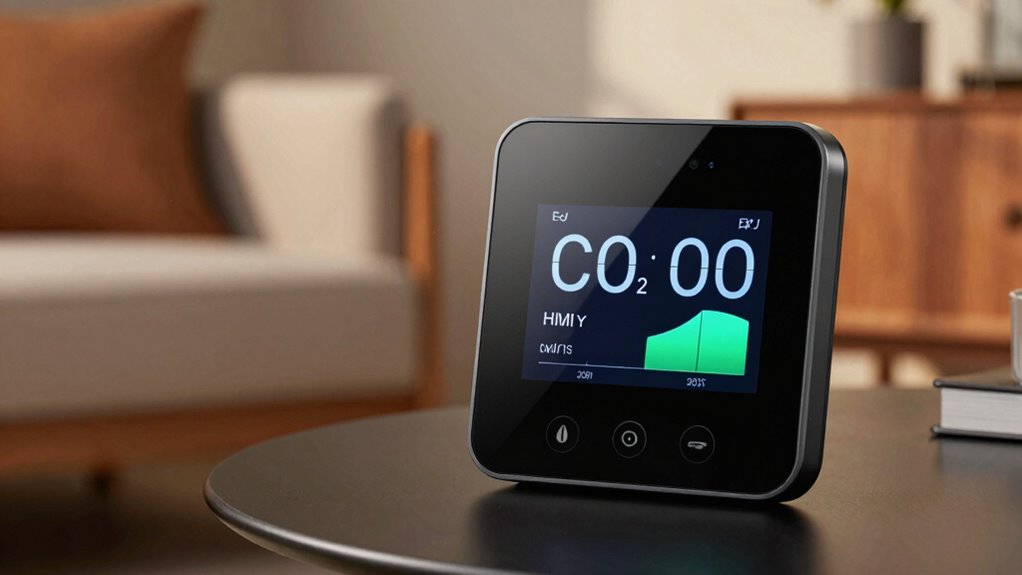
When evaluating indoor air quality monitors, focus on levels of VOCs, particulate matter, and CO2, as these indicate potential health risks and help you take action. Humidity and temperature may be less critical unless they influence comfort or mold growth. Not all numbers matter equally—knowing which ones truly matter can help you keep your home safe. If you keep exploring, you’ll discover how to interpret these numbers and improve your indoor environment effectively.
Key Takeaways
- Focus on pollutant measurements like VOCs, PM, and CO2 levels that directly impact health and indoor air safety.
- Recognize that humidity and temperature are less critical for health but affect comfort and sensor accuracy.
- Understand safe threshold values for pollutants to identify when action, such as ventilation, is necessary.
- Not all sensor readings are equally important; prioritize those indicating harmful or elevated pollutant levels.
- Use data to make informed decisions that reduce pollution sources and improve overall indoor air quality.
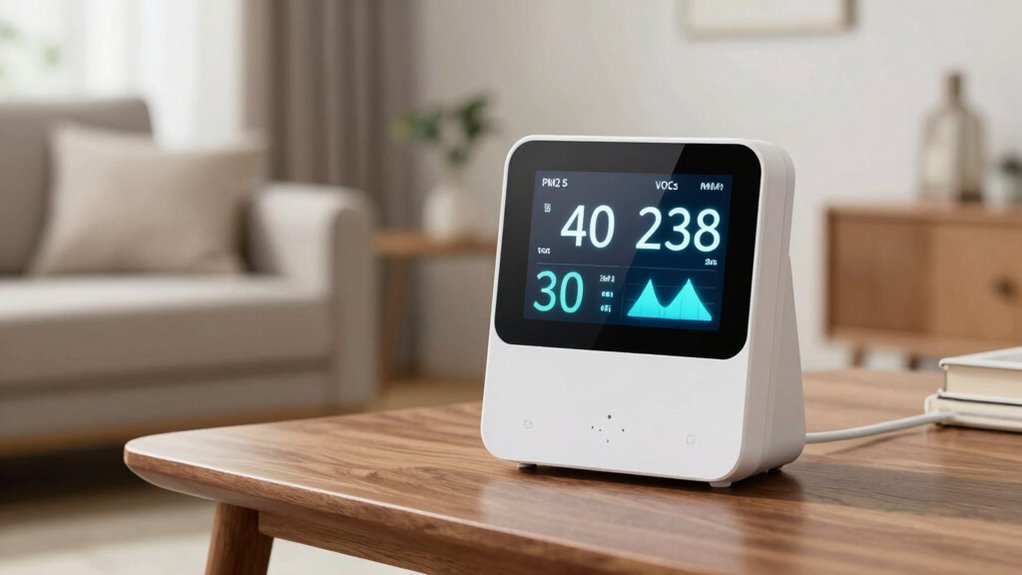
Have you ever wondered what’s really in the air inside your home? It’s easy to assume that the air is safe, but invisible pollutants can build up without you noticing. That’s where indoor air quality monitors come into play. These devices use air quality sensors to provide real-time data about your environment. By measuring pollution levels, they give you a clear picture of what’s happening in your space. With this info, you can take targeted actions to improve your home’s air, making it safer and more comfortable for everyone.
Air quality sensors are the heart of these monitors. They detect various pollutants such as volatile organic compounds (VOCs), particulate matter, carbon dioxide, and humidity levels. Unlike guesswork, these sensors deliver precise, immediate readings, so you know exactly when pollution levels spike. For example, if your sensor detects a rise in VOCs after cooking or using cleaning products, you can open windows or turn on an air purifier. This proactive approach helps prevent long-term health issues linked to poor air quality, like allergies, asthma, or respiratory infections.
Many people focus on the numbers displayed by their monitors, but it’s vital to understand what those numbers mean. A high pollution level might seem alarming, but it’s important to recognize which pollutants are involved and how long exposure lasts. Some sensors measure particulate matter that can penetrate deep into your lungs, while others track chemical vapors that can cause irritation or more serious health problems. Knowing the specific pollution levels—and whether they’re within safe limits—empowers you to make smarter decisions about ventilation and purification.
It’s also essential to note that not all readings are equally important. Some numbers, like humidity, might influence mold growth or dust mites, but they don’t directly impact air toxicity. Similarly, readings on temperature are useful for comfort but less critical for health concerns. Focus on the pollution levels that indicate harmful airborne substances. When your monitor warns you of elevated levels, it’s a sign to take action—whether that’s increasing ventilation, replacing air filters, or reducing certain activities that generate pollutants.
Ultimately, air quality sensors and pollution level readings are tools that put you in control of your indoor environment. They strip away guesswork, giving you concrete data to improve your health and well-being. By paying attention to the numbers that truly matter, you can create a safer, cleaner space for yourself and your loved ones. Remember, knowing what’s in the air is the first step toward making smarter choices and maintaining a healthier home. Understanding pollutant types can help you interpret your monitor’s data more effectively.
Frequently Asked Questions
How Often Should I Calibrate My Air Quality Monitor?
You should calibrate your air quality monitor at least once every six months to guarantee sensor maintenance stays accurate. Regular calibration helps maintain reliable readings, especially if you notice sudden changes or inconsistent data. If you use your monitor frequently or in different environments, consider more frequent calibration. Always follow the manufacturer’s calibration frequency recommendations for superior performance and accurate indoor air quality assessments.
Can Indoor Air Monitors Detect All Types of Pollutants?
You can’t expect indoor air monitors to catch every pollutant under the sun. They do a good job with common issues like VOCs, particulate matter, and CO2, but their sensor limitations mean they might miss some specific pollutants like radon or certain chemicals. Think of it as trying to catch all fish in the sea—some are just too tiny or elusive. For thorough detection, specialized tests are often needed.
Are There Portable Options for Real-Time Air Quality Tracking?
Yes, there are portable devices that provide real-time air quality updates. These compact monitors are easy to carry around, so you can track indoor air quality anytime and anywhere. They often connect to your smartphone via Bluetooth or Wi-Fi, giving you instant data and alerts. With these, you can quickly identify pollution sources and take action, ensuring healthier air in your home or on the go.
How Do I Interpret the Air Quality Index Readings Accurately?
You’ll love how simple it is to interpret AQI readings—just remember, higher numbers mean worse air quality. Check the AQI categories: 0-50 is good, while anything above 150 signals danger. Keep an eye on pollutant sources like smoke or fumes, as they push your AQI higher. So, when your monitor flashes, don’t panic—just understand which category you’re in and take action accordingly. Easy, right?
What Features Should I Prioritize When Choosing a Monitor?
When choosing a monitor, prioritize sensor accuracy to guarantee reliable readings, and look for a user interface that’s easy to navigate. You want clear displays and simple controls so you can quickly understand your indoor air quality. Avoid overly complicated setups or sensors that drift over time. A good monitor balances precise measurements with an intuitive design, making it easier for you to maintain healthy indoor air.
Conclusion
So, next time you buy an indoor air quality monitor, remember: don’t just chase the big numbers. The real scandal is how some devices parade impressive stats while ignoring the tiny, sneaky pollutants lurking in your home. It’s almost poetic—your air might look clean on paper, but your lungs are playing hide and seek. Stay skeptical, stay safe, and don’t let those flashy numbers fool you. After all, your health’s too precious for a gimmick.