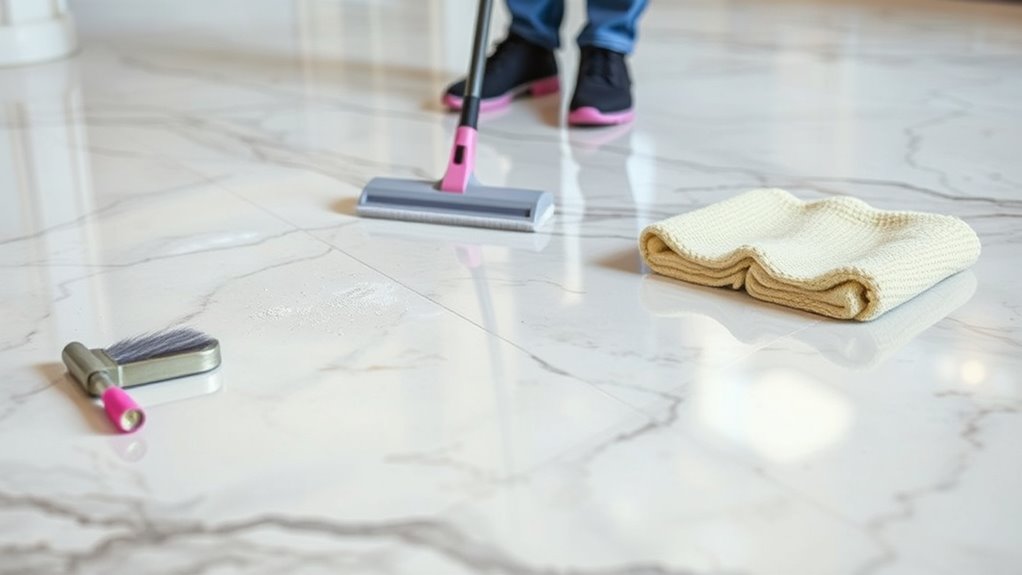

To prevent re-soiling, start by dusting or sweeping to remove loose debris, then clean from the farthest corner of the room toward the exit, working systematically in sections. Use a clean mop for each area, rinsing frequently, and avoid overwetting the floor. Tackle stains promptly with appropriate treatments, then rinse thoroughly to remove residues. Properly maintaining tools and following this order keeps your floors clean longer; learn more to master the process.
Key Takeaways
- Begin cleaning from the farthest corner, working toward the exit to avoid recontamination.
- Dust or sweep first to remove loose debris before mopping.
- Use a systematic mop sequence with clean water to prevent spreading dirt.
- Rinse tools frequently and change water often to avoid redepositing dirt.
- Address stains immediately and thoroughly to prevent them from setting in and re-soiling.
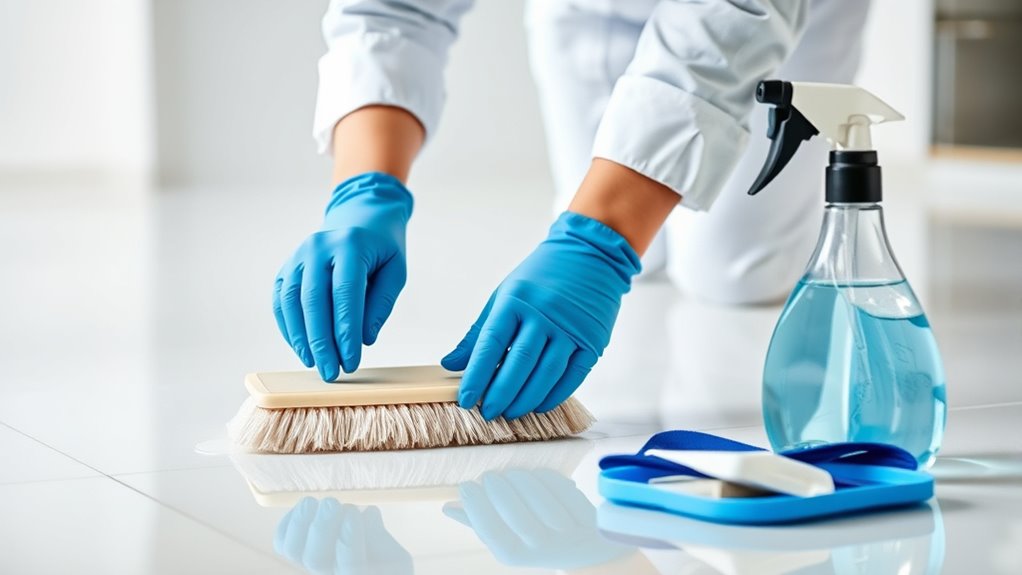
To effectively prevent re-soiling after cleaning, it’s essential to follow a proper cleaning order. This means paying careful attention to your mop sequence and stain removal techniques to ensure dirt and grime don’t resurface shortly after you’ve finished. The first step is to plan your cleaning process from the top down, starting with dusting or sweeping to remove loose debris. Once the floor is free of dust, you can focus on mopping in a systematic way that minimizes dirt redistribution. Your mop sequence should begin in the farthest corner of the room, working your way toward the exit. This way, you avoid stepping on freshly cleaned areas and spreading dirt back onto cleaned surfaces. Use a clean mop head for each section, rinsing frequently to prevent dirt from being redeposited.
When it comes to stain removal techniques, tackling spots promptly is key. Use specific stain removal methods depending on the type of stain—whether it’s grease, ink, or food spills—to prevent them from setting in. For example, for greasy stains, apply a small amount of dish soap directly and let it sit for a few minutes before wiping. For stubborn stains, a mixture of baking soda and water often works well to lift the mark without spreading it further. Always blot stains rather than rubbing, which can push the stain deeper into the fibers or surface, making it harder to remove later. After treating the stain, follow up with an appropriate cleaning agent and thoroughly rinse the area with clean water. This prevents residual cleaning products from attracting dirt later on. Also, choosing the right cleaning tools and maintaining their cleanliness is crucial for effective cleaning and preventing re-soiling.
Another important aspect is to guarantee your cleaning tools are clean and in good condition. Dirty mops or cloths can spread dirt and bacteria, causing re-soiling. Change your mop water frequently, and wash your cleaning cloths after each use. When mopping, avoid overwetting the floor, especially on porous surfaces, because excess moisture can attract more dirt and cause streaks. Use a damp, well-wrung mop that allows you to clean effectively without leaving puddles behind. After mopping, avoid walking on the wet surface until it’s completely dry, as footprints can pick up dirt and re-soil the area. Following these steps—organized mop sequence, targeted stain removal techniques, and maintaining clean tools—helps you keep your floors looking fresh longer and prevents the cycle of re-soiling.
Frequently Asked Questions
How Often Should I Follow This Cleaning Order?
You should follow this cleaning order after every DIY cleaning or stain removal session, especially if you notice any residue or re-soiling. Regularly sticking to this process helps prevent dirt buildup and maintains your surfaces’ cleanliness. If you have pets or children, consider reapplying the cleaning order more frequently. Consistent use guarantees your space stays fresh and stain-free, making your cleaning efforts more effective and longer-lasting.
Can I Use Homemade Cleaning Solutions?
Yes, you can use homemade cleaning solutions, but be mindful of their cleaning effectiveness. Natural ingredients like vinegar, baking soda, and lemon can work well for certain tasks, but they might not be as effective on tough stains or heavy soiling. Always test a small area first and avoid mixing harsh chemicals. For best results, follow the recommended cleaning order to prevent re-soiling and guarantee thorough cleanliness.
Is This Method Suitable for All Carpet Types?
Did you know that over 60% of carpets are made from synthetic fibers? This cleaning method isn’t suitable for all carpet types, especially delicate materials like silk or wool, which may get damaged. For stain-resistant carpets, it’s usually safe, but always check the manufacturer’s recommendations first. Using the wrong cleaning order on sensitive materials can lead to re-soiling or permanent damage, so tailor your approach accordingly.
What Tools Are Essential for This Cleaning Process?
You need crucial tools like a high-quality vacuum to maintain suction and remove loose dirt, which helps in stain prevention and prolongs carpet life. A spot cleaner or stain remover is essential for addressing spills promptly. Keep your vacuum well-maintained to guarantee effective cleaning, and always follow the correct cleaning order to prevent re-soiling. These tools help you achieve a thorough clean and maintain your carpet’s appearance.
How Long Does the Entire Cleaning Process Take?
You might think cleaning takes forever, but with proper timing considerations, it actually doesn’t. The whole process usually takes about 2-4 hours, depending on the area’s size and dirt level. You’ll want to factor in cleaning frequency and drying time to avoid re-soiling. Rushing through can cause more work later, so plan accordingly—this way, your efforts stay effective and save you time in the long run.
Conclusion
By following the proper cleaning order, you prevent dirt from settling, grime from spreading, and stains from setting. You create a fresh, spotless space, a surface that stays cleaner longer, a home that feels brighter, and a mindset that’s confident. Stick to the steps, stay consistent, and enjoy the results. Because when you clean in the right order, you’re not just cleaning once—you’re keeping your space cleaner, longer, and better.