

Every month, you should track key metrics like customer retention rates, which show your relationship management’s effectiveness, and client feedback to identify service improvement areas. Monitoring equipment maintenance and lifecycle helps prevent costly repairs and plan replacements. Keep an eye on operational costs and revenue trends to boost profitability. Focusing on these metrics provides valuable insights to grow your cleaning business. If you want to learn more about optimizing your metrics, keep exploring!

Get cleaning gear delivered free with Prime
- Fast, free delivery on millions of items
- Prime Video, Amazon Music and more included
- Member-only deals all year
Key Takeaways
- Track monthly revenue, expenses, and profit margins to assess financial health.
- Monitor customer retention rates and client feedback for service quality improvements.
- Measure equipment maintenance schedules and costs to prevent downtime.
- Analyze employee productivity and scheduling efficiency for staffing optimization.
- Review key operational metrics like job completion times and customer satisfaction scores.
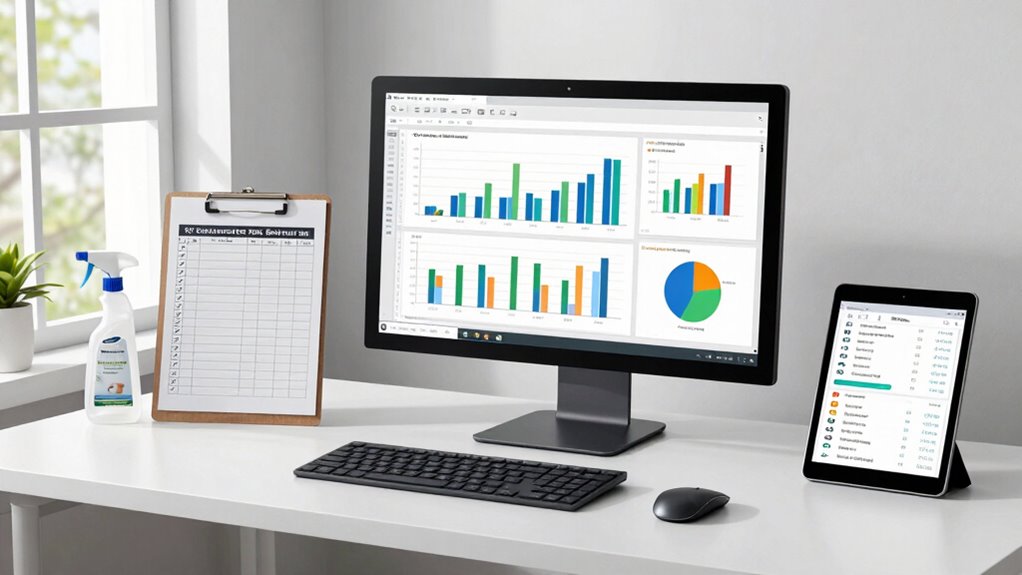
Tracking monthly metrics is essential for cleaning businesses to understand their performance and identify growth opportunities. When you keep a close eye on key data points, you gain insights that help you make smarter decisions, improve service quality, and boost your bottom line. Two critical areas to focus on are customer retention and equipment maintenance. These factors directly influence your revenue stability and operational efficiency.
Tracking key monthly metrics helps cleaning businesses improve decisions, boost service quality, and increase profitability.
Customer retention is a vital metric because it shows how well you’re maintaining relationships with your clients. If you notice a decline in repeat business or a rise in cancellations, it’s a clear sign you need to evaluate your service delivery or client communication. Tracking how many clients stay with you month over month allows you to identify patterns and address issues proactively. For example, if you see a pattern of clients leaving after a certain period, it might be time to enhance your customer service or offer loyalty incentives. High retention rates, on the other hand, indicate that your clients are satisfied and trusting your services, which leads to steady revenue and positive word-of-mouth referrals. Additionally, understanding client satisfaction metrics can help you pinpoint specific areas for improvement. Monitoring these metrics also helps you anticipate future client needs and tailor your offerings accordingly. Incorporating feedback analysis can further refine your service approach and foster stronger client relationships.
Equipment maintenance is another crucial metric that often gets overlooked but has a significant impact on your daily operations. Keeping track of how often your cleaning equipment requires repairs or replacements helps you plan maintenance schedules better. Regular maintenance minimizes downtime, extends the lifespan of your tools, and ensures your team works efficiently. If you notice frequent breakdowns or increased repair costs, it’s a sign you need to revisit your maintenance routines or invest in higher-quality equipment. Tracking these metrics monthly helps you stay ahead of costly repairs and avoid service interruptions that could upset your clients. Moreover, understanding the lifecycle of equipment can help you make better purchasing decisions and budget forecasts. Incorporating predictive maintenance strategies can further optimize your operational costs and prevent unexpected failures. Staying informed about equipment wear and tear also enables you to develop more accurate replacement timelines, saving money in the long run.
professional carpet cleaning equipment
As an affiliate, we earn on qualifying purchases.
As an affiliate, we earn on qualifying purchases.
Frequently Asked Questions
How Can I Track Customer Satisfaction Effectively Each Month?
You can track customer satisfaction effectively each month by actively collecting customer feedback through satisfaction surveys. Send these surveys promptly after service completion, asking specific questions about their experience. Encourage honest responses and analyze the feedback for patterns or recurring issues. Use this data to improve your services, address concerns quickly, and guarantee your customers feel valued. Consistent monitoring helps you gauge satisfaction levels and boost overall customer loyalty.
What Are the Key Signs of Declining Service Quality?
You’ll notice declining service quality through inconsistent results and unhappy customer feedback. Key signs include lapses in service consistency, missed spots, or late arrivals. Poor staff training can lead to mistakes or unprofessional behavior, further impacting quality. To catch these issues early, regularly review customer complaints and monitor staff performance. Investing in ongoing staff training and maintaining strict quality checks help guarantee consistent, high-quality service and prevent service decline.
How Do Seasonal Changes Impact Monthly Cleaning Metrics?
Seasonal fluctuations and weather impact can dramatically alter your cleaning metrics each month. You might notice a sudden drop in bookings during colder months or an unexpected spike in demand after storms. These changes challenge your usual expectations and push you to adapt quickly. By tracking these seasonal patterns, you can anticipate shifts, optimize staffing, and guarantee your service quality remains high, regardless of weather’s unpredictable influence.
What Tools Are Best for Monitoring Employee Productivity?
You should use tools like time-tracking software and task management apps to monitor employee productivity effectively. These tools help you assess employee efficiency by tracking how quickly tasks are completed and identifying areas for improvement. Regularly reviewing this data allows you to guarantee tasks are completed on time, boost overall productivity, and maintain high service standards. Investing in the right tools keeps your team accountable and streamlines your cleaning business operations.
How Should I Adjust Metrics for Different Types of Cleaning Services?
Imagine adjusting your compass to navigate varied terrains—your metrics should adapt based on service types. For deep cleans, track cleaning equipment efficiency and turnaround time, like a steady heartbeat. For specialized services, measure customer satisfaction and repeat business, akin to planting seeds for growth. Incorporate marketing strategies to attract diverse clients, ensuring your performance indicators resonate with each service’s unique rhythm and demands.
Conclusion
By tracking these monthly metrics, you gain a clear picture of your cleaning business’s health and growth. For example, did you know that businesses with consistent client retention see up to a 25% increase in revenue year over year? Keeping an eye on customer satisfaction, revenue, and recurring clients guarantees you’re not just cleaning spaces but building a thriving, sustainable business. Stay diligent with your measurements, and you’ll turn insights into unstoppable growth.
Halloween Picks
halloween
As an affiliate, we earn on qualifying purchases.