
To manage cleaning supply shrinkage effectively, you should combine real-time inventory tracking with strong supplier negotiations. Keep a close eye on stock levels to prevent overstocking and understocking, while building solid vendor relationships to secure better prices and delivery terms. Regularly reviewing your supplies and supplier performance helps you spot theft or waste issues early. Staying proactive in supply management can save costs and keep operations running smoothly—discover more tips to refine your approach as you go.
Key Takeaways
- Implement real-time inventory tracking systems to monitor stock levels and identify discrepancies early.
- Develop strong supplier relationships to negotiate better prices, delivery terms, and reduce shipment costs.
- Regularly review inventory data to anticipate needs and prevent shortages or excess supplies.
- Automate inventory processes to minimize manual errors and improve accuracy in supply management.
- Use data analysis to detect theft, waste, or inefficiencies, enabling prompt corrective actions.
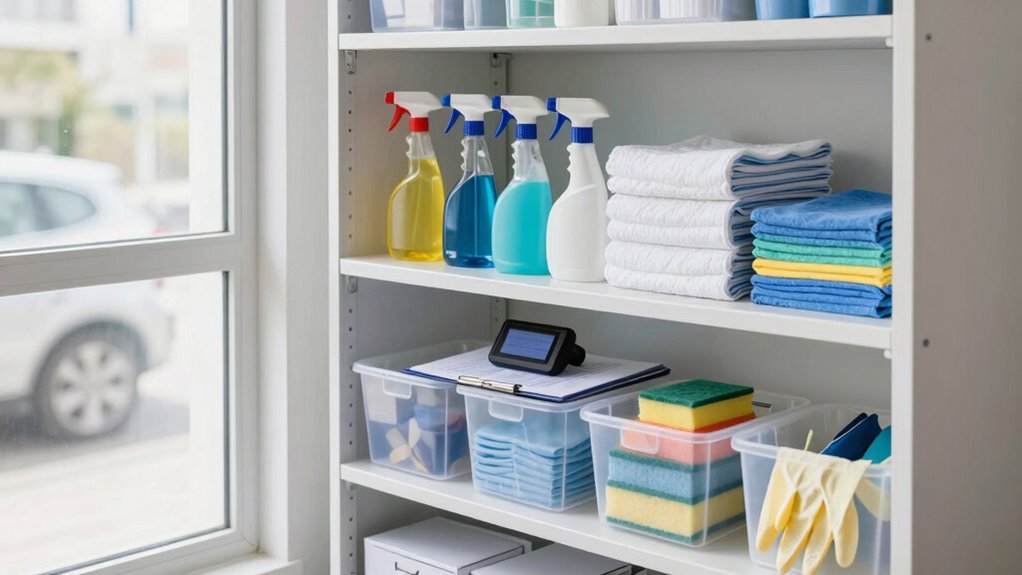
Have you ever wondered how effective cleaning routines stay on track? The secret often lies in solid cleaning supply management, which includes smart inventory tracking and sharp supplier negotiations. When you keep a close eye on your inventory, you prevent overstocking and understocking, both of which can lead to unnecessary shrinkage. Inventory tracking isn’t just about counting supplies; it’s about understanding your usage patterns, identifying waste, and adjusting orders accordingly. By regularly monitoring your stock levels, you catch discrepancies early and avoid the loss of valuable supplies. This process also helps you anticipate future needs, guaranteeing you don’t run out during critical cleaning times. Establishing inventory control practices further enhances your ability to manage supplies efficiently and reduce waste. Implementing data-driven decision-making into your inventory management can significantly enhance accuracy and efficiency. Employing reliable inventory management systems can streamline this process and provide real-time insights. Additionally, integrating automated tracking tools can further improve inventory accuracy by reducing manual errors. Consistently reviewing supply usage data allows you to identify patterns and optimize your procurement schedule more effectively.
Effective cleaning relies on smart inventory tracking to prevent shortages, waste, and unexpected disruptions.
Supplier negotiations play an essential role in reducing supply shrinkage too. When you establish strong relationships with your vendors, you gain leverage to negotiate better prices, bulk discounts, and more favorable delivery terms. This can profoundly cut costs and minimize the temptation to order smaller, more frequent shipments, which often result in higher costs and increased risk of theft or loss. Negotiating effectively also means you get clearer communication about delivery schedules, quality standards, and return policies, helping you keep your supplies in check and avoid unnecessary waste. Building trust with your suppliers makes it easier to implement consistent order cycles, which streamline your inventory management and reduce the chances of overordering.
Combining diligent inventory tracking with strategic supplier negotiations creates a powerful defense against supply shrinkage. When you know exactly what’s in stock and have reliable suppliers, you’re less likely to over-order or purchase items that don’t meet your needs. This reduces surplus and the potential for supplies to be misplaced, stolen, or discarded unnecessarily. It also enables you to spot trends—like sudden spikes in usage—that might indicate theft or inefficient practices. Armed with this data, you can address issues promptly, tightening security or adjusting protocols.
Ultimately, managing cleaning supplies smarter means being proactive rather than reactive. It involves consistently reviewing your inventory, building relationships with vendors, and making informed decisions based on accurate data. This approach not only cuts costs but also guarantees your cleaning routines run smoothly without interruptions caused by shortages or excess. When you stay organized, negotiate wisely, and track your supplies carefully, you create a more efficient, cost-effective cleaning operation that minimizes waste and maximizes cleanliness.

Warehouse Management and Inventory Control System
As an affiliate, we earn on qualifying purchases.
As an affiliate, we earn on qualifying purchases.
Frequently Asked Questions
How Can Technology Prevent Supply Theft Effectively?
Technology prevents supply theft effectively through automated tracking and real-time alerts. You can monitor inventory levels constantly, catching discrepancies instantly. When supplies are accessed or moved unexpectedly, real-time alerts notify you immediately, allowing quick response. This proactive approach discourages theft and helps you maintain control over your cleaning supplies. By integrating automated tracking systems, you guarantee accurate inventory management and reduce losses, making your supply management smarter and more secure.
What Are Signs of Internal Theft of Cleaning Supplies?
You might notice signs of internal theft like unexplained supply shortages or irregular usage patterns. Employee awareness plays a big role, so keep an eye out for suspicious behavior. Implement supply tracking to monitor inventory closely and identify discrepancies early. If supplies seem to vanish without a clear explanation, it’s a red flag. Remember, where there’s smoke, there’s fire—stay vigilant and address issues promptly to protect your resources.
How Often Should Inventory Audits Be Conducted?
You should conduct inventory audits regularly to maintain high inventory accuracy. Typically, performing audits weekly or biweekly strikes a good balance, especially for busy facilities. If your inventory levels are stable and theft is unlikely, monthly audits might suffice. More frequent audits help catch discrepancies early, prevent shrinkage, and guarantee accurate stock levels, making your supply management more effective. Adjust audit frequency based on your facility’s specific needs and past discrepancies.
What Training Improves Staff Accountability for Supplies?
Did you know that 60% of staff theft cases are linked to lack of accountability? To improve staff accountability for supplies, implement targeted training programs that highlight proper usage, tracking, and consequences of waste. Incorporate employee incentives for consistent compliance, which boosts motivation. Regular training sessions reinforce good habits, and acknowledging responsible staff encourages a culture of accountability, ultimately reducing supply shrinkage and fostering a more efficient cleaning operation.
How Does Supplier Choice Impact Supply Shrinkage?
Your choice of suppliers directly affects supply shrinkage through their reliability and consistency. Opt for suppliers with strong procurement strategies and proven track records, ensuring timely deliveries and quality products. Reliable suppliers reduce the chances of stockouts, theft, or damage, helping you control costs better. By prioritizing supplier reliability, you can implement more effective inventory management, minimize waste, and keep cleaning supply shrinkage under control, ultimately saving your business money.
Conclusion
Now that you understand how smarter cleaning supply management acts as a lighthouse guiding your operations, you can steer clear of hidden shortages and waste. It’s about more than just supplies—it’s about illuminating the path to efficiency and savings. When you harness this approach, you’re not just managing inventory; you’re shining a beacon of control in a sea of uncertainty. Embrace the light and navigate your cleaning supplies with confidence.