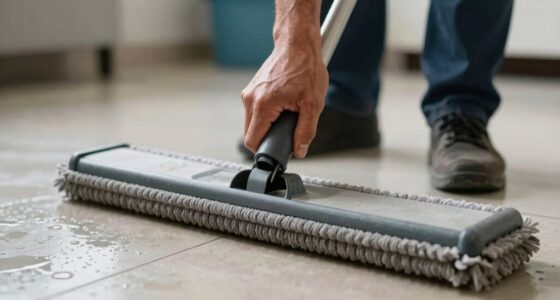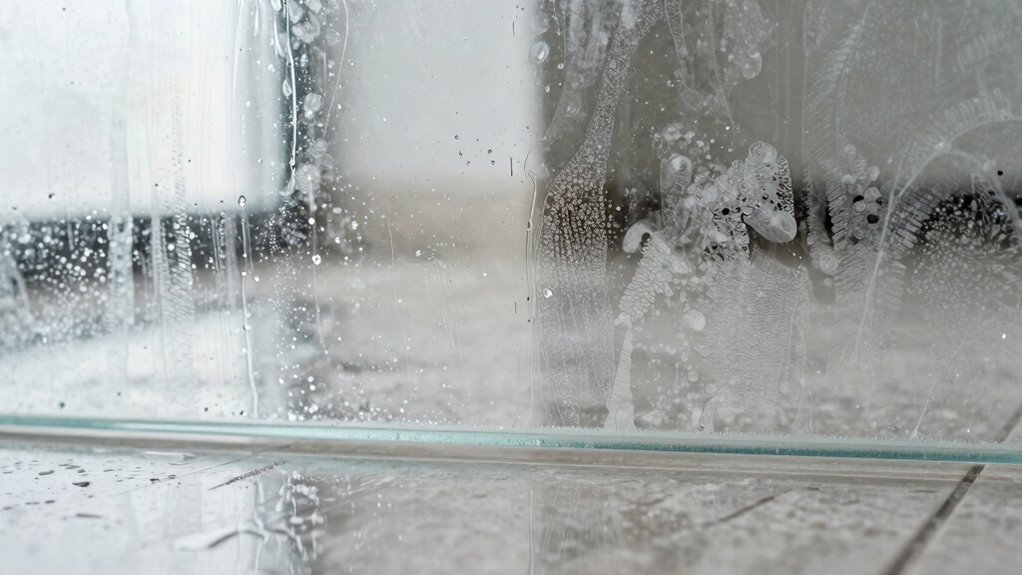

High mineral content in water, like calcium and magnesium, reduces your cleaning effectiveness by reacting with soap and forming stubborn soap scum. When the water evaporates on glass and floors, it leaves behind mineral deposits that cause spots, streaks, and dull surfaces. These residues are tough to remove over time and can damage surfaces or appliances. If you want to understand how to better manage these effects and keep your surfaces shining, continue exploring further.
Key Takeaways
- High mineral levels react with soap, forming soap scum that hampers cleaning effectiveness.
- Dissolved minerals leave deposits that cause streaks, spots, and haziness on glass and floors.
- Mineral buildup creates a dull appearance, reducing surface shine and transparency.
- Water minerals accelerate scaling, damaging surfaces and appliances over time.
- Managing mineral content with appropriate cleaning methods prevents residue buildup and surface dullness.
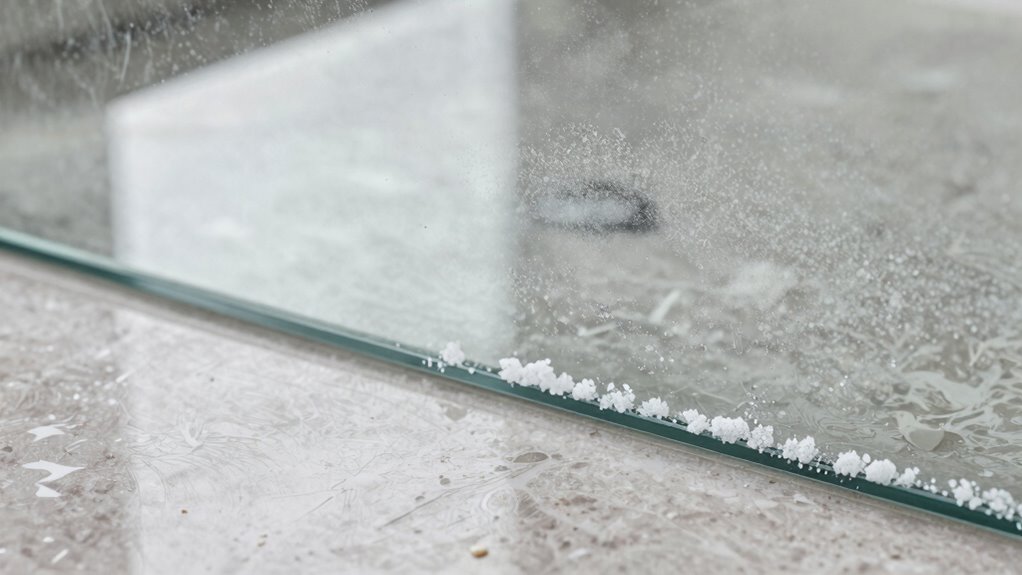
Have you ever wondered how mineral content affects the effectiveness of cleaning? It’s a common question, especially if you’ve noticed streaks, spots, or dullness after washing your glassware or floors. The culprit is often water hardness, which directly relates to the amount of dissolved minerals—mainly calcium and magnesium—in your water supply. These minerals, when left behind after cleaning, form mineral deposits that cling stubbornly to surfaces. Understanding how water hardness influences cleaning results can help you improve your methods and avoid frustrating streaks or residue.
When water is hard, it contains a high concentration of mineral ions. As you clean, these minerals don’t just disappear; instead, they react with soap and cleaning agents, reducing their effectiveness. For example, soap reacts with calcium and magnesium to form soap scum, which doesn’t rinse away easily. This scum can leave a cloudy film on glass or a dull haze on floors. The more mineral-rich your water is, the more likely these deposits will form, making surfaces look less shiny and clean, even if you’ve scrubbed thoroughly. Water chemistry plays a significant role in how well cleaning solutions perform and how easily deposits can be removed. Additionally, the presence of these minerals can lead to scaling that damages appliances over time if not properly managed. Recognizing the impact of water minerals can guide you in selecting appropriate cleaning techniques and solutions.
Mineral deposits are especially problematic on glass surfaces. When water evaporates from glass, it leaves behind tiny mineral particles that create unsightly spots and streaks. This is why, after washing windows or glassware, you often see a cloudy or speckled appearance. On floors, mineral deposits can cause a chalky film that dulls the surface and makes cleaning less effective over time. These deposits are difficult to remove once they set in, so they can accumulate, requiring extra effort and stronger cleaning solutions. Recognizing the role of water hardness can help you choose the most effective cleaning methods to prevent buildup.

Aquasure Harmony Series 32,000 Grains Whole House Water Softener with High Performance Automatic Digital Metered Control Head | Reduces Hardness and Improves Water Quality | for 1-2 bathrooms
- Suitable for 1-2 Bathrooms: Perfect for small homes or apartments
- Protects Appliances: Reduces scale buildup and extends appliance life
- Removes Hard Minerals: Treats 32,000 grains of hardness for cleaner water
As an affiliate, we earn on qualifying purchases.
As an affiliate, we earn on qualifying purchases.
Frequently Asked Questions
How Does Water Temperature Affect Mineral Deposits on Glass?
Higher water temperatures can worsen mineral deposits on glass because warm water increases water hardness, causing minerals like calcium and magnesium to dissolve more readily. When you use hot water for cleaning, it accelerates mineral buildup on surfaces, leaving streaks or spots. Cooler water helps reduce mineral deposits, making cleaning more effective. So, controlling water temperature can considerably improve your cleaning results and minimize mineral-related streaks on glass.
Can Mineral Content Vary Seasonally or Geographically?
You’ll find that mineral content can vary considerably based on location and season, with some areas experiencing water hardness levels over 300 ppm. During dry seasons, mineral fluctuations tend to increase because of lower water flow, leading to harder water. Geographically, regions with limestone or calcium deposits naturally have higher mineral content. This variation affects cleaning results, as harder water leaves more residues on glass and floors.
Do Different Types of Minerals Impact Cleaning Effectiveness Differently?
Different types of minerals impact cleaning effectiveness differently because of mineral interactions. Certain minerals, like calcium and magnesium, can create stubborn deposits, leading to cleaning challenges on glass and floors. For example, mineral interactions may cause water spots or streaks, making surfaces harder to clean. Recognizing these differences helps you choose the right cleaning solutions, preventing mineral buildup and ensuring your surfaces stay clear and spotless.
How Often Should I Test My Water’s Mineral Levels?
Testing your water’s mineral levels is like tuning a musical instrument—you want it just right. You should check your water every 3 to 6 months through water treatment tests. Regular testing helps you understand your mineral content, ensuring effective mineral filtration and cleaner results. If you notice changes in water quality or cleaning outcomes, test more frequently. Staying on top of these levels keeps your cleaning efficient and your surfaces sparkling.
Are There Specific Cleaning Products Better for High-Mineral Water?
Yes, for high-mineral water, you should choose eco-friendly solutions and commercial cleaning products specifically designed for mineral-rich environments. These products often contain less harsh chemicals, reducing mineral buildup on glass and floors. Look for labels indicating effectiveness against minerals and deposits. Regularly using these products helps prevent streaks, spots, and residue, ensuring your surfaces stay clean and clear without damaging the environment.
Conclusion
So, next time you notice stubborn spots on your glass or floors, remember it’s often the minerals in your water causing the trouble. It’s funny how something as simple as mineral content can unexpectedly affect your cleaning results, making you realize that perfection often hinges on tiny, unseen factors. Sometimes, it’s the little details—like mineral levels—that remind us how life’s little coincidences shape our daily routines, turning simple chores into moments of mindful awareness.