TL;DR

Get cleaning gear delivered free with Prime
- Fast, free delivery on millions of items
- Prime Video, Amazon Music and more included
- Member-only deals all year
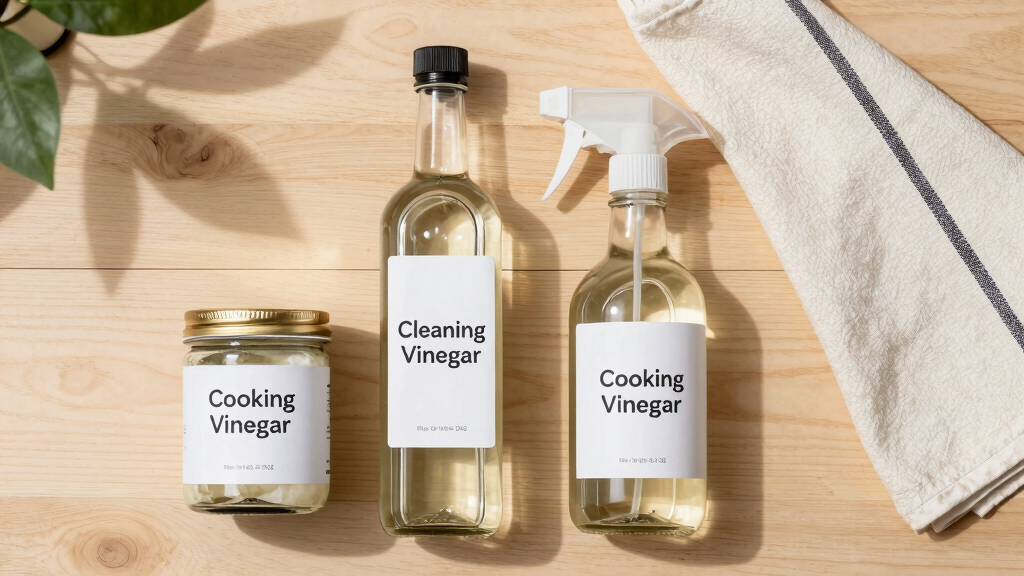
Cleaning vinegar and cooking vinegar are similar but differ mainly in concentration. Cleaning vinegar is more concentrated and intended for cleaning, while cooking vinegar is safe for consumption. Understanding these differences helps prevent misuse and health risks.
Cleaning vinegar and cooking vinegar are often confused, but they differ significantly in concentration, affecting their safe use at home. Experts emphasize understanding these differences to avoid health risks and improper application.
According to household cleaning experts, ‘white vinegar’ used in cooking typically has a 4-5% acetic acid concentration, making it safe for consumption. Cleaning vinegar, however, ranges from 6% up to 75%, with most household options falling between 6% and 20%. The higher concentration makes cleaning vinegar more effective for removing grime and buildup but also more hazardous if misused. Experts warn that cleaning vinegar is not suitable for cooking and should be stored separately to prevent accidental ingestion. Handling higher concentrations requires caution, including wearing gloves and ensuring proper ventilation. While both types can be used for household cleaning, the key difference is their strength, which influences how much should be used in cleaning solutions. Using too much cleaning vinegar or using it in place of cooking vinegar can pose health risks due to its potency and possible chemical additives.
Why Correctly Identifying Vinegar Matters for Safety
Knowing the difference between cleaning and cooking vinegar is essential for household safety. Using cleaning vinegar as a substitute for cooking vinegar can lead to health issues, including chemical exposure or ingestion of non-food-grade substances. Proper storage and labeling prevent accidental misuse, especially in households with children or pets. Additionally, understanding concentration levels helps consumers use the right amount for cleaning tasks, optimizing effectiveness while minimizing risks. This clarification supports informed purchasing decisions, saving money and avoiding potential health hazards associated with high-concentration cleaning products.
As an affiliate, we earn on qualifying purchases.
Vinegar Types and Their Uses in Home Practices
White vinegar has long been a household staple, both in cooking and cleaning. Regular white vinegar, with a 4-5% acetic acid concentration, is approved for human consumption and widely used in recipes, salad dressings, and pickling. Cleaning vinegar, marketed specifically for household cleaning, has a higher concentration, ranging from 6% to 20%, with some industrial-grade options reaching 75%. The higher concentration enhances its ability to cut through grease, soap scum, and mineral deposits. The distinction has become clearer as consumers seek to understand which vinegar to use for specific tasks. Experts note that while both types are derived from the same basic product, their manufacturing processes, concentrations, and intended uses differ significantly. The confusion between the two has prompted safety warnings and storage recommendations to prevent accidental ingestion of cleaning-grade vinegar.
“Cleaning vinegar can be harmful to your health because of the concentration. It’s not meant for human consumption and may contain traces of other chemicals or fragrances.”
— an anonymous researcher
Remaining Questions About Vinegar Safety and Usage
It is not yet fully clear how many consumers are aware of the concentration differences or how often cleaning vinegar is mistakenly used in cooking. There is also ongoing discussion about the best storage practices to prevent accidental ingestion, especially in households with children. Further guidance from health authorities on labeling and education could help reduce misuse, but specific regulatory updates are still pending.
Future Consumer Guidance and Safety Recommendations
Expect increased educational efforts from manufacturers and safety organizations to clarify the differences between vinegar types. Retailers may implement clearer labeling and separate shelving for cleaning and cooking vinegars. Additionally, health agencies might issue updated guidelines on storage and handling to prevent accidental ingestion. Consumers are advised to check labels carefully and store cleaning vinegar out of reach of children and pets.
Key Questions
Can I use cleaning vinegar for cooking?
No, cleaning vinegar is not safe for consumption due to its higher concentration and potential chemical additives. Use only food-grade vinegar for cooking and eating.
What concentration of vinegar is safe for cleaning?
Most household cleaning vinegar has a concentration between 6% and 20%, which is effective for cleaning tasks. Avoid using industrial-grade vinegar with higher concentrations unless properly diluted and handled with safety precautions.
How should I store cleaning vinegar to prevent accidents?
Store cleaning vinegar in a clearly labeled container and keep it out of reach of children and pets. Do not store it near food or in kitchen areas used for preparing meals.
Can vinegar with a higher concentration be diluted for cleaning?
Yes, higher-concentration vinegar can be diluted with water to reach safe and effective levels for cleaning. Follow proper dilution ratios to avoid over-concentrating the solution.
Are there health risks associated with using too much cleaning vinegar?
Excessive use or inhalation of concentrated vinegar can cause skin irritation, respiratory issues, or chemical burns. Always handle with gloves and proper ventilation.
Source: rss
Halloween Picks
halloween
As an affiliate, we earn on qualifying purchases.