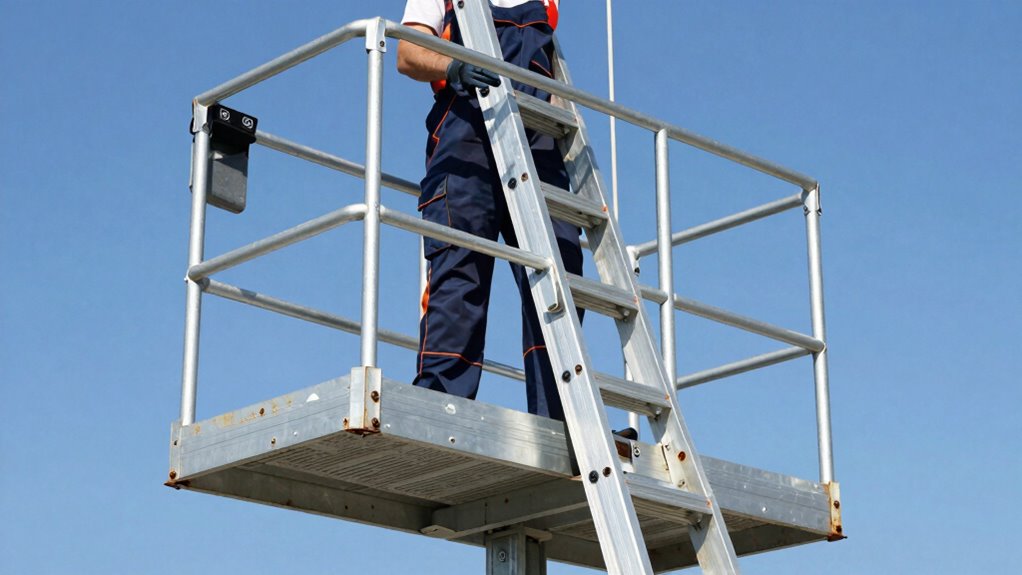

Before high-reach cleaning, thoroughly inspect your ladders and platforms for damage or wear. Check all safety gear, like harnesses and helmets, to ascertain they’re in good condition and fit properly. Examine the structural integrity, looking for rust, cracks, or missing parts, and confirm safety features such as guardrails and anti-slip surfaces are intact. Make sure load labels are clear, and the surfaces are free of debris and slippery substances. Stay safe—keep learning how to perform a detailed inspection.

Get cleaning gear delivered free with Prime
- Fast, free delivery on millions of items
- Prime Video, Amazon Music and more included
- Member-only deals all year
Key Takeaways
- Examine for corrosion, rust, cracks, or deformation on all ladder and platform components.
- Verify that safety features like guardrails and anti-slip surfaces are intact and functioning properly.
- Check all rungs, joints, and bolts for stability, wear, or missing parts.
- Ensure load capacity labels and safety signs are visible and legible.
- Conduct a visual overall check for debris, oil, or slippery substances that could cause slips.
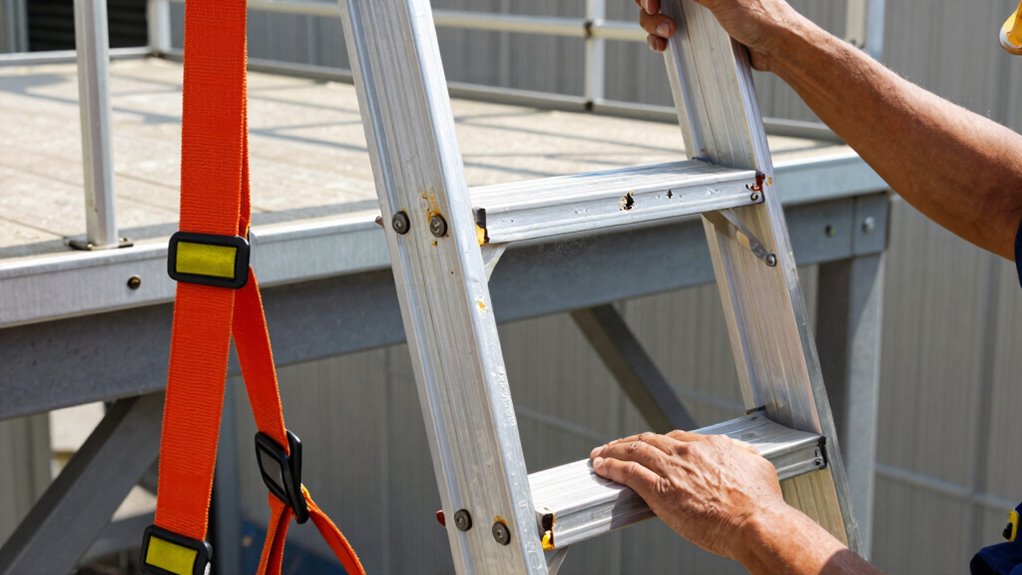
Have you ever wondered how to guarantee your ladders and platforms are safe to use? Ensuring safety isn’t just about following rules—it’s about actively checking every component before starting high-reach cleaning tasks. The first step involves thoroughly inspecting your safety gear. Make sure your harnesses, helmets, gloves, and non-slip footwear are in excellent condition, free of tears, cracks, or wear that could compromise their effectiveness. Proper safety gear is your first line of defense, so never overlook its condition. Wearing damaged gear increases the risk of accidents, so always double-check that everything fits correctly and functions as intended.
Next, focus on your inspection procedures for the ladders and platforms themselves. You want to examine every part meticulously. Start with the structural integrity: look for any signs of corrosion, rust, or deformation on metal parts. Check the rails, rungs, and joints for cracks, bends, or missing bolts. It’s vital that all rungs are secure and evenly spaced, with no wobbling or looseness when you apply pressure. For wooden ladders or platforms, inspect for splinters, rot, or decay, which can weaken the entire structure. If you notice any damage, it’s imperative to remove the equipment from service immediately and replace it.
In addition, verify that safety features such as guardrails, anti-slip treads, and locking mechanisms are intact and functioning properly. Locking devices should securely hold the ladder in place and prevent accidental collapse during use. Also, ensure that the platform’s surface is clean and free from debris, oil, or any slippery substances that could cause slips or falls. If your equipment has safety labels or load capacity markings, check that they are visible and legible, so you know the weight limits you must follow. Regularly inspect equipment to maintain optimal safety standards and prevent potential accidents. A thorough visual inspection can help identify issues early before they lead to hazards, further emphasizing the importance of routine checks. Remember, visual inspections are essential for catching issues early and ensuring your safety equipment performs reliably during high-reach tasks.
As an affiliate, we earn on qualifying purchases.
Frequently Asked Questions
What Safety Gear Should I Wear During Inspections?
You should wear personal protective equipment (PPE) during inspections to guarantee safety. This includes a hard hat, gloves, safety glasses, and sturdy footwear. Use an inspection checklist to identify potential hazards. PPE helps protect you from falls, debris, or sharp edges. Always double-check your gear before starting and make sure it’s in good condition, so you stay safe while inspecting ladders and platforms.
How Often Should Ladders and Platforms Be Inspected?
Did you know that equipment durability decreases by up to 30% without regular inspections? You should inspect ladders and platforms at least monthly, especially before high-reach cleaning tasks. Regular inspection frequency helps identify wear and tear early, preventing accidents. By maintaining a consistent schedule, you guarantee your equipment remains safe and reliable, reducing risks and extending its lifespan. Always prioritize thorough checks to keep everyone safe on site.
Are There Specific Standards or Regulations to Follow?
Yes, you should follow specific standards and regulations like OSHA and ANSI for ladder and platform inspections. These compliance guidelines require regular inspections, documented with detailed checklists to identify hazards. Use inspection checklists to guarantee all safety components are intact, such as rungs, rails, and stability. Staying current with these standards helps prevent accidents, maintains safety, and guarantees your equipment meets legal requirements for high-reach cleaning tasks.
What Signs Indicate a Ladder or Platform Needs Replacement?
You’ll want to replace a ladder or platform if you notice signs of material fatigue, such as cracks, splinters, or deformities that compromise its strength. Corrosion damage is another key indicator, especially rust or corrosion spots that weaken the structure. These signs suggest the equipment’s integrity is compromised, making it unsafe for use. Regular inspections help catch these issues early, preventing accidents during high-reach cleaning tasks.
How Do Weather Conditions Affect Inspection Routines?
Weather impact is like nature’s unpredictable mood; it can weaken ladders and platforms silently. You should adjust inspection timing after rain, snow, or strong winds, as these conditions can cause corrosion or damage. Always inspect in dry weather to get a clear view of potential issues, and avoid rushing inspections during or immediately after adverse weather. Stay vigilant, and your equipment will support you safely through high-reach tasks.
Conclusion
Remember, inspecting ladders and platforms before high-reach cleaning isn’t just good practice—it’s essential for your safety. Take a moment to check for damage or wear, just like the meticulous craftsmen of yore inspected their tools before a grand quest. A quick inspection now can save you from a tumble or mishap later. Stay vigilant, stay safe, and keep your adventures high and dry—because even in the age of chivalry, safety always comes first.
Fall Picks
fall essentials
As an affiliate, we earn on qualifying purchases.