
For small cleaning teams, a simple, automated inventory system is key to staying organized and avoiding equipment loss. You need a straightforward platform that’s easy to learn, integrates mobile updates, and tracks equipment in real-time to reduce manual errors. Regular maintenance alerts prevent breakdowns and extend equipment life. This system helps you plan future purchases and improves efficiency. Keep going to discover how to choose the right tools to keep your team running smoothly.

Get cleaning gear delivered free with Prime
- Fast, free delivery on millions of items
- Prime Video, Amazon Music and more included
- Member-only deals all year
Key Takeaways
- A simple, automated inventory system that is easy to learn and use on mobile devices.
- Real-time tracking to prevent equipment loss and monitor availability efficiently.
- Automated maintenance reminders to extend equipment lifespan and reduce breakdowns.
- Clear reports on usage patterns to inform purchases and optimize resource allocation.
- Solutions that require minimal training, promoting quick adoption and team responsiveness.
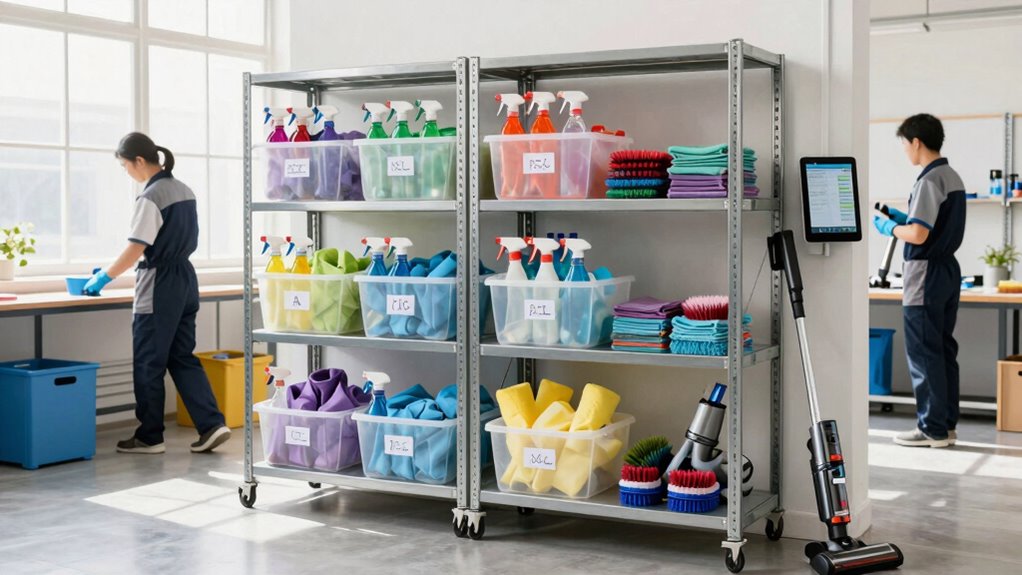
Managing cleaning equipment can feel overwhelming for small teams, especially when you don’t need a bulky or complicated system. The key is to find a straightforward inventory system that keeps everything organized without adding unnecessary complexity. Automated tracking becomes a game-changer here, allowing you to monitor equipment usage, location, and status with minimal effort. This technology helps prevent equipment loss or misplacement, which can disrupt your cleaning schedule and waste time. A simple and effective system can significantly reduce manual errors and improve overall efficiency. Instead of manually updating spreadsheets or relying on paper logs, automated tracking tools provide real-time data, so you always know what’s available, what needs replacing, or repairing. Implementing digital tools can streamline your processes and improve accuracy across your operations. Focusing on equipment maintenance is just as essential as tracking inventory. When you have a simple system in place, it becomes easier to schedule regular maintenance checks for your tools and machines. Automated reminders can alert you when it’s time for routine inspections or repairs, preventing equipment breakdowns that could halt your cleaning operations. Keeping your equipment in good condition extends its lifespan and saves you money in the long run. Small teams often operate on tight budgets, so investing in a system that promotes proactive maintenance makes a lot of sense. A practical inventory system for small teams shouldn’t be complicated or overly technical. Look for solutions that integrate automated tracking features but remain user-friendly. You want a tool that everyone on your team can easily learn and use daily without requiring extensive training. Mobile apps are especially helpful because they let you update equipment status on the go, whether you’re in the storage closet or out on a job site. This flexibility ensures that your team stays informed and responsive, which is essential when managing multiple cleaning tasks. Another benefit of a simple inventory system with automated tracking is its ability to generate reports. These reports can offer insights into usage patterns, identify frequently worn-out equipment, and help you plan for future purchases. When paired with scheduled maintenance alerts, this data becomes a powerful tool to keep your operations running smoothly. Incorporating biodiversity considerations into your equipment choices can also contribute to more sustainable practices in your cleaning routines. Using environmentally friendly equipment and supplies can also improve your environmental impact and align with eco-conscious values. It also reduces downtime caused by equipment failure, ensuring your team can focus on cleaning rather than troubleshooting. Ultimately, the cleaning equipment inventory system your small team needs is one that combines automated tracking with easy-to-manage maintenance schedules. It’s about working smarter—not harder—so you can stay organized, extend your equipment’s lifespan, and keep your cleaning operations efficient. With the right tools, managing your cleaning equipment becomes less of a chore and more of a streamlined process that supports your team’s success.
inventory management system for cleaning equipment
As an affiliate, we earn on qualifying purchases.
As an affiliate, we earn on qualifying purchases.
Frequently Asked Questions
How Often Should Inventory Audits Be Conducted?
You should conduct inventory audits at least monthly to maintain accurate inventory records. Regular audits help guarantee inventory accuracy, catch discrepancies early, and prevent stock shortages. By doing so, you can streamline stock replenishment processes, avoiding overstocking or understocking. Frequent audits also enable your team to identify issues quickly, improve overall efficiency, and keep your cleaning equipment inventory well-maintained and reliable for daily operations.
What Training Is Required for Staff on Inventory Management?
You should provide staff training focused on inventory management to guarantee they understand proper procedures, record-keeping, and equipment handling. Emphasize the importance of inventory accuracy, teaching staff how to track items correctly and spot discrepancies. Regular training sessions help reinforce best practices, minimize errors, and keep your inventory data reliable. Well-trained staff are key to maintaining an efficient system and making sure your cleaning equipment is always accounted for.
How to Handle Equipment Maintenance and Repairs?
You should establish clear preventive protocols and repair routines for equipment maintenance. Regularly inspect equipment for signs of wear, and schedule preventive checks to avoid breakdowns. When repairs are needed, follow a consistent routine, documenting issues and fixes. Train your team on these procedures so they can identify problems early and perform basic repairs, ensuring equipment stays in top condition, minimizing downtime, and extending its lifespan.
What Budget Considerations Are Involved in System Implementation?
Think of your budget like a treasure map; you need clear directions to find the right funding. Conduct a thorough cost analysis to identify expenses, then explore funding strategies such as grants or reallocating resources. Budget considerations involve initial setup costs, ongoing maintenance, and staff training. Planning carefully guarantees you avoid surprises and secure the necessary funds, making your system implementation smooth, efficient, and sustainable.
How to Integrate Inventory Systems With Existing Workflows?
You should start by mapping your current workflows and identifying points where inventory tracking can seamlessly fit. Implement barcode scanning to streamline data entry and reduce errors. Integrate the new system with existing management tools, guaranteeing compatibility for real-time updates. Train your team on using barcode scanners effectively, so inventory tracking becomes part of daily routines. This approach guarantees smooth integration without disrupting your team’s productivity.
Conclusion
Now that you understand what’s essential, it’s time to implement a system that truly works. But what if the next challenge isn’t what you expected? Will your inventory system hold up under pressure, or will it reveal hidden gaps? The right tools and approach can make all the difference—yet the real test is still ahead. Are you ready to take that final step and guarantee your team’s success? The choice is yours.
Evergreen bestsellers Picks
bestsellers
As an affiliate, we earn on qualifying purchases.