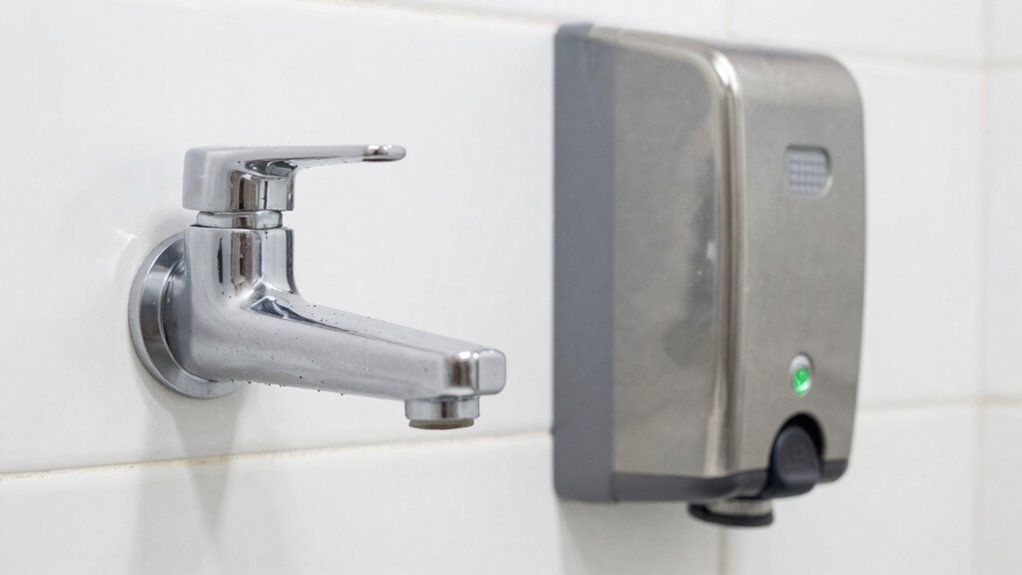
Even though touchless restroom hardware reduces contact germs, you still need to clean and maintain it regularly. Surfaces around the fixtures can still get contaminated through splashes, aerosols, or grime buildup. Bacteria, viruses, and biofilms can form, making cleaning essential for hygiene and proper function. Using effective disinfectants and following manufacturer guidelines will keep your fixtures in prime condition. Keep going to discover more about maintaining touchless fixtures for ideal cleanliness.
Key Takeaways
- Touchless fixtures can harbor bacteria and biofilms, requiring regular cleaning to ensure hygiene.
- Surfaces around touchless devices can become contaminated via splash or aerosolized particles.
- Dirt, mineral deposits, and biological contaminants can build up, impairing fixture function over time.
- Proper cleaning maintains electronic component safety and prevents malfunctions.
- Routine maintenance and inspections are essential for ongoing hygiene and optimal performance.
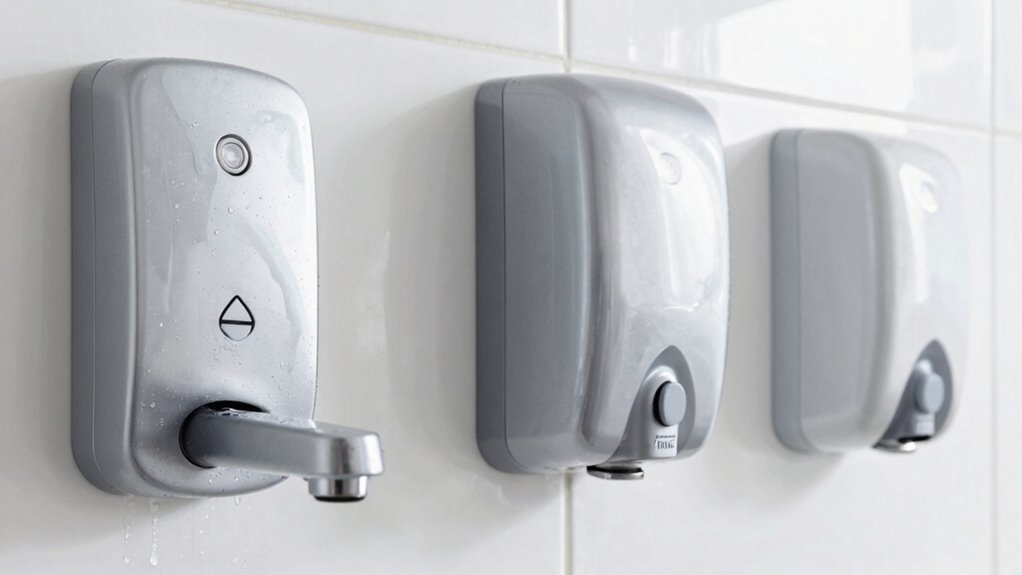
Many people assume that touchless restroom hardware, like automatic faucets and push-button-free flushometers, eliminate the need for cleaning. While these fixtures reduce the spread of germs by minimizing touch contact, they don’t wipe out the need for regular maintenance. Touchless hardware can still harbor bacteria, viruses, and other pathogens if not properly cleaned, making routine cleaning and adherence to maintenance protocols essential. You might think that because these fixtures are hands-free, they automatically stay cleaner, but that’s a misconception. Touchless devices can accumulate grime, mineral deposits, and biological contaminants just like traditional fixtures, especially in high-traffic areas. Over time, this buildup can compromise their functionality and pose health risks if not addressed. Proper hand hygiene remains vital, even with touchless technology. Users may assume that because they didn’t touch anything, they’re safe from contamination, but surfaces around the fixtures can still be contaminated through splash or aerosolized particles. This underscores the importance of cleaning protocols that target not just the fixtures themselves but the surrounding surfaces and touchpoints in the restroom environment. Routine cleaning helps prevent cross-contamination, especially in places with many users, like public restrooms, schools, or healthcare facilities. Additionally, understanding that touchless hardware can still serve as a reservoir for germs highlights the need for diligent sanitation practices. Maintaining touchless fixtures involves following specific maintenance protocols designed to keep them operating efficiently and hygienically. These protocols include frequent inspections, timely replacement of worn sensors or damaged parts, and routine cleaning with appropriate disinfectants. It’s also important to consider electronic component safety to prevent damage during cleaning, as improper use of cleaning agents can harm sensitive parts. Using the correct cleaning methods and disinfectants can help preserve the electronic components while effectively reducing germs. Proper cleaning procedures should also consider the presence of biofilm buildup, which can harbor bacteria and viruses resistant to standard disinfectants. It’s essential to use cleaning products that won’t damage sensitive electronic components but are effective against germs. Also, you should be mindful of manufacturer instructions, which often recommend specific cleaning routines and frequencies. Establishing a consistent schedule ensures that fixtures stay in good working order and reduce the risk of malfunctions caused by dirt or mineral deposits.
touchless restroom fixture disinfectant
As an affiliate, we earn on qualifying purchases.
As an affiliate, we earn on qualifying purchases.
Frequently Asked Questions
How Often Should Touchless Restroom Hardware Be Cleaned?
You should clean touchless restroom hardware at least daily to maintain proper hand hygiene and prevent bacteria buildup. Regular cleaning guarantees sensors stay calibrated and function correctly. If the hardware shows visible dirt or fingerprints, clean it immediately. Consistent cleaning routines help keep the hardware hygienic, ensuring it operates smoothly and promotes good hand hygiene practices, which are essential for a safe restroom environment.
What Cleaning Products Are Safe for Touchless Sensors?
You should use gentle, non-abrasive cleaning products like alcohol-based wipes or mild soap solutions for touchless sensors. These products help preserve sensor calibration and uphold warranty considerations. Avoid harsh chemicals that can damage sensitive components. Regularly inspect and clean the sensors with these safe options, ensuring they function correctly and stay durable. Always follow manufacturer guidelines to prevent voiding warranties and to maintain peak sensor performance.
Can Cleaning Damage Touchless Restroom Hardware?
Cleaning can damage touchless restroom hardware if you don’t use the right products or techniques. Harsh chemicals may affect sensor calibration and weaken hardware durability over time. To prevent this, you should use gentle, sensor-safe cleaners and avoid abrasive materials. Regularly inspecting and maintaining your sensors helps guarantee they stay accurate and functional, extending their lifespan and preventing costly repairs or replacements. Proper cleaning preserves both the performance and longevity of your touchless fixtures.
Are There Specific Cleaning Techniques for Touchless Devices?
Think of cleaning touchless devices like tuning a fine instrument—you need the right techniques. Use soft, damp cloths and gentle cleansers, avoiding abrasives. Focus on sensor calibration and regularly check for dirt buildup. Educate users on proper use to prevent misuse. This approach guarantees your touchless hardware stays accurate and hygienic, much like a well-tuned instrument, ready to serve without a hitch.
How Do I Prevent Bacterial Buildup on Touchless Hardware?
You can prevent bacterial buildup on touchless hardware by regularly cleaning it with disinfectants, but also focus on sensor calibration to guarantee proper function and reduce unnecessary touching. Educate users to avoid brute force and encourage proper hand hygiene before and after using the devices. Combining effective cleaning, sensor maintenance, and user education helps keep touchless hardware sanitary, minimizing bacteria growth and ensuring safe, hygienic restroom experiences.

hygger Bucket-Free Aquarium Water Change Kit Metal Faucet Connector Fish Tank Vacuum Siphon Gravel Cleaner with Long Hose 25FT Drain & Fill
Upgrade Metal Brass Sink Connector: build to last long term use. hygger Bucket-Free Water Change Kit makes aquarium…
As an affiliate, we earn on qualifying purchases.
As an affiliate, we earn on qualifying purchases.
Conclusion
Even with touchless hardware, you still need to clean regularly—germs can hide in the tiniest crevices. Did you know that 80% of infectious diseases are transmitted through contact with contaminated surfaces? So, while touchless tech reduces your risk, it’s not a substitute for good hygiene. Keep up with cleaning routines to truly keep yourself safe. After all, technology can help, but it can’t replace good old-fashioned cleanliness.

Techo Touchless Toilet Flush Kit, Adjustable Sensor, 1256315 Adapt k1954, Automatic Toilet Flusher – Easy to Install
Quick & Easy Upgrade – Install in about 10 minutes to convert your manual toilet into a convenient,…
As an affiliate, we earn on qualifying purchases.
As an affiliate, we earn on qualifying purchases.

CleanSmart Daily Surface Cleaner and Pet-Safe Disinfectant, Kills 99.9% of Viruses, Bacteria, 23 ounce Bottle (Pack of 2)
KILLS 99.9% OF VIRUSES AND BACTERIA and leaves no harsh residue PACKAGING MAY VARY
As an affiliate, we earn on qualifying purchases.
As an affiliate, we earn on qualifying purchases.