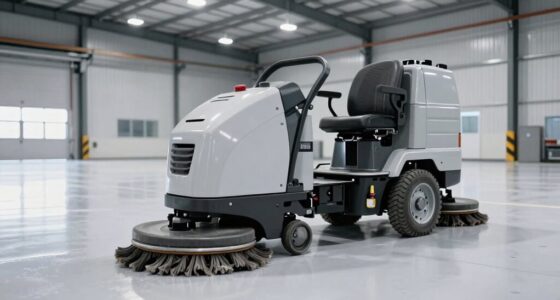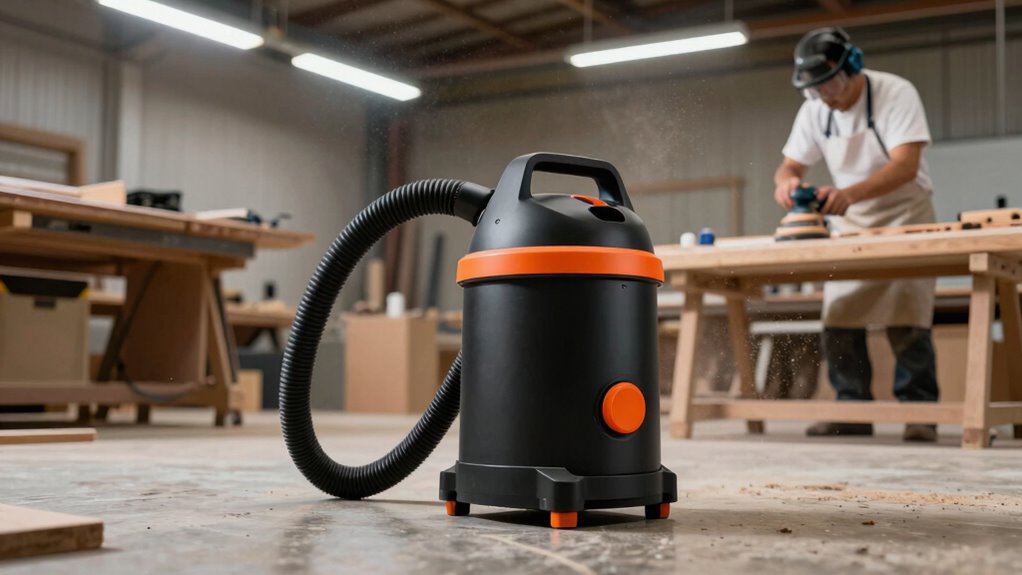
Dust extractors aren’t just for construction sites—they’re essential in industries like woodworking, manufacturing, and environmental cleanup. You’ll find them capturing debris from cutting, grinding, and polishing, helping prevent fire hazards and equipment issues. They also improve air quality, protect workers’ health, and ensure compliance with environmental rules. These systems support cleaner, safer workplaces and aid in sustainability efforts. Stick with us to discover more ways dust extractors make a difference across various industries.
Key Takeaways
- Dust extractors are essential in woodworking shops to control wood dust during cutting and sanding processes.
- Manufacturing plants use them to capture particles from grinding, polishing, and machining, ensuring product quality.
- Environmental remediation sites rely on dust extractors to prevent airborne contaminants from spreading.
- Cleaners and janitorial services use portable dust extractors for indoor air quality and surface cleaning.
- Food processing industries utilize dust extractors to manage fine flour and powder dust, maintaining hygiene standards.
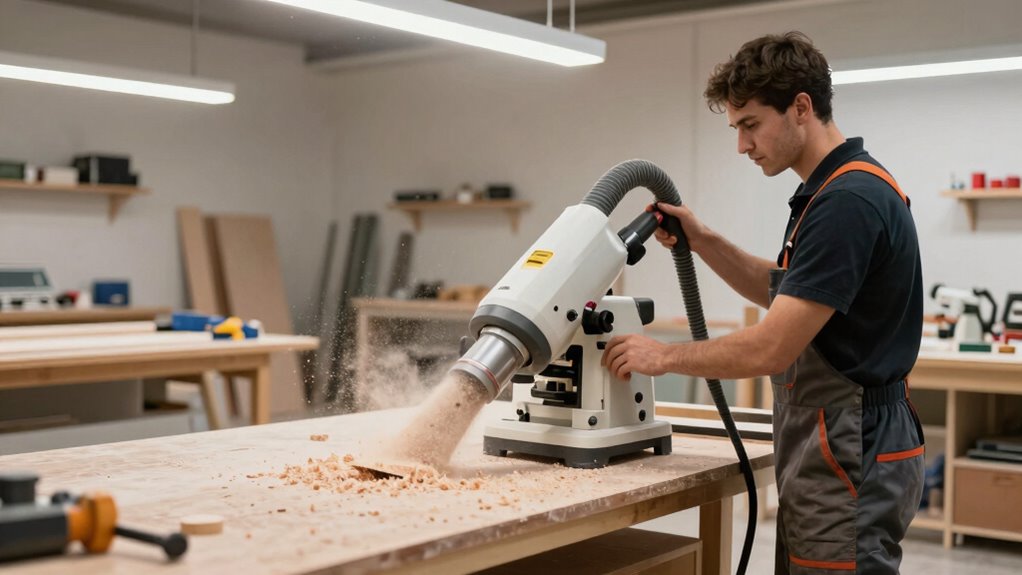
Have you ever considered that dust extractors aren’t just for construction sites? These powerful tools play a pivotal role in various industrial applications, where controlling dust isn’t just about cleanliness but also about safety and efficiency. In factories, woodworking shops, and manufacturing plants, dust extractors capture tiny particles generated during processes like cutting, grinding, and polishing. This prevents dust buildup on equipment and surfaces, reducing the risk of fires and machinery malfunctions. Plus, in environments where precision matters, keeping the air clear of debris ensures better product quality and worker health. The versatility of dust extractors means they’re essential across industries that generate airborne particulates.
Dust extractors are essential for safety, efficiency, and air quality across various industrial applications.
When you think about the environmental impact, dust extractors become even more consequential. They help minimize the release of harmful dust into the atmosphere, supporting cleaner air standards and reducing pollution. This is especially important in urban or environmentally sensitive areas where airborne dust can settle on soil, water, and vegetation, causing long-term damage. By capturing dust at the source, these devices prevent contamination that might otherwise spread far beyond the immediate work zone. In many industrial settings, regulations require strict dust management, and using high-quality extractors is an effective way to meet these standards. This not only helps companies avoid fines and legal issues but also demonstrates a commitment to environmental responsibility.
Additionally, dust extractors contribute to healthier workplaces. Without proper dust control, employees can suffer from respiratory problems, allergies, or other health issues caused by inhaling fine particles. When you implement extraction systems, you’re safeguarding workers’ well-being while maintaining compliance with occupational safety guidelines. Furthermore, these systems can improve the overall cleanliness of the workspace, which boosts morale and productivity. Less dust means less cleanup, fewer maintenance issues, and a safer environment for everyone involved. Incorporating air filtration systems further enhances these benefits by ensuring cleaner indoor air quality.
In essence, dust extractors serve a broader purpose than you might initially realize. They’re integral to industrial applications where controlling airborne particles improves safety, enhances product quality, and reduces environmental impact. Whether in manufacturing, woodworking, or even in environmental remediation efforts, these devices help create safer, cleaner, and more sustainable operations. Recognizing their role in dust management helps better appreciate how essential dust extraction technology is across multiple industries, shaping a safer and greener future.

YOWMOFT CVL30-RC, 8 Gallon Dust Extractor with Remote Control, 5.5 Peak HP Shop Vacuum with HEPA Filter, Dust Bag, Dusting Brush, Hose, Dust Extractor for Woodworking, Garage, and Home Cleaning
Remote Control Function: This dust extractor is equipped with a remote control, making it convenient for you to…
As an affiliate, we earn on qualifying purchases.
As an affiliate, we earn on qualifying purchases.
Frequently Asked Questions
Can Dust Extractors Improve Air Quality in Residential Settings?
Yes, dust extractors can improve air quality in your home by reducing indoor allergens and enhancing air purification. You can use them to efficiently capture dust, pet dander, and other airborne particles that trigger allergies or asthma. By regularly operating a dust extractor, you help create a cleaner, healthier environment, making your living space more comfortable and reducing potential respiratory issues caused by indoor pollutants.
Are Dust Extractors Suitable for Use in Food Processing Industries?
Yes, dust extractors are suitable for food processing industries, but you must guarantee they meet strict food safety standards. They help maintain a clean environment, reducing contamination risks. However, check equipment compatibility to prevent cross-contamination and ensure easy cleaning. When properly integrated, dust extractors become essential tools, safeguarding product quality and worker health, making your food processing operation safer and more efficient.
How Do Dust Extractors Help in Reducing Workplace Health Risks?
Dust extractors considerably reduce workplace health risks by controlling pollution and improving air quality. You benefit from better health benefits as they capture harmful dust particles before they become airborne, preventing respiratory issues and allergies. By efficiently filtering pollutants, dust extractors create safer work environments, ensuring employees breathe cleaner air. This proactive pollution control minimizes long-term health problems, making your workspace healthier and more compliant with safety standards.
Can Dust Extractors Be Used for Hazardous or Toxic Materials?
Yes, dust extractors can safely handle hazardous materials and toxic substances when equipped with appropriate filters and safety features. I once saw a cleaner expertly use a specialized extractor to contain asbestos dust, preventing it from spreading. These devices trap dangerous particles, protecting your health and the environment. Always guarantee your dust extractor is rated for hazardous materials to avoid exposure and keep your workspace safe.
What Maintenance Is Required for Dust Extractors in Non-Construction Environments?
You need to regularly check and replace filters, clean internal components, and inspect hoses to maintain dust extractors in non-construction environments. Doing so boosts industrial efficiency and guarantees equipment longevity. Keep the system sealed and free of blockages, and follow manufacturer guidelines for scheduled maintenance. Proper upkeep prevents breakdowns, maintains suction power, and extends the lifespan of your dust extractor, ensuring it performs at its best over time.
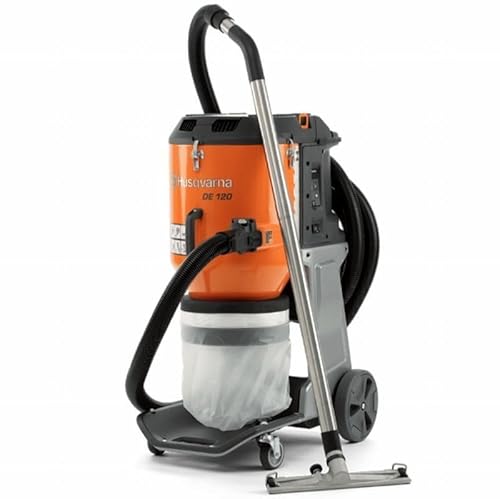
Husqvarna DE 120 HEPA Dust Extractor Vacuum
Continuous High Performance: The ingenious e-flow system automatically adjusts air flow to prolong time between filter cleanings, allowing…
As an affiliate, we earn on qualifying purchases.
As an affiliate, we earn on qualifying purchases.
Conclusion
So, next time you think dust extractors are only for construction sites, remember they’re more versatile than a Swiss Army knife. From cleaning up art studios to maintaining vintage cars, these machines are your modern-day knights in shining armor—minus the dragon slaying, of course. Just like an old-school librarian once kept dust at bay, today’s cleaners wield these powerful tools to keep any space pristine. Dust doesn’t stand a chance—trust me, it’s practically medieval!
YOWMOFT CVL30-RC, 8 Gallon Dust Extractor with Remote Control, 5.5 Peak HP Shop Vacuum with HEPA Filter, Dust Bag, Dusting Brush, Hose, Dust Extractor for Woodworking, Garage, and Home Cleaning
Remote Control Function: This dust extractor is equipped with a remote control, making it convenient for you to…
As an affiliate, we earn on qualifying purchases.
As an affiliate, we earn on qualifying purchases.

Oneida Air Systems Dust Collector & Cyclone Separator Kit DD Deluxe 5-Gal – Clear Bucket – Portable
ANTI-STATIC CYCLONE DESIGN: Cyclone dust separator for shop vac uses centrifugal force to capture 99% of dust and…
As an affiliate, we earn on qualifying purchases.
As an affiliate, we earn on qualifying purchases.