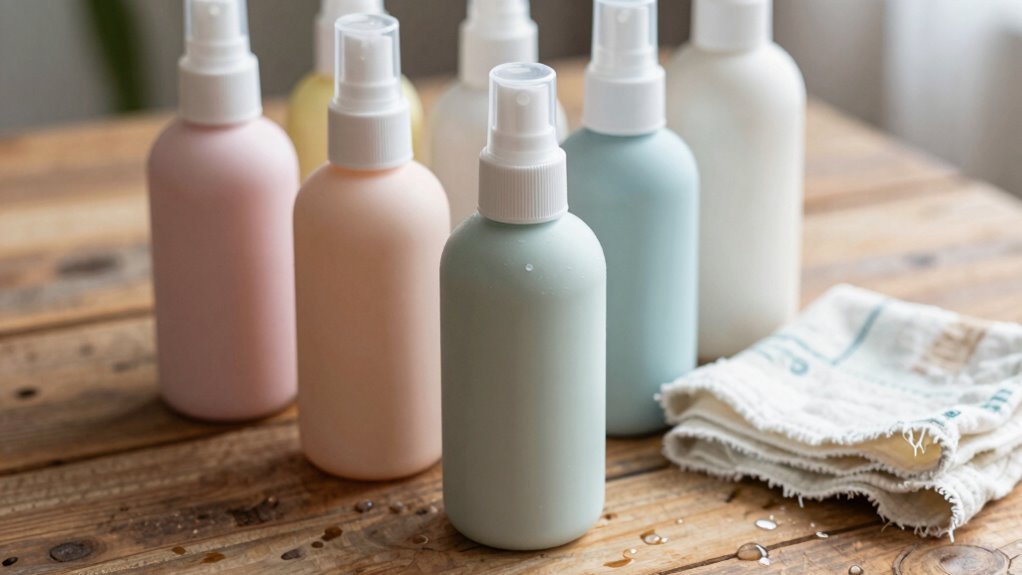

To avoid reusable spray bottles and cloths turning into contamination sources, clean them thoroughly with hot water and soap regularly. Always label bottles with their contents to prevent misuse or damage. Use the right cloths for specific tasks and wash them in hot water without fabric softeners. Inspect your bottles for cracks or wear and replace them when needed. Practicing these steps helps keep your cleaning safe and effective—continue to explore how to maintain your household tools properly.
Key Takeaways
- Always thoroughly clean and disinfect bottles and cloths to prevent cross-contamination and bacterial growth.
- Clearly label bottles with their contents to avoid misuse and potential damage or skin irritation.
- Use appropriate cloths for specific tasks to prevent surface damage and maintain cleaning effectiveness.
- Regularly inspect and replace worn or damaged bottles to avoid leaks, contamination, and safety hazards.
- Avoid switching cleaning solutions abruptly or using household liquids that may harm surfaces or compromise safety.
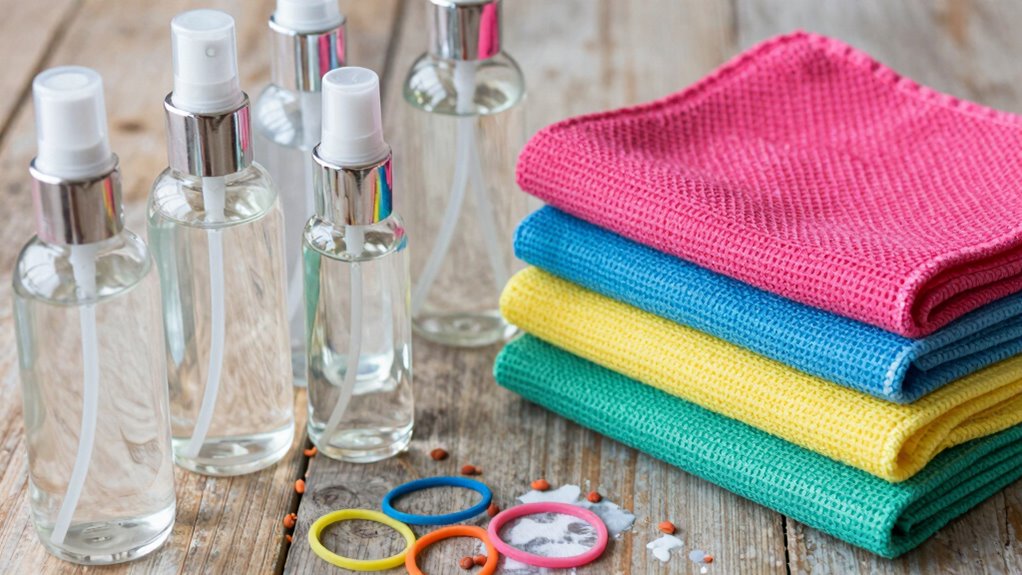
Many people turn to reusable spray bottles and cloths to reduce waste and save money, but they often overlook the mistakes that can come with their reuse. While switching to eco friendly packaging is a smart step toward sustainable cleaning routines, it’s essential to understand the potential pitfalls involved. Reusing containers without proper cleaning can lead to cross-contamination, especially if you use them for different cleaning solutions or other household liquids. This oversight can introduce bacteria or residues that compromise your health and the effectiveness of your cleaning efforts. To avoid this, always thoroughly clean spray bottles and cloths between uses, especially when switching products. Hot water and a bit of soap usually do the trick, but for added safety, disinfecting with vinegar or diluted bleach can help eliminate germs, ensuring your reusable items remain safe and hygienic.
Another common mistake is neglecting to label your bottles clearly. When you reuse spray bottles, it’s easy to forget what solution is inside, which can cause accidental misuse. For example, mistaking a vinegar solution for a chemical cleaner could damage surfaces or irritate your skin. Proper labeling helps you keep track of what’s in each container, supporting safer and more effective cleaning routines. Additionally, you should pay attention to the type of cloth you use and how you launder it. Not all cloths are suitable for every cleaning task; some are better for dusting, while others are designed for scrubbing or absorbing liquids. Using the wrong cloth on certain surfaces can cause scratches or damage. Regularly washing your cloths in hot water and avoiding fabric softeners will help maintain their cleanliness and effectiveness. Incorporating appropriate cleaning techniques can also extend the lifespan of your cloths and enhance their performance. Regular inspection of your cleaning supplies ensures that any plastic degradation or damage is caught early, preventing potential household hazards. Proper storage of your reusable items can further prevent contamination and prolong their usability, making your cleaning routine more sustainable.
To further support your efforts, consider proper cleaning procedures that include using the right disinfectants and techniques, which can significantly reduce the risk of bacteria buildup. Many also overlook the importance of maintaining the integrity of the bottles themselves. Over time, repeated use can cause plastic degradation or cracks, which may lead to leaks or contamination. Inspect your spray bottles regularly, and replace them when they show signs of wear. This prevents potential messes or the spread of bacteria. When selecting new bottles, opt for durable, BPA-free options that support your goal of sustainable cleaning routines. This not only keeps your household safer but also aligns with your eco-friendly values. It’s also helpful to consider proper storage of your reusable cleaning supplies to prevent exposure to dust or other contaminants. Remember, the goal of reusable items isn’t just to cut waste but to do so responsibly. By paying attention to cleaning, labeling, and maintenance, you ensure that your sustainable cleaning routines truly benefit your household and the environment. Avoiding these common mistakes helps you maximize the advantages of reusable spray bottles and cloths, making your eco efforts both effective and safe.
reusable spray bottles with labels
As an affiliate, we earn on qualifying purchases.
As an affiliate, we earn on qualifying purchases.
Frequently Asked Questions
How Long Do Reusable Spray Bottles Typically Last?
Reusable spray bottles usually last about one to two years, but it depends on durability testing and how well you care for them. Over time, material degradation can weaken the bottle, especially if exposed to harsh chemicals or extreme temperatures. To extend their lifespan, clean them regularly, avoid over-tightening the spray nozzle, and store them properly. Proper maintenance helps guarantee your bottle remains functional and safe for continued use.
Are Reusable Cloths More Cost-Effective Than Disposable Ones?
Are reusable cloths more cost-effective than disposable ones? Absolutely. When you choose eco-friendly materials, your reusable cloths last longer and reduce waste, making them a smarter financial choice over time. A simple cost comparison shows you’ll spend less on replacements and disposables. Plus, you help the environment by minimizing waste. So, switching to reusable cloths not only saves you money but also supports sustainability.
What Are Common Mistakes When Cleaning Reusable Items?
You often make mistakes when cleaning reusable items by neglecting to properly disinfect them, especially if they have antimicrobial coatings. Failing to follow correct storage practices can lead to bacterial growth or mold. Always clean thoroughly, paying attention to crevices, and guarantee items are properly dried before storing. This prevents contamination and preserves the item’s lifespan, making your reusable items safer and more effective for continued use.
Can I Use the Same Cloth for Multiple Cleaning Tasks?
Sure, you can use the same cloth for multiple tasks—until you forget about cross contamination concerns. It’s tempting, but it’s best to follow proper washing techniques to prevent spreading germs. Use different cloths for bathrooms and kitchens, and wash them thoroughly between uses. This way, you avoid transferring bacteria and keep your cleaning routine truly effective. Remember, a clean cloth is your best defense against germs!
How Do I Prevent Mold Growth in Reusable Spray Bottles?
To prevent mold growth in your reusable spray bottles, make sure to rinse them thoroughly after each use and let them dry completely before storing. Regular bottle maintenance, like cleaning with a mixture of vinegar and water, helps eliminate mold spores. Store bottles in a cool, dry place and avoid leaving liquid inside for long periods. These steps will keep mold prevention effective and extend your bottle’s lifespan.
disinfectant spray bottles for cleaning
As an affiliate, we earn on qualifying purchases.
As an affiliate, we earn on qualifying purchases.
Conclusion
As you navigate the world of reusable essentials, remember that each choice is a brushstroke in your sustainability masterpiece. Avoid common pitfalls like cross-contamination or neglecting proper cleaning, which can tarnish your efforts. By being mindful, you craft a symphony of eco-friendly habits—each spray, wipe, and decision harmonizing with your commitment to a greener planet. Keep your intentions pure and your methods intentional, turning everyday reuse into a vibrant tapestry of mindful living.
hot water washable microfiber cloths
As an affiliate, we earn on qualifying purchases.
As an affiliate, we earn on qualifying purchases.
reusable cleaning cloths for kitchen and bathroom
As an affiliate, we earn on qualifying purchases.
As an affiliate, we earn on qualifying purchases.