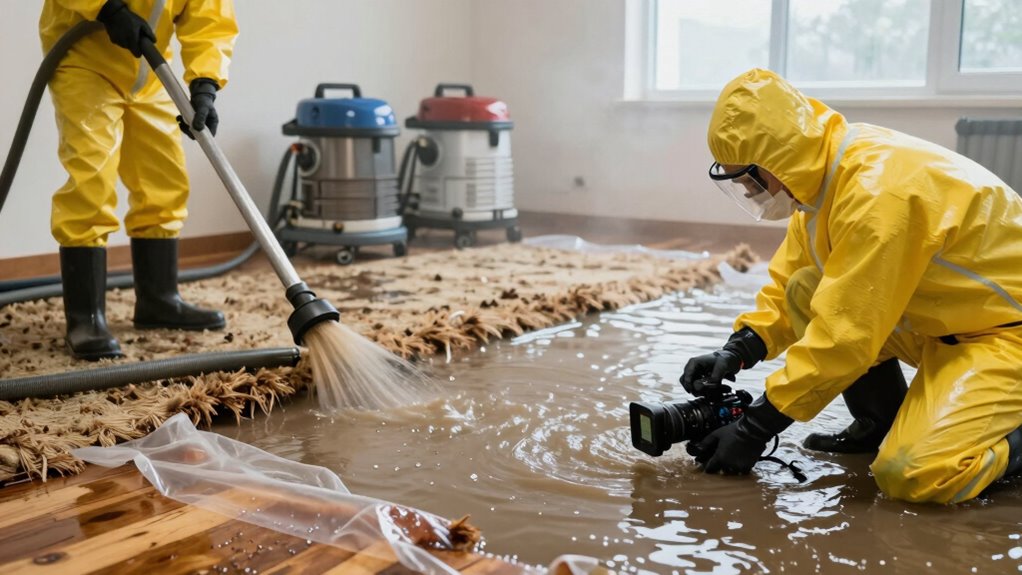

After a flood, start by removing standing water as quickly as possible with pumps or wet-dry vacuums to prevent mold and further damage. Then, focus on dehumidifying the area using fans and industrial dehumidifiers, ensuring all moisture is extracted from walls, floors, and furniture. Finally, thoroughly dry the space and monitor humidity levels to prevent mold growth. Following these steps carefully will help restore safety and property integrity—continue to learn ways to do it effectively.
Key Takeaways
- Prioritize immediate water extraction using pumps or wet-dry vacuums to prevent mold and structural damage.
- Open windows and run fans along with industrial dehumidifiers to accelerate moisture removal.
- Continuously monitor humidity and inspect hidden areas with moisture meters for thorough drying.
- Ensure electrical safety by avoiding contact with water and turning off affected circuits before cleanup.
- Complete drying and dehumidifying before restoring furniture or repainting to prevent future mold growth.
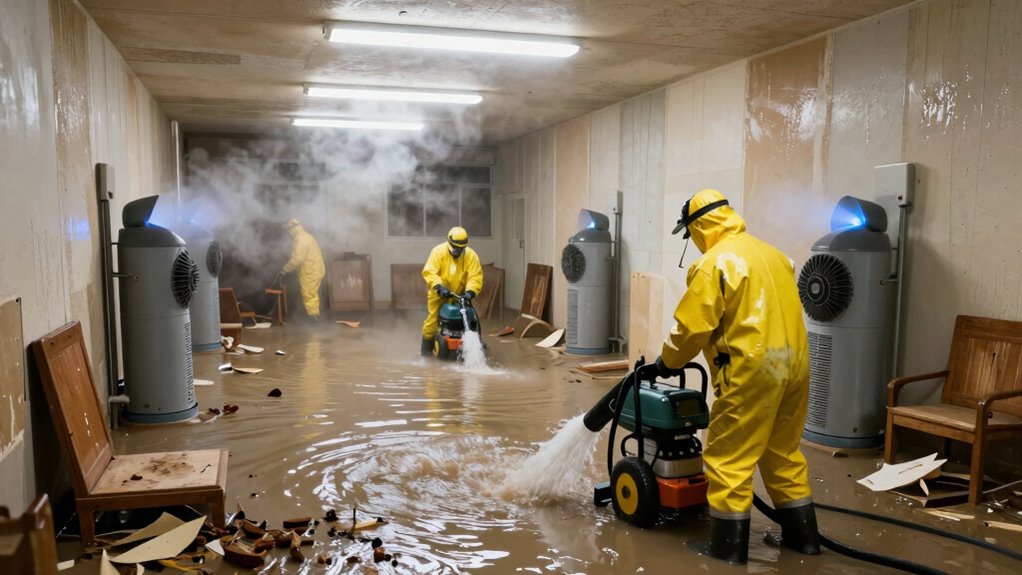
If your property has been affected by recent flooding, authorities may issue a flood cleanup order to guarantee the area is safely restored. This order ensures that you follow proper procedures to address water damage effectively while prioritizing safety precautions. Your first step is to thoroughly assess the extent of the water damage. Look for areas where water has seeped into walls, flooring, or furniture, and be cautious of potential electrical hazards or structural weaknesses. Remember, water can hide behind walls or beneath floors, so don’t rush the process. It’s essential to wear protective gear, such as gloves, boots, and masks, to prevent exposure to contaminated water or mold spores.
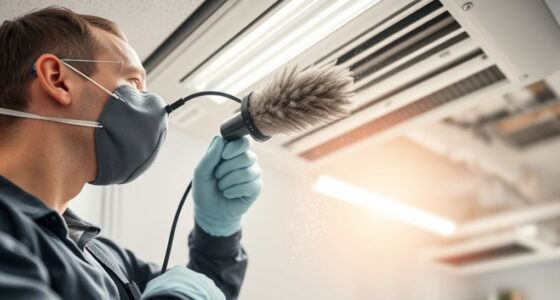
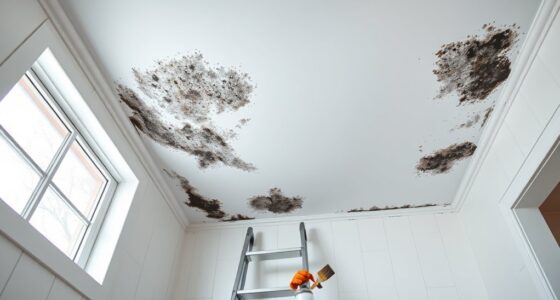
Once safety precautions are in place, you need to begin water extraction. Remove standing water as quickly as possible to prevent further damage and mold growth. Use pumps, wet-dry vacuums, or professional-grade extraction equipment if available. The faster you remove water, the less likely you’ll face long-term issues like warped flooring or compromised drywall. After extracting the visible water, focus on moisture removal from surfaces. Open windows and doors to improve ventilation, and use fans or industrial dehumidifiers to speed up the drying process. Keep in mind that thorough drying is essential, as residual moisture can lead to mold growth, which complicates cleanup and poses health risks.
Start water extraction immediately with pumps or vacuums to prevent mold and structural damage.
During dehumidifying and drying, continuously monitor humidity levels and temperature to guarantee ideal conditions for drying. It’s important not to rush this step; incomplete drying leaves behind moisture that can cause structural problems later. You should also inspect hidden areas such as behind walls, under flooring, and inside cabinets, using moisture meters if available. This helps you identify any remaining water pockets and address them promptly.
Throughout the entire process, adhere strictly to safety precautions. Avoid electrical outlets or appliances that may have come into contact with water, and consider consulting professionals if the damage is extensive or if you’re unsure about safety. Proper extraction, dehumidifying, and drying are essential to restoring your property and preventing mold growth or further deterioration. Additionally, understanding the importance of proper ventilation systems can significantly improve the efficiency of the drying process. Following these steps carefully will help you manage water damage efficiently while keeping yourself safe. Remember, swift action combined with diligent safety measures can make all the difference in returning your property to a safe, dry condition.

1/3 HP Submersible Sump Pump 2400 GPH Portable Utility Water Pump Thermoplastic Drain Pump with 10ft Power Cord Fast Water Removal for Basement Pool Garden Pond and Flood Cleanup
High-Efficiency Water Removal-Delivers up to 2400 GPH flow rate, efficiently removing water from flooded basements, pools, ponds, and…
As an affiliate, we earn on qualifying purchases.
As an affiliate, we earn on qualifying purchases.
Frequently Asked Questions
How Long Does Flood Cleanup Typically Take?
Flood cleanup usually takes anywhere from a few days to a week, depending on water damage severity. You’ll need to utilize effective drying techniques to prevent mold growth and further damage. The process involves extracting water, dehumidifying the area, and thoroughly drying everything. If the damage is extensive, it might take longer. Stay patient and thorough to ensure your space is completely dry and safe again.
Are There Safety Precautions During Flood Extraction?
Safety comes first, so don’t cut corners. During flood extraction, you should wear appropriate safety gear like gloves, masks, and waterproof boots. Always check for electrical hazards—avoid contact with submerged outlets or wiring. Keep a clear path and work carefully to prevent accidents. Remember, playing it safe guarantees you’re not just quick but also thorough, helping you get through the cleanup without any mishaps.
Can I Do Flood Cleanup Myself or Need Professionals?
You can attempt DIY flood cleanup if the damage is minor and you feel comfortable handling the process. However, for significant flooding, it’s best to hire professional restoration services to guarantee thorough extraction, dehumidifying, and drying. Professionals have the expertise and equipment to prevent mold growth and structural issues. Remember, safety is vital, so if you’re unsure, opting for professional help guarantees a safer, more effective cleanup.
What Are the Costs Associated With Flood Cleanup?
Think of flood cleanup costs as a rollercoaster ride—full of ups and downs. You can expect cost estimates to range from a few hundred to several thousand dollars, depending on damage severity. Insurance coverage can help ease the financial burden, but it’s crucial to check your policy. Preparing for these expenses ensures you’re not caught off guard, making the cleanup process smoother and less stressful for you.
How Do I Prevent Mold After Flood Damage?
To prevent mold after flood damage, you need to focus on moisture control and mold prevention. Immediately dry out affected areas with fans and dehumidifiers, and remove any wet or porous materials like drywall or carpeting. Keep the space well-ventilated, fix leaks promptly, and monitor humidity levels. Acting quickly helps prevent mold growth, protecting your home and health. Regular inspections guarantee moisture stays controlled, reducing the risk of mold reappearance.
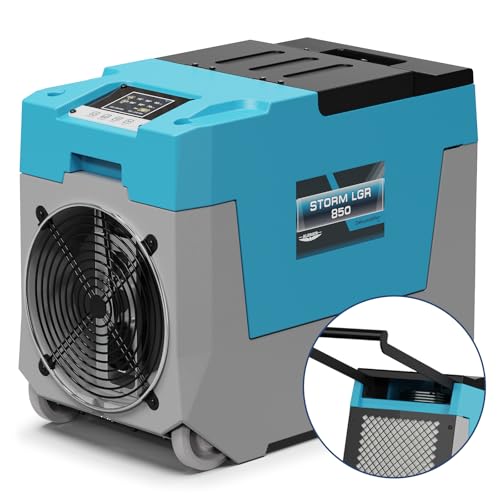
AlorAir 180 PPD LGR Commercial Dehumidifier with Pump, Heavy Duty Industrial Dehumidifiers Water Damage Restoration for Homes, Basements, Garages, Gym and Job Sites, Winter Storm (Blue)
Commercial Grade Dehumidifier with Wi-Fi: Monitor and control your machine, wherever you are. This large capacity dehumidifier can…
As an affiliate, we earn on qualifying purchases.
As an affiliate, we earn on qualifying purchases.
Conclusion
Think of flood cleanup as tending to a wounded garden. You must carefully extract the debris, restore the soil’s moisture balance with dehumidification, and let the sun’s warmth dry what’s left behind. Each step nurtures the land back to health, preventing decay and future damage. With patience and precision, you’re guiding your home’s resilience to bloom anew—transforming chaos into calm, just as a gardener restores beauty after a storm.

Vacmaster VK609PFR 0201 6 Gallon 5.5 Peak HP 3-in-1 Wet/Dry/Upholstery Shampoo Vacuum Cleaner
Ideal for Cleaning Carpets, Car Interiors, Upholstery, and More!
As an affiliate, we earn on qualifying purchases.
As an affiliate, we earn on qualifying purchases.
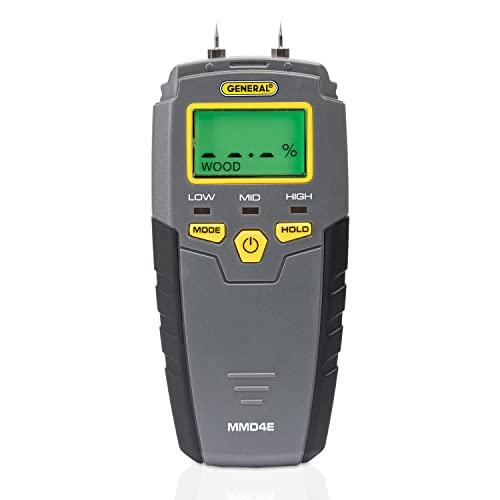
General Tools MMD4E Digital Moisture Meter, Water Leak Detector, Moisture Tester, Pin Type, Backlit LCD Display With Audible and Visual High-Medium-Low Moisture Content Alerts, Grays
HUMIDITY SENSOR: Our handy meter tool can quickly determine what level of remediation is needed to keep your…
As an affiliate, we earn on qualifying purchases.
As an affiliate, we earn on qualifying purchases.