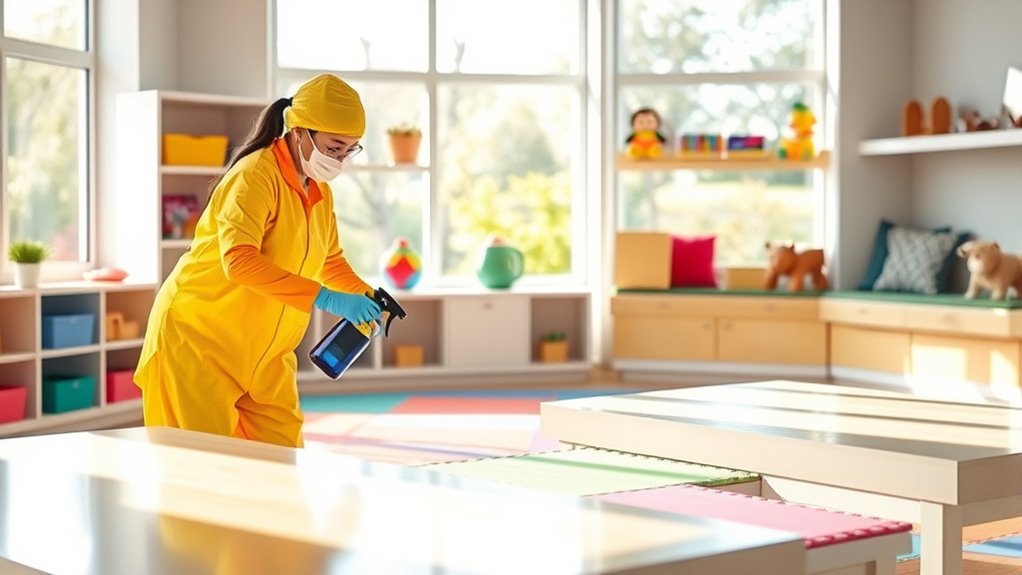

To keep your childcare facility safe, focus on regular cleaning and disinfecting of toys, surfaces, and high-touch areas using EPA-registered products. Wear gloves and guarantee proper contact time for disinfectants to work effectively. Clean diaper areas thoroughly, dispose of soiled diapers properly, and wash hands frequently. Consistent routines like disinfecting toys, sanitizing surfaces, and practicing good hygiene are key. Keep learning how to create a healthier environment for children by exploring more tips and strategies.
Key Takeaways
- Follow manufacturer instructions and use EPA-registered disinfectants for effective cleaning of toys and surfaces.
- Regularly disinfect diaper changing areas with appropriate, child-safe disinfectants after each use.
- Implement proper hand hygiene protocols, including handwashing and glove use during diaper changes.
- Establish consistent cleaning schedules for all surfaces, toys, and high-touch areas to minimize germ spread.
- Educate staff on hygiene best practices and maintain a clean, safe environment to support children’s health.
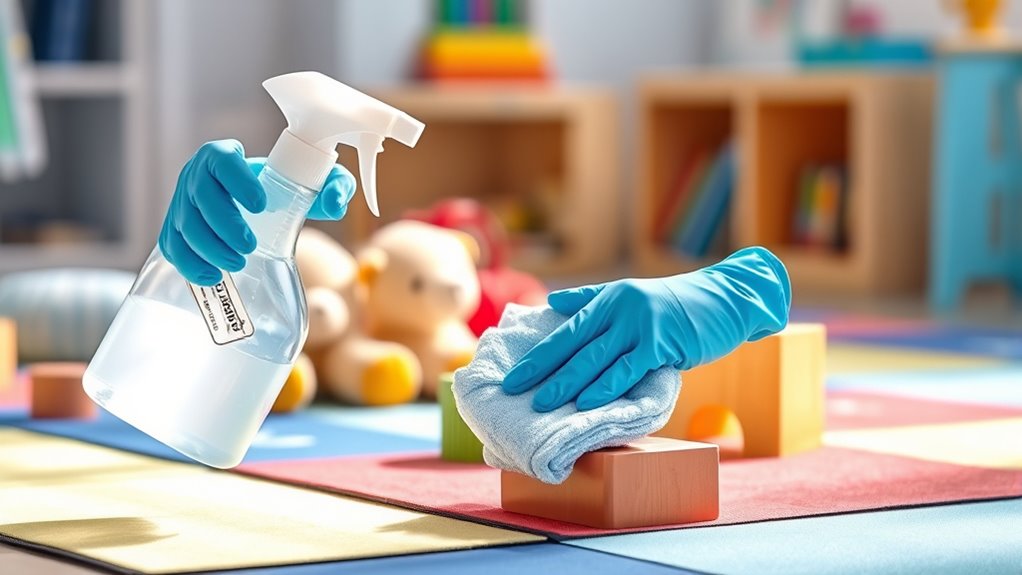
Ever wondered how to keep a childcare facility safe and healthy for little ones? The key lies in diligent cleaning and sanitizing routines that target the areas where children play, eat, and rest. Toys are a major concern because kids tend to put them in their mouths or touch them repeatedly. Toy disinfecting should be a regular part of your cleaning schedule. Use appropriate disinfectants approved for toys, and make sure to follow the manufacturer’s instructions for contact time. Small plastic and rubber toys can often be washed with soap and water, but for more thorough disinfection, a diluted bleach solution or commercial toy disinfectant can do the trick. Remember, after disinfecting, rinse toys thoroughly and let them air dry before returning them to the play area. This process helps eliminate germs, viruses, and bacteria that can spread illnesses among children. Incorporating body awareness techniques into cleaning routines can also help staff remain mindful of hygiene practices and reduce cross-contamination.
Another essential aspect is diaper area sanitation. Since diaper changes are frequent and involve potential exposure to bodily fluids, maintaining a clean diaper area is indispensable to prevent infections. Use disposable gloves during diaper changes, and always clean the surface with a disinfectant after each use. Wiping down changing tables and surrounding surfaces with an EPA-registered disinfectant ensures germs don’t linger. Proper disposal of soiled diapers is equally important—seal the mess in a plastic bag before discarding it to avoid contamination. Educate staff on the importance of hand hygiene, making sure everyone washes their hands thoroughly with soap and water afterward. Hand sanitizers with at least 60% alcohol can be used in a pinch, but soap and water remain the gold standard, especially when dealing with diaper area sanitation.
In addition to these specific measures, establishing a routine cleaning schedule for all surfaces—doorknobs, tables, chairs, and toys—is essential. Use appropriate cleaning products that are effective against germs but safe for children. Always wear gloves and ensure proper ventilation when working with disinfectants. Regularly inspecting the environment for cleanliness and promptly addressing messes helps maintain a safe space. Remember, children’s immune systems are still developing, so the less they’re exposed to germs, the healthier they stay. By prioritizing toy disinfecting and diaper area sanitation, you create a safer, cleaner environment where children can thrive without unnecessary health risks. It’s all about consistency, attention to detail, and knowing the right cleaning techniques to keep your childcare facility a safe haven for every little one.

LEXX® RTU Broad Spectrum Disinfectant & Cleaner – EPA Registered, Kills 99.99% of Bacteria – Hospitals, Schools, Offices, Homes – Citric Acid, Safer Choice, Non-Toxic, No Bleach – 32 fl. oz. Spray
EPA Registered Disinfectant Spray – Kills 99.99% of bacteria and virus on hard, non-porous surfaces, while removing the…
As an affiliate, we earn on qualifying purchases.
As an affiliate, we earn on qualifying purchases.
Frequently Asked Questions
How Often Should Toys Be Sanitized in Childcare Centers?
You should sanitize toys daily in childcare centers, especially those frequently mouthed or shared among children. Implementing regular sanitizing schedules helps prevent the spread of germs. Focus on toy disinfection after each use or at least once a day, depending on activity levels. Consistent cleaning keeps toys safe and hygienic, reducing illness risks. Remember, maintaining a strict sanitizing schedule and promptly disinfecting toys are essential steps to ensure a healthy environment for kids.
What Cleaning Agents Are Safest for Children’s Environments?
You should use natural disinfectants and child-safe chemicals to keep your environment safe. While some worry about effectiveness, many natural options like vinegar or plant-based cleaners work well without harmful residues. Always check labels to verify products are non-toxic and specifically designed for children’s spaces. This way, you protect their health, prevent accidents, and create a clean, safe area where children can learn and play confidently.
How to Prevent Cross-Contamination During Cleaning?
To prevent cross-contamination, you should implement effective disinfectant techniques and guarantee staff compliance with protocols. Always use separate cleaning tools for different areas, and disinfect high-touch surfaces regularly. Train staff to follow proper hand hygiene and don’t forget to change gloves frequently. Consistent supervision helps maintain adherence to cleaning procedures, reducing the risk of spreading germs and creating a safer environment for children.
Are There Specific Protocols for Cleaning Outdoor Play Areas?
You’re probably imagining outdoor play areas as germ-free zones, but in reality, outdoor surface disinfecting is essential. You should regularly clean and sanitize all playground equipment, especially high-touch spots, to keep kids safe. Maintain outdoor surfaces by sweeping away dirt and debris, then disinfect them with approved solutions. These protocols protect children from germs while they play, turning outdoor spaces into safe fun zones rather than hidden health hazards.
How Can Staff Be Trained Effectively in Cleaning Procedures?
You can train staff effectively in cleaning procedures by using a mix of staff training methods, such as hands-on demonstrations, visual aids, and interactive sessions. Focus on effective cleaning education that emphasizes proper techniques, safety protocols, and the importance of sanitation. Regular refresher courses and clear, accessible guidelines help reinforce best practices, ensuring staff stay confident and consistent in maintaining a clean, safe environment for children.

Dynamic Element Diaper Pail Odor Eliminator Spray – Unscented Mineral-Based Spray for Odors in Diaper Pails and Baby Changing Areas – 9 Fl Oz
Patented Mineral-Based Diaper Pail Spray – Break away from traditional solutions with our patented, mineral-based formula. This powerful…
As an affiliate, we earn on qualifying purchases.
As an affiliate, we earn on qualifying purchases.
Conclusion
In your childcare facility, consistent cleaning and sanitizing cultivate cleanliness, comfort, and contagious confidence. By diligently disinfecting daily, you demonstrate dedication, discipline, and a deep desire to protect. Remember, meticulous maintenance minimizes messes, maximizes safety, and nurtures a nurturing, natural environment. Your effort ensures children feel safe, secure, and smile brighter, building bonds that bolster their beginning. Keep cleaning, keep caring, because your commitment creates a clean, carefree, and confident childhood.

Amazon Basics Hand Sanitizer, Original Scent, Contains 62% Ethyl Alcohol, Moisturizing Formula, 67.60 fl oz, Pack of 1 (Previously Solimo)
CONVENIENT PACKAGING: Includes 1 67.6-fluid ounce (2L) bottle of hand sanitizer
As an affiliate, we earn on qualifying purchases.
As an affiliate, we earn on qualifying purchases.

Schneider Medical Nitrile Exam Gloves, Powder-Free, Latex-Free, Non-Sterile Disposable Gloves for Medical Use, Cleaning and Food Prep, Blue, 100 Count, Small
MEDICAL-GRADE 3 MIL NITRILE – Delivers dependable protection and comfort for healthcare professionals. These nitrile exam gloves provide…
As an affiliate, we earn on qualifying purchases.
As an affiliate, we earn on qualifying purchases.